The narrator and Bon escape the reeducation camp
The SympathizerThe escape of the unnamed narrator and Bon from the reeducation camp is both a release from confinement and a bitter lesson in the price of freedom. Man, who is also the commissar who tortured the narrator, arranges their passage out of the camp and the country by using money extracted from prisoners’ desperate families. At the gate, the two friends reunite after more than a year apart, but their departure also makes visible the broken bodies and lost lives of comrades who cannot leave with them. The escape brings them to Saigon, not to peace: the journey unfolds amid renewed war and the silencing of the popular music that had once accompanied city life.
The Escape Arranged
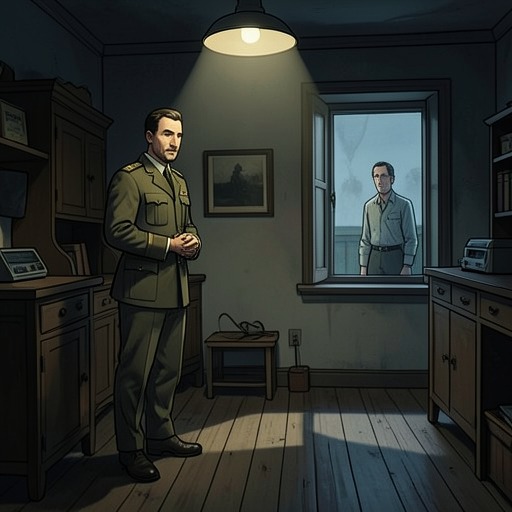
The decision comes at the end of the narrator’s examination and recovery. He had assumed he would die in the camp; instead, at their next and last meeting, the commissar tells him that he and Bon are leaving both the camp and the country. A truck is waiting at the gates, and their immediate destination is Saigon, where Bon has a cousin who has already tried twice to flee and been caught. The commissar expects the third attempt, now involving Bon and the narrator, to succeed.
The narrator’s surprise is part of the turn: the examination that seemed to end in pain and confinement is followed by an unexpected route out. The escape is not presented as a simple reward for the narrator’s confession. Man explains that the narrator’s revolutionary background may allow a confession to secure his release from the camp, but that Bon’s crimes make money necessary. The Commandant must be paid a considerable sum, and additional payments are required to ensure that the two men can leave the country. Their freedom therefore depends not only on their words or convictions, but on a concealed transaction with officials and police.
Man reveals where the money came from. Desperate women who want to see their husbands in the camp pay whatever they can; guards take a share, while the remainder goes to the Commandant and Man. Man sends part home to his wife, pays a tithe to his superiors, and uses what remains for the escape. The arrangement is simultaneously an act of friendship and an exploitation of families already suffering under imprisonment. The narrator calls the contradiction funny, but Man says he could not laugh while taking the women’s money. His question about whether the narrator can still recognize and love him makes the cost of the favor personal as well as political.
Man and the Price of Freedom
The release complicates the relationship between torturer and friend. The narrator embraces Man and weeps, recognizing the commissar who inflicted pain as the confidant and companion he still loves. Man’s face has been destroyed, and the narrator understands him as divided between his role as interrogator and his identity as Man. The escape does not erase what happened during the examination; instead, it makes the intimacy and violence of their bond impossible to separate.
Their different prospects sharpen the imbalance in the gift. The narrator and Bon are being sent away, while Man remains at the camp, unable or unwilling to leave except through death. The narrator interprets Man’s condition as a kind of living death, and the rescue he has arranged cannot rescue its arranger. His generosity is thus no clean redemption: it is purchased with money taken from prisoners’ wives, and it sends his friends toward freedom while leaving him where he is.
The narrator connects this exchange to the insight reached at the end of his examination. The words of independence and freedom can be turned inside out: a revolution that began as a vanguard of political change can become a rearguard hoarding power. He recognizes a parallel with the French and Americans, who had themselves moved from revolutionary causes to imperial power. The release puts that contradiction into action. The country’s revolutionary authorities can invoke liberation while depriving defeated compatriots of freedom, and the escape itself can proceed only through money paid to those authorities.
The Reunion at the Gate
The baby-faced guard escorts the two men to the gates, where The Commandant and Bon wait beside an idling Molotova truck. The narrator has not seen Bon for a year and many months. Their first exchange is a joke about how terrible each looks, but the reunion’s physical evidence is harsher than the joke: Bon is in patchwork and rags, his hair is thinning, his skin has a sickly color, and a black patch covers one eye. He stumbles, and the narrator knows not to ask what was done to him. The humor cannot conceal what the separation and imprisonment have done to his body.
Behind the barbed wire, three other prisoners watch: the Hmong scout, the philosophical medic, and the dark marine. They trade jokes with the departing men and wish them luck. The farewell is brief. The unnamed narrator and Bon can only smile and raise a hand before climbing into the truck; the guard shuts the hatch and locks it. When The Commandant asks whether they have anything to say, they do not risk provoking him by speaking. Their silence is both practical caution and a consequence of the confessions already demanded of them. The Commandant says they have confessed their errors and have nothing more to say. In the narrator’s account, nothing is indeed unspeakable.
As the truck leaves through red dust, the three prisoners still at the camp cover their eyes. The vehicle turns a corner and the camp disappears from view. The departure therefore brings a sharp change in the narrator’s circumstances, but it does not offer a view of those left behind: their farewell gives way to distance before the narrator learns what became of the other comrades.
The Road to Saigon
Bon tells the narrator that the Lao farmer vanished in the river while trying to escape, and that the darkest marine bled to death after a landmine sheared off his legs. The news interrupts the relief of release with questions about what the dead had sacrificed themselves for, and why millions had died in the war to unify the country and liberate it. The narrator and Bon have survived, but their survival does not settle the meaning of the losses. They laugh at the bitter joke of people who have sacrificed themselves and others; when Bon asks what is wrong, the narrator wipes away tears and answers that it is nothing. The laughter is neither proof that the pain has passed nor an explanation for the deaths. It is the response they can make as the truck carries them away.
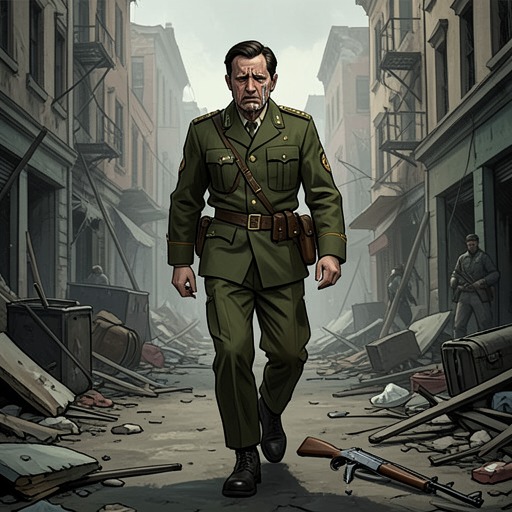
After a numbing two-day journey across mountain passes and crumbling highways, the Molotova deposits them on the outskirts of Saigon. They walk through dirty streets among sullen people toward the home of The Navigator, Bon’s cousin, moving slowly because of Bon’s limp. The driver has told them that the country is again at war: Vietnam has invaded and seized Cambodia after Khmer Rouge attacks on its western border, while China had raided Vietnam’s northern border earlier that year. The route out of the camp has brought them into a country still caught in conflict rather than into a settled peace.
Another absence marks their arrival. They hear no romantic song or pop music, although cafés and transistor radios had once filled the streets with such tunes. The escape thus ends not with a secure return to ordinary life, but with the two men reaching a changed and subdued Saigon. Their freedom is real, yet conditional: it has been bought through corruption, won at the cost of separation from those left in the camp, and carried into a landscape where war continues and familiar sounds have fallen silent.