The narrator and Bon’s blood-brother friendship
The SympathizerThe narrator and Bon’s blood-brother friendship is founded on a schoolyard act of solidarity and tested, years later, by war, exile, and the prospect of death. Its force lies not in unbroken agreement but in a durable obligation: the two men can rebuke one another, yet each remains prepared to act for the other when the cost becomes real.
The schoolyard origin
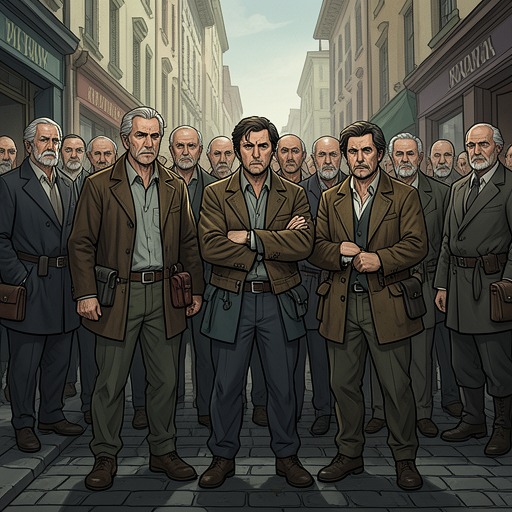
The narrator traces the friendship to a lycée football pitch, where older students surrounded him because he was odd and vulnerable to being singled out. Man, another new boy, stepped out of the crowd to defend him. When an older student challenged Man’s right to decide who belonged, Man refused to move and was struck. The narrator drove his head into the aggressor’s ribs and began fighting, but the older boys overwhelmed both of them.
Bon, also a new student, then left the watching crowd and joined the two boys. Though large, he could not defeat the older students alone: he struck one, elbowed another, and rammed a third before the group brought him down. The three friends were beaten and left bruised and bloody, but the narrator remembers feeling elated. In his account, their defeat had marked a choice between standing with the bullied and joining either the bullies or the cowards who watched.
That night, the boys slipped out of the dormitory to a tamarind grove. They cut their palms, mingled their blood, and gave one another their word. The narrator does not specify the oath’s wording; he instead presents the scene as the origin of their sense of kinship and of a shared instinct to defend the weaker. He acknowledges that a materialist might dismiss his attachment to the memory as romanticism, but argues that the boys’ youthful commitment revealed something adulthood could obscure. The friendship is thus remembered not merely as sentiment, but as an early ethical choice made together.
Loyalty in exile
Years later, the narrator recalls this origin while traveling with Bon toward the Roosevelt Hotel in Los Angeles. The two sing songs from their youth, and the narrator senses that the schoolyard episode remains alive in both of them, as if it were still in their blood. The journey returns them, in memory, to the Saigon nightlife they shared with Man before they became fathers. In exile, their companionship can briefly restore an earlier version of themselves, even as the sadness carried by their displaced community surrounds them.
The narrator’s effort to get Bon out for an evening at Fantasia is also an act of care. Bon, who has decided that he is going to die, has begun to show signs of life; he lets the narrator cut his hair, then slicks it down with Brylcreem. Their shared preparation and the trip to hear songs from their lost country do not erase Bon’s despair, but they give the two men a reprieve from its isolation. The narrator’s friendship works through these small acts as well as through dramatic sacrifice: grooming, music, a drive, and the recovery of a familiar ease.
Disagreement over courage and return
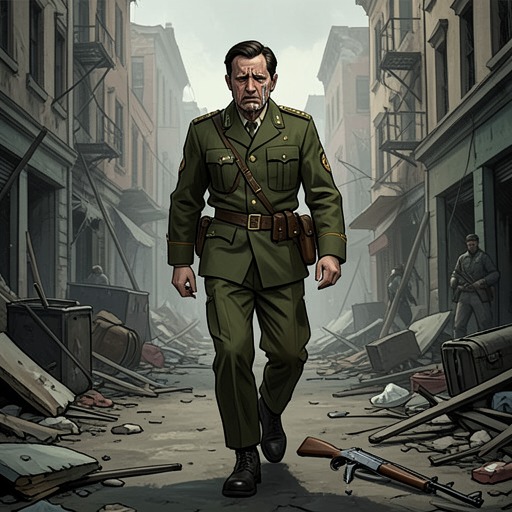
The bond does not make the friends share a single judgment about the exiled soldiers around them. Before a ten-mile hike, the narrator and Bon smoke a final cigarette while watching men prepare to leave. The narrator believes the company has no intention of returning and calls its mission suicidal. Bon answers that life itself is a suicide mission. The narrator dismisses this as philosophy, insisting that it does not make the men’s decision less reckless.
Their argument exposes different ways of understanding manhood and defeat. The narrator says he recognizes the soldiers’ hearts and the bravery they believe they showed, despite having fought on the opposing side. Bon rejects that generosity. He says he is hard on himself and refuses to call himself a man or soldier, reserving those descriptions for the men who stayed behind in Vietnam. In his view, the exiles’ postwar lives have reduced them to men who frighten their families rather than defend them; he measures the identity of a soldier by the willingness to die for family, country, and comrades.
The narrator tries to comfort him, saying that retreating to save his family does not make him less of a man or soldier. He urges Bon to think strategically: rather than join a mission unlikely to return, he might wait for a later wave with a better chance. Bon distrusts that reasoning. He says the General asked for volunteers and received only three, while the others dress and talk like soldiers without intending to fight. To Bon, a second chance may simply provide another occasion to run. Their disagreement is intimate precisely because each presses on the other’s deepest vulnerability: the narrator refuses to let Bon turn survival into proof of cowardice, while Bon refuses easy reassurance about the men who fled.
Sacrifice, violence, and mutual care
The friendship is tested again when the narrator faces The General’s demand that something be done before he can return to Vietnam. The narrator does not tell Bon that Man has written orders forbidding his return, but he does disclose The General’s offer and asks Bon for counsel. Bon calls him an idiot but does not try to stop him. At a billiards hall, after buying drinks and playing pool, Bon offers to carry out the killing in the narrator’s place. The narrator refuses. He believes that the act would cross a threshold separating those who have killed from those who have not, and that he must bear that consequence himself. Bon’s offer makes their loyalty concrete, while the narrator’s refusal shows that protecting a friend cannot always mean accepting his sacrifice.
After the narrator kills Sonny, Bon helps him endure the immediate aftermath. The next morning, he gives the narrator scotch, tells him that what happened had to be done, and urges him to return to the battlefield in Thailand. The advice does not make the narrator forget the killing; even an evening with Lana has not done that. But Bon stays beside him and tries to convert shock into action, offering the kind of blunt care that characterizes their friendship.
The narrator subsequently disobeys Man’s instruction to remain in America and plans to return to Vietnam with Bon to save him. He writes that he has accepted responsibility for disobeying orders, but keeps his rescue plan from Man because he has not yet worked out how to carry it through. He understands himself as responsible for having brought Bon into the dangerous situation and therefore responsible for trying to get him out. The movement from the boys’ blood oath to this decision gives the friendship its enduring shape: its childhood promise is never fully stated, but its adult meaning appears in repeated acts of protection, argument, and shared risk.