The narrator’s divided identity
The SympathizerThe unnamed narrator’s divided identity is more than a private conflict between competing loyalties. It is the condition through which he understands himself, his country, and a revolution that has turned its promise of independence and freedom into a justification for denying those same things to others. The final movement of his account brings this division to a hard-won recognition: he cannot choose one self against the other, and the contradiction around him cannot be made whole by pretending it does not exist.
Identity and Inherited Division
The unnamed narrator describes himself as having chosen to live two lives and to be a man of two minds, yet insists that choice only partly explains his division. People have called him a bastard, a judgment that makes his identity something imposed as well as experienced. The word carries a private wound, but it also opens outward: Vietnam itself, he argues, has been bastardized and partitioned, its people repeatedly made to inhabit divisions they did not choose. His account links those divisions to successive political arrangements. The French divided the country into north, center, and south; later, the competing powers of capitalism and communism imposed another division, turning the country into opposing sides in the Cold War. The narrator compares that history with his own birth into a world that would not accept him as he was, but repeatedly pressured him to choose between his two sides. For him, the analogy is not decorative: both the person and the country have been treated as problems to be split and sorted by forces claiming the right to define them. That pressure makes choosing one half of himself against the other impossible. The unnamed narrator frames the demand as a false choice: choosing one side would mean rejecting part of the self that must do the choosing. His divided identity is therefore not simply indecision. It is a refusal of the terms imposed on him, even as he recognizes that he has lived within those terms and has sometimes chosen a double life.
The Crisis of Reeducation
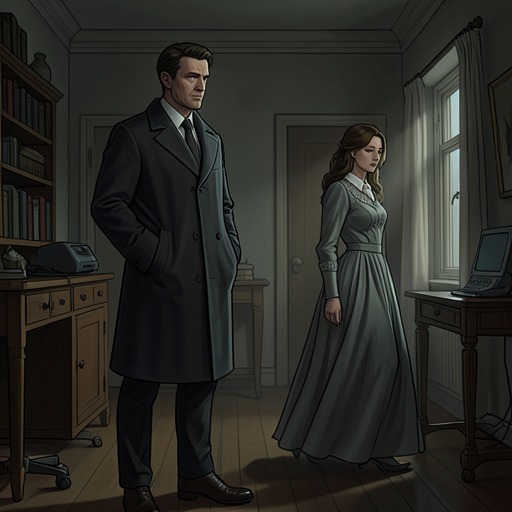
The division becomes acute during the final examination, when the question of what is most precious is repeated until the unnamed narrator breaks down and says that he wishes he were dead. He has arrived at a personal answer through despair, but the scene immediately unsettles any simple account of what that answer means. The Commandant leaves; Man, whom the narrator recognizes as his friend, comes close and places a Tokarev in his hand, asking him to shoot. The unnamed narrator cannot hold the pistol upright by himself, and Man has to close his fingers around its grip. The exchange makes the divided self bodily and consequential: the narrator is asked to act through a hand he cannot control alone, in a relationship that binds the two men even as it places a weapon between them. At this moment, the narrator sees himself as both the child within the man and the man within the child. The image gathers his sense of being divided from birth, his painful history with The Father, and his country’s imposed partitions into a single recognition of a self that cannot be reduced to one answer. The examination does not produce a clean reconciliation. Instead, the narrator’s understanding comes through the contradictions in the scene: a friend’s apparent offer of death is also an expression of concern, and the demand that the narrator act is entangled with the Commandant’s authority over what can happen to him. The answer that completes the reeducation is nothing. The unnamed narrator later calls this one word the completion of his education, but the insight does not make his circumstances bearable or restore him to society. He is a graduate of reeducation with no place in the revolutionary order, and he recognizes that he and others like him cannot be represented there. The end of physical pain therefore brings a different kind of knowledge: pain passes, but awareness of exclusion remains.
Man and the Mark of Brotherhood
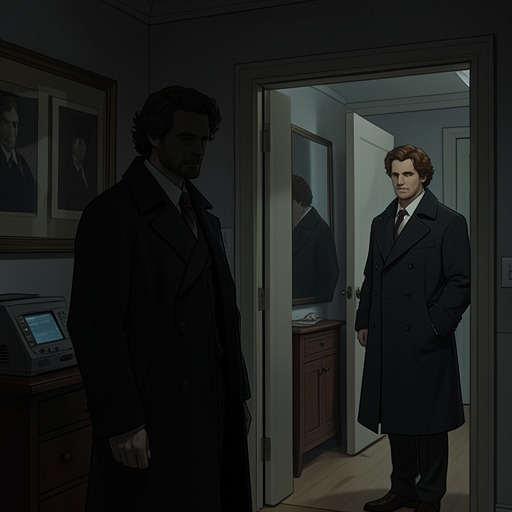
Man is central to the narrator’s divided identity because their bond survives injury, political conflict, and separation. In the examination room, the narrator sees the disfigurement of the friend whose face he had not seen at such close range in years. The face has changed, but the tears and the sound of Man’s voice allow the narrator to recognize the brother of his youth. His memory preserves the friend’s former face; the present scene forces that memory into contact with the damaged body before him. Their shared history is made visible by a red scar, the mark of their brotherhood. The narrator and Man show each other their hands, and the scar remains the mark on their body through everything they have endured. That shared mark does not erase their separate suffering or restore the past. It provides evidence of continuity: the division within the narrator has not severed the relationship that joins him to a friend who has also been transformed by what happened. Before the unnamed narrator leaves, Man gives him their battered rucksack and their copy of Asian Communism and the Oriental Mode of Destruction. The book has come apart at the binding and is held together by a rubber band; Man nevertheless presses it into the rucksack, explaining that it can serve if either of them needs to send the other a message. The object is at once damaged and preserved, like the relationship it accompanies. Its practical purpose makes their bond extend beyond the immediate examination room, while the shared possession carries a history that neither man can simply leave behind.
Living Within the Contradiction
The narrator’s final political insight turns on two nearly identical formulations of independence and freedom. One is the revolutionary slogan in its official, inspiring sense; the other, as the unnamed narrator understands it, is the same promise turned inside out. A revolution that fought in the name of those ideals has made them worth less than nothing by depriving defeated people of the freedom it claimed to secure. He sees this reversal not as an exceptional failure but as a pattern: former revolutionaries can become imperialists and occupiers, and a movement can learn to abuse the ideals that once animated it. This recognition does not release the narrator from doubleness. He describes himself as both himself and himself, a man of two minds able to grasp the joke because he can hold the opposed meanings together. The people around him have repeatedly wanted him to separate into one thing or another; Man is the exception. Their red scars and the exchange of the rucksack affirm a connection that can persist without requiring either man to deny what has divided them. The unnamed narrator must still leave Vietnam by water. His departure is not presented as a desired escape or a solution to the split: it is what he must do because the revolutionary society has no place for him. The divided identity thus ends this portion of his story neither cured nor overcome. It becomes a way of seeing how private identity and national history repeat the same coercive demand for a single answer—and how acknowledging the contradiction may be more honest than accepting the answer imposed from outside.