The narrator’s professional conflict with Auteur
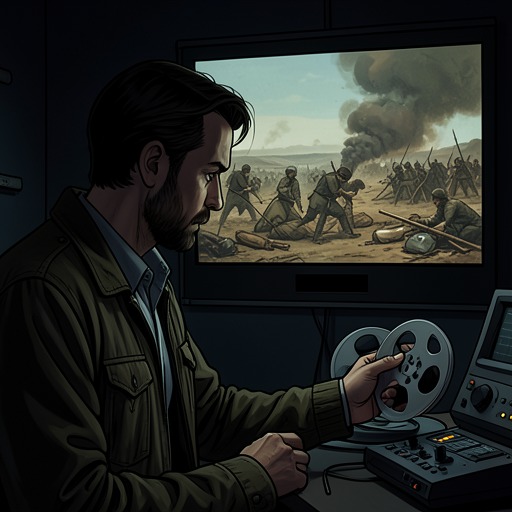
The SympathizerThe narrator’s professional conflict with Auteur is a contest over both the craft of filmmaking and the authority to represent Vietnamese people. The narrator presses for Vietnamese characters to speak and act as people rather than as scenery or spectacle; Auteur treats that challenge as an intrusion on his expertise. A brief opening toward collaboration follows, but the dispute sharpens during production over pay, Mai’s rape scene, and the way Vietnamese bodies are made to serve the film’s effects.
First Encounter and Dispute over the Screenplay
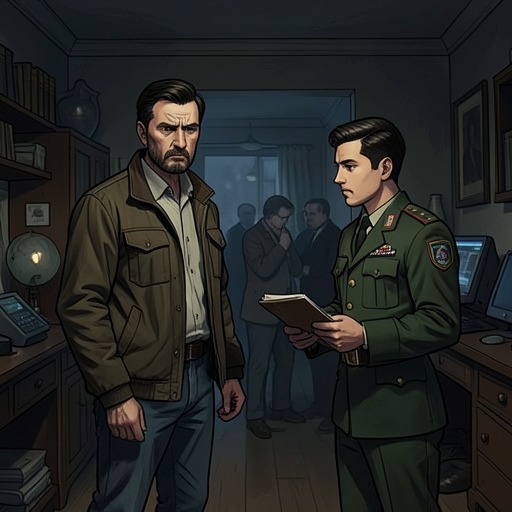
The conflict begins when the narrator receives Auteur’s screenplay for The Hamlet and reads its portrayal of a Vietnamese hamlet as a fantasy of heroic American soldiers facing King Cong and his guerrillas. At the meeting arranged by Violet, the narrator encounters a dismissive manner even before he meets Auteur. Her clipped speech and refusal to make eye contact lead him, already unsettled by the crapulent major’s death and the apparition of his severed head, to suspect that she sees him chiefly through his race. His sense of being treated as foreign despite his American documents makes the meeting more than a disagreement about a script: the question of who can speak for Vietnam is already present in how he is received.
Auteur initially invokes his research, citing published accounts of Vietnam and claiming knowledge of Vietnamese psychology. The narrator answers with a concrete criticism of the screenplay: whenever Vietnamese characters have speaking parts, they scream rather than speak. He points to pages throughout the script where this pattern occurs, then writes AIEYAAHHH!!! across the screenplay’s cover to demonstrate what the script has reduced their speech to. The gesture turns a technical note into a challenge to the film’s entire distribution of voice.
The narrator also argues that a film set in Vietnam would be more believable and authentic if its Vietnamese characters were allowed to say something, rather than being represented by directions that villagers speak in their own language. He suggests that even heavily accented English would give them more presence, and questions the screenplay’s lack of a love interest for its Green Beret. These objections concern both realism and the narrowness of the story’s attention: Vietnamese people are present in the setting, but the script gives them almost no language, while American soldiers receive the dramatic focus.
Auteur responds not by addressing these points on their merits but by asking how many films the narrator has made. When the answer is none, he dismisses the suggestions as cheap ideas and orders him out, telling him to return after making films of his own. The narrator later describes Auteur as seeking approval rather than criticism. That judgment captures the imbalance of their first meeting: Auteur has solicited comments, but appears to expect affirmation of his authority, not a consultant’s substantive challenge.
From Rejection to Consultation
The conflict briefly changes course when Violet calls the following week. She says Auteur has reconsidered and sees usable ideas in the narrator’s notes; she also reports that he respects the narrator for standing up to him. The production now needs someone to advise on Vietnamese matters and work with refugees from Vietnam who will appear as extras in the Philippines. Its existing research covers history, costumes, weapons, and customs, but Violet says it lacks the human touch the narrator can provide.
The narrator accepts the opportunity despite its underpaid terms. The job promises several months of work, with room and board included, and offers a respite from his American refuge. He also hopes to save money to support the crapulent major’s widow and children, to whom he had been able to give only fifty dollars at the funeral. The arrangement therefore gives the narrator a practical reason to work with a production whose representation he has already criticized. It does not remove the original disagreement; it brings him inside the production, where he can intervene in the treatment of the extras.
Production, Pay, and the Mai Dispute
In the Philippines, the narrator handles the extras’ practical needs: wardrobe, scene schedules, food, weekly wages, and filling assigned roles. The roles themselves reproduce the film’s unstable categories of friend and enemy. Civilian extras may be treated as possible Viet Cong and killed; South Vietnamese soldiers may be read by American characters as either allies or threats. Many refugees are familiar with the vulnerability built into these parts, but they resist playing Viet Cong. The narrator persuades Violet to double the pay for those who take the roles, using compensation to address a problem that the production’s casting has created.
The pay dispute contributes to Auteur’s irritation, but the deeper rupture comes over Mai’s rape. The narrator asks whether the scene is necessary, objecting to what he sees as its heavy-handed use of sexual violence to shock an audience. Auteur defends it as something that happens in war and as an obligation of the filmmaker. He also attacks the narrator as a sellout for helping a white filmmaker. The accusation turns their professional disagreement into a personal one: the narrator is condemned both for criticizing the film and for participating in its making.
The narrator rejects the label and answers with anger about American promises of friendship and respect. He acknowledges that he belongs to the losing side as he presents himself, but argues that belief in those promises was not proof of foolishness or betrayal. Auteur repeatedly interrupts and insults him, attacking his education and his right to have an opinion. The narrator eventually responds with an obscene provocation; Auteur threatens to kill him and describes gouging out his eyes with a spoon. Violet later tells the narrator that Auteur threatens people habitually and treats it as a figure of speech. The narrator refuses that easy separation between words and consequences, particularly when the production is itself preparing to stage violence as entertainment.
Work Continues amid a Broken Relationship
The narrator is not present for the filming of Mai’s rape. Only Auteur, selected crew members, the four actors playing rapists, and Asia Soo are there. He later sees the scene in a Bangkok theater, a year afterward. His absence matters: he has objected to the scene, but his consulting position gives him neither control over its production nor immediate access to its result.
Two weeks after the confrontation, he witnesses James Yoon’s water-cure scene. Yoon is stripped to the waist and strapped to a plank balanced on an extra playing a dead militiaman; the same four men who raped Mai are assigned to torture him. Auteur explains the scene to the extras through the narrator, although he does not look at him and the two men are no longer on speaking terms. The narrator remains useful as an intermediary even after Auteur has broken off direct professional communication. The episode leaves the conflict unresolved: the narrator has gained a place from which to advocate for Vietnamese participants, but not the authority to determine how the film represents them. Their estrangement exposes the limits of consultation when the filmmaker retains control over the story, the images, and the violence staged for the audience.