Vietnam War
The SympathizerThe Vietnam War is presented as both a military collapse and a crisis of belief: as the South Vietnamese front disintegrates, the narrator records the regime’s reversals for Man while feeling the human cost they reveal. The war’s ending does not bring peace so much as expose the damage, abandonment, and divided loyalties left in its wake.
Collapse and the April Crisis
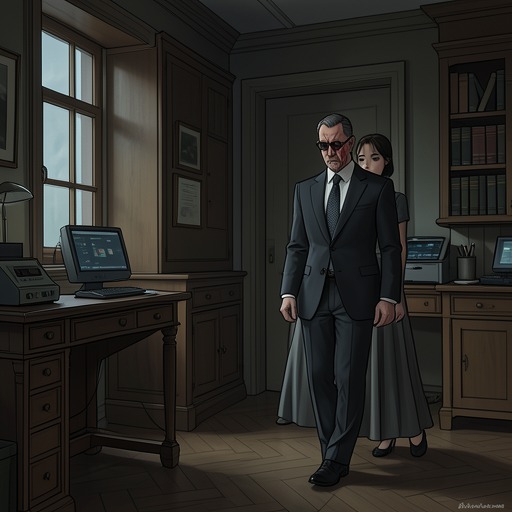
The account opens in April 1975, with the narrator awaiting the war’s end inside the General’s villa, where he has lived for five years. The walls are topped with rusted barbed wire and glittering broken glass; the room he occupies there anticipates the isolation cell in which he later writes his confession. April carries opposite meanings at once: it marks the end of a long war, but the narrator doubts that what follows can properly be called peace. The conflict is ending not as a clean resolution but as a body losing its limbs.
The General, previously a man who could always find something to do, is suddenly unable to act. Since the northern front collapsed weeks earlier, he has appeared at the narrator’s office or room with increasingly bleak reports. The pleasant coffee town where the narrator grew up has been sacked; the president has ordered troops defending the Highlands to retreat; and major cities have fallen. The General, who had trusted in the French and American models and in the mission they claimed to serve, becomes sleepless and visibly shaken. His loss of confidence is personal as well as political: the military reversals have made his former certainties impossible to sustain.
The retreat turns civilians into casualties of the regime’s collapse. As people flee by barges and boats, soldiers shoot them in the back; thousands die, while others face thirst and exposure at sea. The narrator also reports that their own soldiers rob and rape civilians. His intelligence work requires him to photograph the reports secretly and pass them to Man, his handler. Those accounts serve the revolutionary purpose of documenting the regime’s erosion, yet they also move him. He thinks of his dead mother as one of the poor people caught in war, and of himself as her poor child: people who were never asked whether they wanted a war or its consequences.
The military dependence behind the collapse sharpens the sense of betrayal. The South Vietnamese had received American weapons, planes, tanks, ammunition, fuel, and spare parts, but when they requested more money, their American benefactors refused. The General observes that what is given for free can prove exceptionally costly: the equipment supplied by the United States still required American money and matériel to keep it operating. The narrator’s image of needles supplied without the drug makes the relationship feel less like protection than dependency. The refusal arrives as the regime is losing ground, turning an alliance once described as friendship into another source of disillusionment.
Competing Accounts of Defeat
The war’s collapse is also a contest over who may explain it. At a wedding reception in a Chinese restaurant in California, the Anti-Communist Congressman welcomes two young Vietnamese people as fellow Americans and presents their displacement as temporary bad luck. He praises their soldiers and argues that the United States would have secured victory had Congress continued its support. He blames Democrats, the media, antiwar activists, students, and radicals for weakening America, while casting Vietnamese refugees as evidence of the country’s promise as a land of freedom, independence, and welcome. The speech offers comfort and political utility at once: the lost homeland can be imagined as recoverable, and American intervention as a common cause whose failure belongs to domestic opponents.
The General’s fundraising effort makes that account materially consequential. With the Congressman’s help, he attracts moderate donations from organizations and well-connected Americans, presenting support for South Vietnamese veterans as a debt owed to former allies. The money is routed abroad to Thailand, where its value in baht can cover food and clothing for a clandestine army made up of refugees; Thai security forces supply weapons and ammunition with American funds. The public language of humanitarian assistance and gratitude therefore overlaps with preparations for renewed armed action. Exile is not merely the aftermath of defeat in this account: it becomes the social and financial base from which the General hopes to continue the struggle.
Other American explanations turn the defeat into an argument for greater violence. At a gathering with the General, Richard Hedd claims that the United States lost because it fought a war of attrition rather than one of obliteration, and he presents this contrast as a difference between Western and Oriental attitudes toward life. The General replies that the Orient has an inexhaustible supply of people; Hedd then generalizes that life is cheap in the Orient. The narrator recognizes that Hedd’s categories can describe him only by flattening him into a type: the book classifies Vietnamese people as either radical intellectuals beyond American influence or young admirers of America who might be cultivated. The narrator sees himself as composed of many pages, not a single legible category. The war’s explanation thus repeats its political struggle: American commentators claim authority to define Vietnamese motives even as the Vietnamese characters expose the limits and violence of those definitions.
War on Screen and the Politics of Representation
The film production turns the Vietnam War into a second battlefield, one fought over who can make the conflict visible and whose experience counts as its reality. Working as a technical consultant, The unnamed narrator comes to understand that he is not simply assisting an artistic project: he is inside a work of propaganda. The production is being filmed in the Philippines, whose martial law, armed constabulary, and US-backed suppression of communist and Muslim insurgencies make it an unsettling substitute for Vietnam. The setting is not a neutral backdrop. It reproduces the political conditions of the war while allowing an American film to stage them at a distance.
The film’s scenes make Vietnamese people legible chiefly as figures in an American story. In one sequence, James Yoon’s character Binh is captured after a firefight with a patrol led by Pete Attucks. The script has the Viet Cong mutilate Attucks and subject Binh to water torture; on set, the torture is simulated, with a stunt performer breathing through a tube while water is poured over a cloth covering his face. The production’s distinction between simulated and actual suffering does not erase the effect of the performance: extras sweat as they enact violence, and the scene teaches the crew obscenities in Vietnamese while leaving the Vietnamese characters’ interior lives largely subordinated to the spectacle. The violence is staged, but the labor of representing it is bodily and real.
The production’s largest spectacle makes that imbalance explicit. For a bombing scene, trenches are filled with two thousand gallons of gasoline; the crew adds a thousand smoke bombs, phosphorous, dynamite, rockets, flares, and tracers to simulate a B-52 strike on King Cong’s lair. The director presents the sequence as an artwork that will outlast the war and become, in effect, the war itself. The unnamed narrator recognizes the truth and the arrogance in that claim: art can survive the people whose deaths it depicts, but survival does not grant it ownership of their experience. The dead and the extras cannot speak for themselves within the production’s terms, and the narrator’s efforts to add Vietnamese dialogue and adjust costumes leave the central machinery of the film intact. Authentic accents and clothing can be made exact while its emotions and ideas remain false.
The contrast between cinematic violence and wartime violence becomes sharper in the narrator’s memories of a 1968 massacre near Quang Ngai. A private’s testimony describes American soldiers killing animals, gang-raping four girls, and shooting fifteen elders, women, and children in a village square; the platoon leader’s report instead records nineteen Viet Cong killed, although no weapons beyond farm tools, a crossbow, and a musket were recovered. The gap between the testimony and the official report shows how the language of military action can conceal the identities of victims and recast a civilian massacre as combat. The war’s violence is not only what happens to bodies but also the account entered afterward into the record.
Man’s account of the war’s final hours offers another collapse of the categories that are supposed to distinguish friend from enemy. As liberation forces approach a bridge, his own side’s aircraft drops bombs that fall on his unit rather than the advancing tanks. Napalm engulfs the soldiers; Man survives with burns after the fire only licks him, and his wife finds him dying in a military hospital and secures the surgeons who save his life. The scene makes the war’s promised deliverance arrive through a catastrophic mistake, leaving Man alive but profoundly disfigured. Its personal aftermath resists the clean ending implied by military chronology: the war may be declared over, but its damage continues in the body and in the testimony that the survivor struggles to give.
Interrogation and the Afterlife of Wartime Violence
The war’s violence persists in the narrator’s recollection of a captured courier known as The Communist Agent. She had been caught with a list of police names concealed in her mouth; the narrator’s own name was on it, and he knew she was a courier for Man, though she did not know the narrator’s true identity. In the room called a movie theater when foreigners visited, the interrogation took place under fluorescent lights, with blackout curtains drawn and a Sony projector standing at the back. The crapulent major was nominally in charge, while Claude watched from beside the projector and the narrator stood with him. The room’s ordinary use as a theater and its concealed function as an interrogation space make the staging of violence part of the violence itself.
The three policemen turned questioning into sexual assault. They taunted The Communist Agent, mocked her appearance, and raped her in succession while the narrator watched. When asked her name, she answered that her surname was Viet and her given name was Nam; the policemen laughed, then continued. The narrator’s account lingers on the jostling men and the victim’s diminishing screams, making clear that this was not a search for information conducted through neutral procedure but an assault carried out against a captive who had no power to refuse. The narrator had objected that this did not need to happen and asked for time alone with her, but the episode as recalled leaves him watching as the policemen acted.
Afterward, the men poured soda into the bottle and left it inside her body. They joked over the act while she lay silent, and the room was washed down with buckets of water and mopped; The crapulent major later claimed that he had ordered the cleanup. Claude disclaimed responsibility for the bottle, saying the policemen had devised it themselves. That distinction does not undo what happened: the policemen acted within an interrogation organized by the police and overseen by a major, while Claude and the narrator witnessed the assault. The cleanup, the bottle, and the narrator’s remembered warm soda turn the scene into an image of violence that cannot be made clean merely by scrubbing the floor.
The recollection surfaces during the narrator’s confession under interrogation, as questions force him back toward events he has forgotten or tried not to articulate. Its delayed return connects wartime brutality to the later machinery of coercion: the memory is not a detached account of past violence but something recovered through a new interrogation. The episode also complicates the narrator’s self-image as someone who resisted the abuse. He objected, yet remained present; his confession must reckon not only with what the regime and its agents did, but with the distance between recognizing an atrocity and preventing it.
Killing and the War’s Moral Residue
The war’s reach extends beyond battles into the excuses and habits that make killing possible. The unnamed narrator distinguishes his reluctance from innocence: although he served in the police and repeatedly witnessed interrogations, he says he generally allowed others to use violence rather than inflicting it himself. The memories remain vivid—the Montagnard strangled with wire, the captive whose face turned purple, and The Communist Agent with evidence stuffed into her mouth. Their different ordeals converge in his recollection as a series of routes toward death, making violence less an exception than a system with many procedures and destinations.
Against that history, the unnamed narrator regards murder as disturbingly easy to justify. In a country where people on every side possess both an excuse and an instrument, appeals to God, country, honor, ideology, or comrades can function as uniforms worn over private vulnerability. He has had opportunities to kill but lacks the desire and the ready-made justification that others use to make violence feel necessary. His distinction is precarious, however: he acknowledges that political choices and police service have cultivated a violent part of himself, and that he has permitted violence when circumstances seemed to leave no clever escape.
That precariousness becomes immediate when The General expects him to arrange the death of The crapulent major. The unnamed narrator wants to correct the suspicion he helped create and knows that refusing to act could look like failure; The General, meanwhile, sees the major as marked by guilt and insists that the operation be carried out patiently. The assignment turns the war’s abstract machinery of justification into a personal test: the narrator must decide whether loyalty and action can excuse a killing, even when his own judgment tells him the target may not be a spy. In this way, the conflict survives military defeat as a demand that its participants keep converting uncertainty, guilt, and fear into violence.
Historical Record and Narrative Construction
The novel’s acknowledgments frame the Vietnam War as a history built from records, testimony, and acts of imaginative reconstruction. The author notes that many events in the novel happened, while also admitting liberties with detail and chronology. For the Fall of Saigon and the Republic’s final days, the cited sources include David Butler’s The Fall of Saigon, Larry Engelmann’s Tears Before the Rain, James Fenton’s account, Dirck Halstead’s White Christmas, Charles Henderson’s Goodnight Saigon, and Tiziano Terzani’s Giai Phong! The Fall and Liberation of Saigon. Frank Snepp’s Decent Interval specifically inspired Claude’s flight from Saigon and the episode with the Watchman, linking the novel’s invented intelligence plot to published accounts of the evacuation.
The sources also reach beyond the battlefield to prisons, interrogation, and the later consequences of war. The author identifies Douglas Valentine’s The Phoenix Program, We Accuse, and Truong Nhu Tang’s memoir among the materials consulted on South Vietnamese prisons, police, and Viet Cong activity, and cites Alfred W. McCoy’s A Question of Torture for the development of American interrogation techniques from the 1950s through the war and their extension into later conflicts. Accounts of reeducation camps informed the postwar sections, while a small exhibit at the Lao People’s Army History Museum in Vientiane supplied artifacts and weapons associated with Vietnamese resistance fighters who attempted to invade Vietnam. This range of sources makes the war’s narrative boundary porous: military defeat, coercive institutions, exile, and the disputed memory of resistance belong to the same historical aftermath.
The Movie’s Historical Echoes
The novel’s acknowledgments identify Apocalypse Now as the unmistakable inspiration for its fictional Movie, drawing on Eleanor Coppola’s Hearts of Darkness and Notes: The Making of Apocalypse Now, Francis Ford Coppola’s DVD commentary, and a range of biographies, interviews, and production histories. Articles about the film’s troubled production, including accounts of Ifugao extras, also informed the depiction. These sources place the Movie’s manufactured spectacle beside a real cinematic history of representing the war, while the novel’s own account asks who gets to shape that representation and whose experience it leaves at the edges.
The acknowledgments also point to a less visible aftermath: Vietnamese resistance fighters who attempted to invade Vietnam, whose captured artifacts and weapons appeared in a small exhibit at the Lao People’s Army History Museum in Vientiane. The fighters, the author notes, have been largely forgotten or never known. Their marginal place in public memory extends the novel’s concern beyond the combatants and civilians who appear in its central scenes to those whose participation barely enters the record.
Survival Beyond the Military Ending
The novel’s closing declaration, “We will live!”, refuses to let military defeat serve as the final measure of the Vietnam War. It does not erase the deaths, displacement, coercion, or bodily injuries that the narrative has traced; instead, survival becomes an insistence made in their shadow. Set against April’s uncertain passage from war to a peace the narrator cannot confidently name, the closing words leave the conflict’s aftermath open: the war ends as a military campaign, but its human and political consequences continue to shape the lives of those who remain.