Vietnamese boat people exodus
The SympathizerThe Vietnamese boat people exodus is both a mass departure from Vietnam and the novel’s test of what revolution means to the people it claims to serve. The unnamed narrator first encounters the exodus through refugees gathered at the Bataan refugee camp, then through the scattered lives of exiles in the United States. At the end of the novel, he and Bon prepare to take to the sea themselves. Their departure remains uncertain, but the words they carry insist on a future beyond survival alone.
Causes and Background
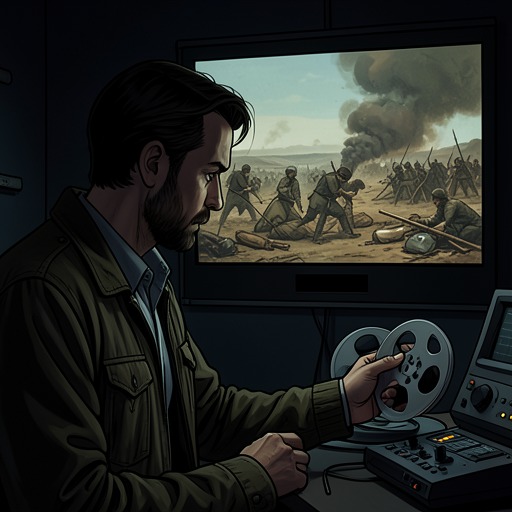
The exodus follows the revolution’s victory and the displacement that succeeds it. The unnamed narrator hears competing accounts of conditions in Vietnam while working on The Hamlet, a film being made with Vietnamese refugees as extras. After visiting the Bataan refugee camp, he recruits one hundred people for the production, offering a dollar a day. Their physical hardship and willingness to accept the pay without bargaining make visible how little choice their circumstances leave them.
One of the extras, a lawyer of aristocratic appearance, gives the narrator a compressed account of political change: before the communists won, foreigners had victimized, terrorized, and humiliated the Vietnamese; now, she says, their own people do so. Her bitter comparison unsettles the narrator. The revolution’s victory has not ended the experience of coercion, but transferred its agents. The refugee’s testimony also gives the narrator a perspective absent from the competing claims of political authorities: people are fleeing the country that the revolution says it has liberated.
The General interprets the flight as evidence that the new government is purging the country. He shows the narrator newspaper clippings describing drowning, pillage, rape, and possible cannibalism, and reports that only one boat in two survives the crossing from Vietnam to nearby shores, with storms and pirates sinking the others. The narrator records his doubts in a hidden message to Man, asking whether the reports describe real events or propaganda. The uncertainty does not make the refugees’ departure less consequential. It reveals how exile itself becomes contested evidence, claimed by opposing political narratives even as people risk their lives to leave.
The Crossing and the Refugees’ Testimony
The novel first shows the boat people from the narrator’s position on shore. At the camp, he describes people with mangy hair, chapped lips, crusted skin, and swollen glands, their desperation apparent in their acceptance of the low wage. The narrator’s account emphasizes not only deprivation but the loss of bargaining power: people accustomed to negotiating now accept what is offered because the conditions of flight have left them with few alternatives.
Their presence also unsettles the narrator’s effort to put his own past at a distance. He has been trying to live with the guilt surrounding the crapulent major’s death, but the refugees’ testimony brings the country’s continuing suffering back into view. The narrator asks what is happening at home and what he himself is doing abroad. His questions expose the gap between his assigned role among the exiles and his ties to the political struggle he has left behind.
The refugees’ journeys are dangerous before they reach a camp or a sponsor. Reports shown by the General describe boats attempting to reach Hong Kong, Indonesia, Malaysia, and the Philippines, with storms and pirates making the passage deadly. The narrator does not verify the reported survival rate, and his secret message explicitly leaves open whether the accounts are propaganda. This tension matters: the narrative neither turns the General’s clippings into unquestioned fact nor dismisses the exodus as political fabrication. Instead, the narrator’s uncertainty becomes part of his developing recognition that flight is itself a vote against the conditions people leave.
Exile and Dispersal
The exodus continues after arrival. In a letter marking the first anniversary of Saigon’s fall or liberation, the narrator describes refugees’ departure from the camp and the sponsorship required for resettlement. Sponsors might be former employers, military advisers, lovers, churches, or even distant acquaintances. Those without immediate benefactors had to plead for support; families might leave together, while others were divided and sent to different places. Many refugees were dispatched to states whose names were unfamiliar to them, and they exchanged addresses and telephone numbers before leaving, hoping to learn where jobs, welfare, and relative safety might be found.
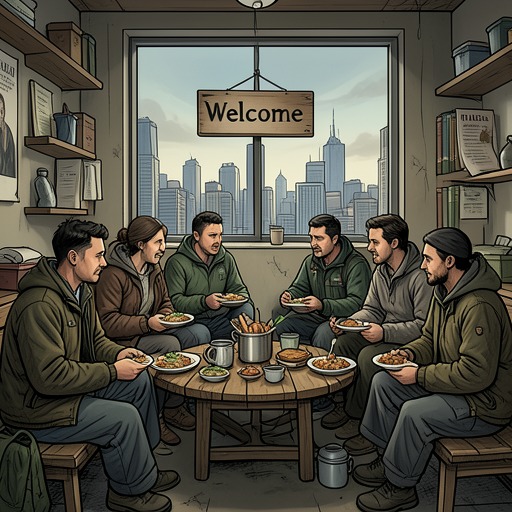
The narrator imagines what the refugees might have become if they had been allowed to settle together: a self-sufficient community with its own trades, professions, religions, political disagreements, and representatives. Instead, bureaucratic dispersal scattered them across the country. They nonetheless found one another again, forming small groups in basements, churches, backyards, and at beaches. These gatherings preserved communal life without restoring the homeland. Food could evoke the past but also mark its absence: reliance on Chinese markets altered familiar dishes, and the refugees missed the fish sauce that gave their cuisine its characteristic variety and complexity.
Resettlement also takes the form of precarious work and constrained support. The narrator finds a sponsor through Professor Hammer, who secures him a clerical position in a university department and gathers money for his move. The narrator uses the funds for a bus ticket, a motel, an apartment deposit, and a used car, then searches for a sponsor for Bon. Bon finds part-time work as a church janitor, paid in cash, and receives welfare. The crapulent major, meanwhile, works as a gas station attendant while his wife sews in a sweatshop. These individual arrangements show the exiles’ practical resourcefulness, but also how military service, education, and professional experience fail to guarantee stable work in the country where they have resettled.
The Narrator’s Imminent Departure
At the novel’s close, the unnamed narrator and Bon prepare to join the exodus they have previously encountered from the outside. Their passage is part of a larger movement: the narrator describes tens of thousands of people taking to the sea as refugees from a revolution. They have paid for their passage with gold taken from the commissar, hidden in the false bottom of the narrator’s rucksack. The gold is exchanged for a shared cipher, and the manuscript becomes the heaviest thing they carry after it—a record meant to represent them against those who have represented them without their consent.
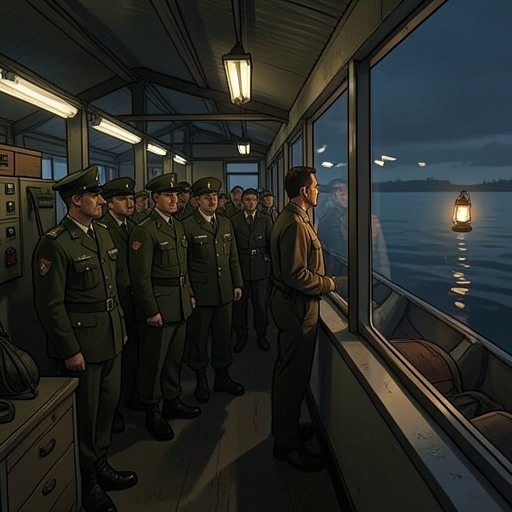
The escape plan depends on secrecy and coordinated movement. Families will leave homes across Saigon as though taking trips of less than a day, travel by bus for three hours to a village, and meet a ferryman at the riverbank. A coded question about an uncle’s funeral and its prepared reply will identify the travelers. The unnamed narrator, Bon, the navigator, and the navigator’s wife will cross by skiff to a hamlet, where the rest of the navigator’s clan will join them. Farther downriver, a fishing trawler designed for 150 passengers will carry the group; almost everyone will hide in a hold built for only a third that number. The navigator warns them that it will be hot, foul-smelling, and difficult to breathe in the crowded space.
The escape is not presented as a completed rescue. The navigator estimates the odds at fifty-fifty, based on having heard from only half of those who fled. The narrator and his companions accept the risk, aware that even the manuscript may not survive the journey. Their plan makes the novel’s central conflict concrete: the revolution that promised independence has become a power from which they must flee, while the act of leaving may cost them their lives. Yet the closing resolve is not simply despair. The unnamed narrator and Bon remain committed to a revolutionary future, even as they reject the present regime’s claim to speak for them. Their departure joins personal survival to a final act of self-representation.