Antoinetta Wright
The Tale of the Vampire BrideAntoinetta Wright is the mother whose authority, beauty, wit, and religious faith frame the Wright family’s passage from privileged domestic life into supernatural captivity. She begins as a woman who polices propriety and marriage, yet ends as a prisoner who sacrifices herself to preserve Glynis Wright’s moral and emotional freedom. Her tragedy lies in that reversal: the mother who once tried to direct her daughter’s future finally recognizes that survival depends on Glynis’s ability to reject every imposed role, including that of Vlad Dracula’s bride.
Identity and Family Position
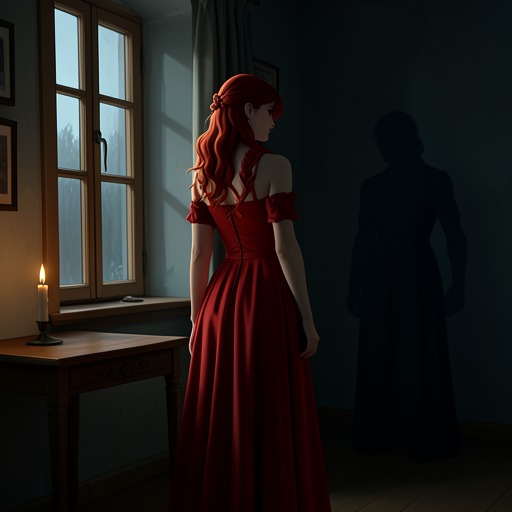
Antoinetta Wright is presented as a dignified aristocratic mother seated opposite Edric Wright in the family carriage. Her bronze-colored hair, Mediterranean-blue eyes, fine features, and lingering illusion of youth make her strikingly beautiful, while her sharp tongue is described as quicker and deadlier than a sword. That combination of elegance and verbal force defines her domestic presence. She is not passive within the family; she reprimands, judges, comforts, and intervenes, even when the carriage ride leaves her exhausted.
Her relationship with her daughters contains both tenderness and discipline. When Glynis Wright gives an improper answer, Antoinetta Wright immediately chides her, insisting that a young lady should observe the expected standards of speech and conduct. She then turns her attention to May Wright, who is pale, sickly, and frightened by the mountain journey. Antoinetta Wright comforts May while urging Edric Wright to correct Glynis, revealing a household structure in which maternal labor includes both emotional care and the enforcement of social decorum.
Antoinetta Wright’s voice also appears through an unfinished letter addressed to Sir Andrew Wright. The letter is associated with June 9 and presents her as a mother attempting to communicate with a son while events around the family are becoming increasingly difficult to record. Her later diary account, identified as The Journal of Lady Antoinetta, gives her a more direct narrative presence: she writes from the castle dungeon, turning personal testimony into a record of captivity, guilt, faith, and sacrifice.
Marriage, Gender, and Maternal Control
Antoinetta Wright initially represents the social expectations that constrain Glynis Wright. Glynis expresses the wish to live as a woman with the freedom conventionally granted to men, without the restrictions attached to female respectability. In response, Antoinetta Wright’s position is summarized through the warning that Glynis does not want to become a wanton woman and merely wants to be a man. The statement reduces Glynis’s demand for autonomy to a problem of improper femininity, showing how maternal concern has absorbed the language of the patriarchal order.
The conflict becomes personal because Antoinetta Wright has been determined to find Glynis a husband. During her imprisonment, she recognizes that this pressure helped make Glynis vulnerable to the marriage proposed by Vlad Dracula. Her retrospective guilt is explicit: she asks why she did not allow Glynis to live her own life and find her own way, and why she was so determined to arrange a husband for her. The bitter consequence is that Glynis becomes the bride of the Prince of Darkness, turning ordinary marriage pressure into supernatural possession.
This development gives Antoinetta Wright a complicated moral position. She is not the architect of Vlad Dracula’s violence, and she resists him when he claims Glynis. Yet her earlier insistence on marriage forms part of the chain of expectations from which Vlad Dracula’s coercive version of marriage emerges. Her later appeal to Glynis to fight him and become free therefore functions as a belated correction of her earlier control. She comes to understand that protection cannot mean choosing a daughter’s life for her.
Capture and Confrontation with Vlad Dracula
When Vlad Dracula confronts the Wright family, he asserts absolute authority over his country and declares that he possesses the power of life and death there. He summons Glynis Wright through a supernatural call, and Glynis feels her body struggling to rise toward him. Antoinetta Wright responds with immediate physical and verbal resistance, screaming that Vlad Dracula cannot have her daughter and never will. Edric Wright attempts to block the carriage doorway, while Antoinetta Wright clutches Glynis, making the family’s resistance a literal struggle over the daughter’s body.
The resistance fails. After Edric Wright tries to strike Vlad Dracula, Vlad Dracula knocks him down and announces that Edric Wright will die first. Antoinetta Wright and Glynis Wright scream as the gypsy guards drag Glynis up the steep staircase. Antoinetta Wright collapses while May Wright falls from her grasp, and she reaches toward Vlad Dracula for mercy. The scene destroys the family’s physical unity: the mother loses her husband, her daughter is carried away, and May Wright is left amid the violence.
Antoinetta Wright’s captivity is later rendered through The Journal of Lady Antoinetta. In the castle dungeon, she rises from the filthy floor when the door opens, straightens her posture, smooths her dirty skirt, and reminds herself that she is a Countess. The gesture is small but significant. Even in degradation, she preserves the aristocratic self-command that had defined her before captivity. Her dignity becomes a form of resistance against the prison’s attempt to reduce her to helplessness.
Recognition, Sacrifice, and the Mother’s Death
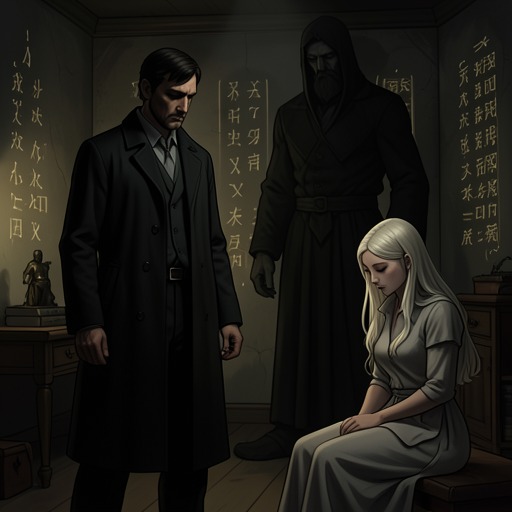
The most devastating encounter occurs when Vlad Dracula brings Glynis Wright into the dungeon. Antoinetta Wright initially sees a jeweled woman in a translucent light-blue gown, adorned with pearls and precious stones. Only after several moments does she recognize that the beautiful, inhuman creature is her own daughter. The transformation converts the daughter she once dressed and disciplined into the supernatural bride of Vlad Dracula, while the mother’s religious identity confronts the vampire body directly.
Antoinetta Wright raises a small crucifix and denounces Vlad Dracula as a monster, damned and cursed. Vlad Dracula recoils from the crucifix, but answers that he is not alone in his damnation. Glynis Wright also shrinks from the sacred object. Antoinetta Wright therefore witnesses not merely a physical transformation but the apparent severing of Glynis Wright from the Christian world: the daughter’s altered body now reacts to the crucifix as Vlad Dracula does.
The encounter briefly breaks through the vampire enthrallment. Glynis Wright’s fierce, mesmerized expression becomes fearful and desperate, and she asks her mother for help. Antoinetta Wright hesitates, then puts her rosary inside her blouse and opens her arms, knowing that the embrace welcomes death. Glynis Wright crosses the room with supernatural speed and falls into her mother’s arms. The embrace restores their relation as mother and daughter for one final moment, even though it also places Antoinetta Wright within reach of Glynis Wright’s hunger.
Antoinetta Wright does not condemn Glynis Wright for what she has become. Instead, she accepts responsibility for having helped create the circumstances that led to the transformation and asks Glynis Wright to fight Vlad Dracula, escape the castle, and do whatever is necessary to become free. Glynis Wright promises that she will escape. Antoinetta Wright then sets her journal aside, digs a small hole in the dirt, filth, and straw, genuflects, kisses her rosary, and buries it. The act resembles a final private religious rite performed inside a space controlled by vampiric power.
She tells Glynis Wright that, just as she gave her life once before, she gives her life once more. She promises to pray before the Father, the Son, and the Holy Spirit and to beseech the Blessed Virgin to watch over Glynis Wright’s soul. Then she instructs her daughter to drink and live, while reminding her not to forget the promise of escape. Glynis Wright feeds upon her mother. Antoinetta Wright’s death is thus both a victimization and a deliberate maternal sacrifice: she allows her body to sustain Glynis Wright while converting her final words into a command to resist Vlad Dracula.
Legacy and Narrative Significance
Antoinetta Wright’s death remains a defining memory for Glynis Wright. Later, Glynis Wright admits that she is ashamed for Andrew Wright to see what she has become and recalls Antoinetta Wright’s aghast expression when the vampire standing before her was recognized as her daughter. The memory preserves the wound of recognition: Antoinetta Wright is the first close family member forced to look directly at the contradiction between Glynis Wright’s beautiful appearance and her monstrous condition.
At the same time, Antoinetta Wright’s last appeal prevents that recognition from becoming only condemnation. Her buried rosary, her prayers, and her insistence that Glynis Wright escape provide a counter-language to Vlad Dracula’s blood power. Vlad Dracula treats Glynis Wright as property, orders what she may wear, and later commands her to conceal herself behind veils when meeting Andrew Wright. Against this logic of possession, Antoinetta Wright leaves Glynis Wright a promise centered on action and freedom.
Her role also clarifies the novel’s conflict between conventional and supernatural forms of marriage. Antoinetta Wright once urged Glynis Wright toward a socially acceptable husband; Vlad Dracula transforms that expectation into forced vampiric bridehood; and Antoinetta Wright’s final sacrifice asks Glynis Wright to break the entire structure of imposed belonging. Her maternal love therefore develops from regulation into recognition. She cannot undo the past, but she can acknowledge Glynis Wright’s separate will and make freedom the final condition of her blessing.
Antoinetta Wright is consequently more than a murdered mother or a background figure in the Wright family massacre. She is the character through whom family affection, feminine propriety, Catholic devotion, aristocratic dignity, and supernatural violence meet. Her last scene reverses the meaning of the blood rite imposed by Vlad Dracula: the same act that completes Glynis Wright’s vampiric existence becomes, through Antoinetta Wright’s consent and command, an act of memory and promised escape. Glynis Wright’s later rebellion carries the shape of her mother’s final instruction: to survive, to fight Vlad Dracula, and not to forget the people whose deaths made freedom possible.