Bride of Dracula status
The Tale of the Vampire BrideBride of Dracula status binds Glynis Wright’s new vampire existence to marriage, hierarchy, and captivity. Vlad Dracula names her his Bride and wife, claims authority over her movements and appearance, and insists that the other Brides are her sisters; the title offers a place in his household, but not freedom within it.
Definition and Imposition
Glynis’s status takes shape as she discovers what her changed body means. After she climbs a wall and asks what kind of creature she has become, she is told that she is a vampire. Vlad then gives that transformation a social and marital form: she is now his wife and Bride, while he is her Master. He declares that she cannot leave the castle grounds without his permission, that she must dress as he chooses, and that the Brides sleep together in the chapel tombs unless he allows otherwise. Her new identity is therefore not simply a name for being undead; it is a system of rules imposed on her body, clothing, residence, and conduct. Glynis rejects the arrangement from the outset. She says she does not want to remain at the castle and wants to return home, but Vlad forbids her departure and declares the matter settled. His claim that the Brides are her sisters and the castle her home recasts captivity as belonging. The contrast is especially sharp beside Glynis’s earlier wish to live as a woman without the constraints imposed on women: she has sought autonomy, only to find herself under a new master whose authority is backed by supernatural power.
Obligations and Enforcement
The title also makes Glynis’s place in the household an obligation enforced through the other Brides. When Vlad summons her, Cneajna tells her she must go to their husband and love him, then pulls her toward the door and insists that it is her duty. Glynis refuses, saying she will not let him touch her again. Cneajna answers that refusal will bring consequences not only for Glynis but for all of them: Vlad will starve the Brides, leaving them weak, ravenous, and vulnerable to madness. Their kinship as “sisters” thus operates alongside a coercive dependence on the blood supply controlled by their Master.
Glynis names the degradation plainly when she protests that she is neither Vlad’s slave nor his whore, and that she is not there to service him. Vlad rejects that distinction, asserting that her sole purpose is to serve him. The marital title does not protect her from coercion; it is part of the language through which he claims her body and denies her right to refuse. After intercourse leaves her struggling to stand, he orders the others to dress her and insists that she feed at the feast, presenting hunger as a further duty of her vampire identity. Glynis refuses to feed, but her weakened condition makes resistance costly: she can barely heal herself after days without blood.
Clothing, Kinship, and Public Identity
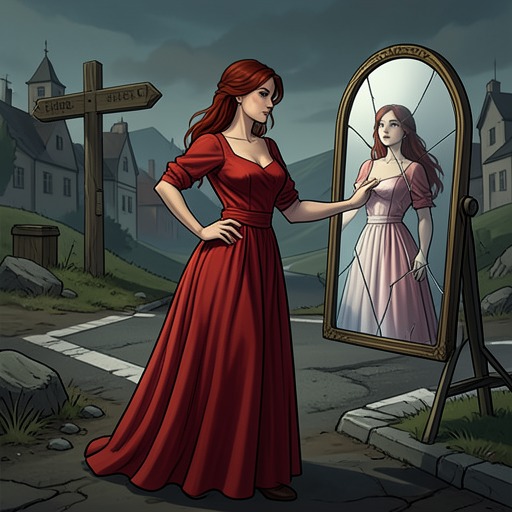
Bridehood is made visible through what Glynis is permitted to wear and how others are allowed to see her. Even before Vlad’s formal rules are fully clear, she takes off the gauzy clothing imposed on her and chooses a favorite gown of fine Italian silk, blue and without a corset. The relief she finds in dressing herself briefly gives her control over her body; Elina’s sharp insistence that she answer Vlad’s summons exposes how little that choice protects her from household authority. Later, Glynis describes the castle’s required outfit as humiliating, a reminder that the escape she once imagined from restrictive expectations has led into another system that dictates her presentation.
In Buda, Vlad extends that control into public life. He orders special veils to conceal Glynis’s beauty from Andrew Wright and forbids her from taking clothing or jewelry her brother might recognize, since he has told Andrew that everything was lost in the accident. Glynis is to wear dresses her mother bought in Paris and Erzsébet Dolingen’s jewels instead. The veil becomes a practical disguise and a daily constraint: frustrated by its layers of organza and lace, Glynis tears it from her face before Andrew’s expected arrival, knowing that she cannot truly see him through it. At the opera, however, Vlad presents her in a lavish black-and-gold dress. Beside Andrew and Vlad, she registers the contrast between her brother’s light and goodness and the darkness surrounding her husband, yet feels radiant and, for that evening, every inch the Countess Dracula. The title grants a public image of rank while the clothes and concealment remain subject to Vlad’s decisions.
The promised sisterhood among the Brides is likewise intimate but unstable. Ariana claims Glynis as a sister through Vlad’s blood and treats that connection as everlasting, while Glynis rejects the kinship and insists that Ariana is not her sister. The exchange makes the household’s family language inseparable from the bond that links its members to Vlad, rather than from Glynis’s own consent. Yet female closeness is not only a label imposed by the Master: Ariana feeds Erzsébet Dolingen mouth to mouth, transferring blood to sustain her, and Glynis witnesses an act of care that is at once bodily, intimate, and strange. Cneajna, too, approaches Glynis with tenderness, drawing her close and kissing her lips and brow, even as her affection coexists with jealousy over Glynis’s favored place in Vlad’s household. Bridehood therefore gathers women into a shared dependence and a language of sisterhood, but does not dissolve rivalry or make their loyalties simple.
That divided status reaches beyond the castle. At the opera, Ignatius suggests that embracing who she is could make Glynis a more powerful helpmate to her husband; she answers that she tries to be what Vlad needs, while recognizing that Ignatius is probing for information. Their private bond is tender and mutual, and Glynis promises to return to him despite the difficulty of slipping away. Vlad, by contrast, insists that he will share her with no one and that she belongs to him. His possessive claim does not erase Glynis’s attachment to Ignatius; it makes the marriage’s control more visible, as the role of wife and Bride competes with a relationship she chooses for herself.
Conditional Freedom and the Promised Rank
Vlad later presents departure from the castle as a concession: in Buda, Glynis will be allowed to hunt alone and learn the powers of the night. But the freedom comes with an explicit condition. He reminds her that the Beckoning compels her to come whenever he calls, and frames her time away as a test of loyalty, leading toward the position of his “true bride.” His plan to establish themselves in England makes the promotion more than a private honor: he expects Glynis eventually to stand as his first Bride in a new household. The title is therefore provisional as well as coercive, a rank Vlad offers to confer in exchange for obedience.
This promise clarifies the status’s central contradiction. Glynis may gain room to act beyond the castle walls, but Vlad reserves the power to summon her and defines advancement in terms of service to him. Even the prospect of becoming first among the Brides does not end her subordination; it would elevate her within the hierarchy he controls. Bridehood joins intimacy, privilege, and authority to captivity, making apparent freedom another stage in Vlad’s effort to secure her allegiance.