Cneajna
The Tale of the Vampire BrideCneajna is the First Bride of Vlad Dracula and the emotional center of his vampire household: a beautiful, mature, and terrifying immortal who acts simultaneously as wife, subordinate, teacher, mother, accomplice, and rival. Her significance lies in the contradiction she embodies. She offers Glynis protection, language, clothing, instruction, and affection, yet she also urges obedience to the husband who enslaves them. Her maternal love is genuine, but it exists inside the patriarchal and supernatural order that made her a captive, and that contradiction finally turns tenderness into violence.
Identity and Mortal Background
Cneajna was thirty-two when she crossed into the vampire world, older than Ariana, Elina, and Glynis at their transformations. Although she retained a youthful appearance, the mature lines of her face marked her as an older woman. Her sapphire eyes, long pale blond hair, full lips, narrow authoritative nose, and radiant beauty make her the most imposing of the Brides, but the narrative repeatedly places sorrow beneath that beauty.
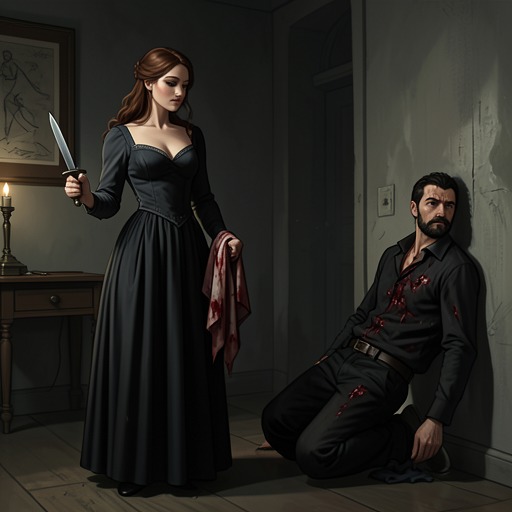
Her mortal life began in an aristocratic Hungarian family. She remembered a loving father, a kind and beautiful mother, and two elder brothers who became soldiers and leaders. Her marriage to István was arranged through King Matyas of Hungary, whose court favored the warrior. Cneajna initially refused the match but fell in love with István after meeting him. The marriage became a source of humiliation when Piroska, pregnant with István’s child and dressed in Cneajna’s clothes and jewels, mocked the childless wife. Cneajna attacked Piroska with a knife, first slashing her cheek and then stabbing her repeatedly until she was silent.
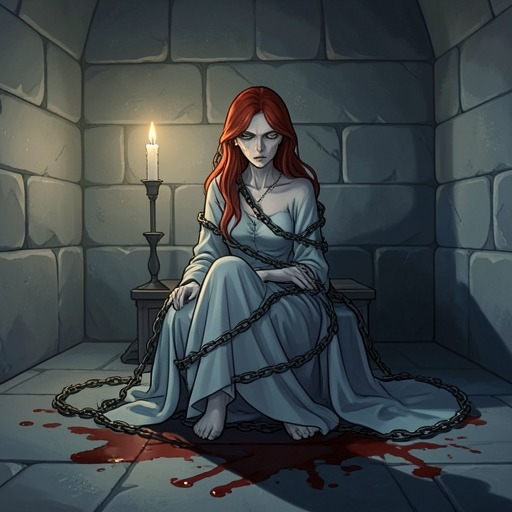
The murder led to imprisonment in a palace, where Cneajna eventually found a strange peace beside the Danube. There she met Vlad Tepes, son of Dracul. He was not repelled when she confessed that she was a murderess. Cneajna recognized that he was not mortal, seeing the same fiery quality in his eyes that she had seen in Erzsébet Dolingen, and she interpreted his bite and declaration that he had come to claim her as an expression of love. Her conversion therefore joins violence to recognition: Vlad accepts the crime that has isolated her, then turns that acceptance into ownership.
Mother of the Vampire Household
Vlad made Cneajna the first wife of his household, placing her above even Erzsébet, his earlier companion in vampire life. In return, she believed that he restored everything mortal life had taken from her: rank, jewels, beautiful clothing, children, beauty, and eternal life. She calls Ariana, Elina, and Glynis her children, and she imagines that the household may one day rise and rule as it once did. Her loyalty is thus not merely romantic. It is bound to recovered status, family, and the hope that vampirism has transformed deprivation into sovereignty.
Cneajna explains that Vlad gives her care of the Brides because her womb remained empty throughout her mortal marriage. Motherhood becomes the compensation for childlessness, but it is also an assigned duty within Vlad’s household. She teaches the younger women how to dance, fly, hunt, and serve their husband, turning the intimate language of motherhood into training for obedience. When Glynis resists the castle’s costumes and complains that she has escaped one restrictive society only to enter another, Cneajna insists that leaving for the night is a duty and that Glynis must feed. Her tenderness cannot release Glynis from the system it sustains.
Cneajna also mediates the household’s supernatural knowledge. She tells Glynis that vampire births differ: Ariana died as a mortal and later awakened as a vampire, Elina transformed gradually, while Cneajna and Glynis experienced sudden rebirth. She describes the madness that follows such a transformation and explains that a newly made vampire who never passes through it may have to be destroyed. Because Glynis survives that madness, Cneajna treats her as a child who can be taught rather than a danger to be eliminated. She gives Glynis a velvet cloak, draws her from her coffin, and repeatedly addresses her as a daughter.
Relationship with Glynis Wright
Cneajna’s bond with Glynis is the closest thing the castle offers to a protective family relationship. She promises to care for Glynis as her mortal mother would, arrange her hair, share dresses and jewels, and teach her the customs of their new existence. She speaks of Glynis as her sweetest child, and her physical gestures reinforce the claim: she touches Glynis’s chin, offers her hand, kisses her cheek, and later holds her beneath the curtain of her long blond hair. When Glynis leaves the castle for Buda, Cneajna’s forlorn face and cool cheek reveal that separation wounds her, even though she has helped enforce the obligations that make escape necessary.
Yet Cneajna is also the voice that translates Vlad’s commands into familial language. She kneels before her angered husband and pleads that Glynis is still human and unable to feed, but she does so by calling him Master. After Vlad punishes her, she warns Glynis that obedience is necessary because Glynis has now seen what he is capable of. Cneajna understands the danger more clearly than anyone, but her survival strategy is submission rather than rebellion. Her advice protects Glynis from immediate punishment while preserving Vlad’s authority.
Glynis’s departure reveals the limits of the maternal bond. In Buda, Glynis admits that she barely misses Ariana and Elina, while Cneajna’s teasing smile and bright laugh remain vivid. She knows that she would miss her vampire mother dreadfully, yet freedom from the castle where her family perished is more enticing than Cneajna’s affection. The feeling is not simple rejection. Glynis loves Cneajna and still recognizes that loving her cannot justify returning to captivity.
Cneajna’s care also extends to the household’s other wounded members. When Erzsébet is found impaled, Cneajna gently caresses her cheek and assures her that she is loved, while Ariana feeds Erzsébet blood through a kiss and Elina remains beside her. This scene presents the Brides as a female network of touch, nourishment, and shared suffering, but it does not make them free: their care takes place within the violence Vlad has created and under the authority of the husband who controls them.
Marriage, Obedience, and Political Appearance
Cneajna’s marriage to Vlad is sustained by a mixture of devotion, fear, gratitude, and political fantasy. She believes he restored her social position and gave her the family she had lost, but the same relationship demands that she kneel, plead, and instruct younger Brides to obey. Her identity as wife is therefore both a source of privilege and a mechanism of subordination. Vlad’s household grants her precedence over other women while denying her independence from him.
The politics of appearance make this structure visible. In Buda, Vlad orders special veils to hide Glynis’s changed face from Andrew Wright. Cneajna’s knowledge of the supernatural world allows her to speak the local language flawlessly, while Andrew Wright has only learned a little Magyar. Glynis understands this inherited knowledge as one of the gifts of the dark world and specifically associates it with her vampire mother. Cneajna is thus not merely a domestic figure; she is a cultural intermediary whose language and experience help the household pass through human society.
Her role also exposes how clothing and titles organize power. Glynis rejects the castle’s prescribed outfit and chooses her own Italian silk dress, but Vlad later insists on a veil, controls what she may take to Buda, and supplies the clothing she must wear before Andrew. Cneajna belongs to the same order: the first wife’s jewels, dresses, beauty, and maternal title are signs of rank, yet they are granted within Vlad’s design. The household’s apparent grandeur is a form of discipline made visible.
Conflict and Ending
Cneajna’s final conflict with Glynis emerges from the collapse of the household. When Vlad starves the Brides, Glynis protests that he cannot leave Cneajna and the others suffering. The consequences are stark: the three sisters become skeletal, frail, gray, and old, hiding from the flames while watching blood-filled Gypsies remain beyond their reach. The image strips away their supernatural beauty and reveals starvation as a punishment that attacks not only the body but also the identity built upon eternal youth.
Even in this crisis, Cneajna’s attachment to Glynis remains powerful. She reminds Glynis that she took her into her heart, helped Vlad create her, and called her daughter. When the two meet, Cneajna embraces Glynis, kisses her lips and brow, and holds her gently beneath her blond hair. The scene briefly restores the mother-and-child relationship, but it cannot erase the struggle over succession and possession that surrounds it.
Cneajna ultimately confronts Glynis as a rival within her own home. She sits upon Vlad’s throne with the golden stake behind her and tells Glynis that she will not be usurped. The maternal figure becomes the defender of household rank; the woman who once taught Glynis to survive now raises a bloodied dagger against her. Glynis survives the attack, and Cneajna later appears with a terrible wound in her neck, anguished but determined, while the other sisters stand with torches. Her ending is therefore neither a clean rejection of love nor a simple villainous betrayal. Cneajna remains bound to the family she helped create even as that family turns against her.
Cneajna’s tragedy is that she has learned to reproduce the structure that injured her. Mortal humiliation, imprisonment, and childlessness make Vlad’s promises of status and motherhood irresistible; immortality gives her beauty and children but preserves the logic of marriage as possession. Her affection for Glynis opens a space of female intimacy within the vampire household, yet her obedience to Vlad repeatedly closes that space. As First Bride, vampire mother, cultural guide, and final defender of her position, Cneajna shows how captivity can survive by disguising itself as family—and how genuine love may remain inside a system that must eventually destroy it.