Escape and Freedom
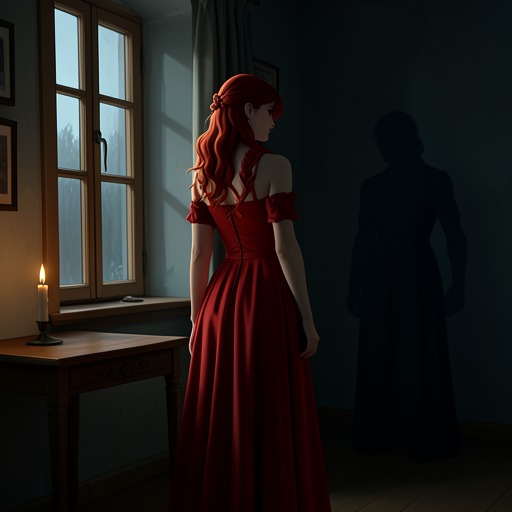
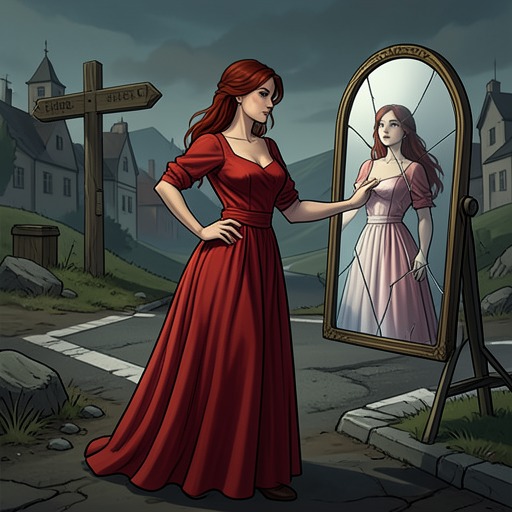
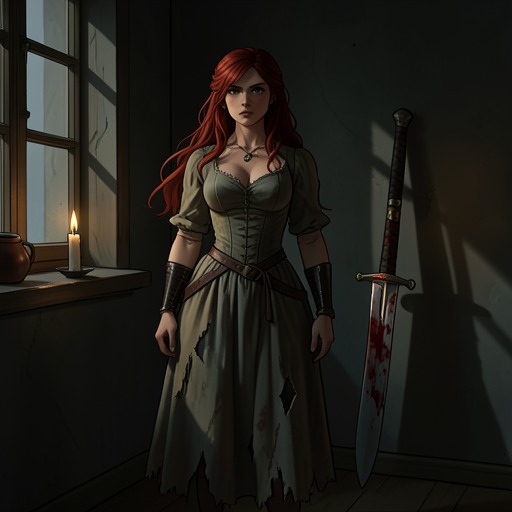
The Tale of the Vampire BrideEscape and Freedom is the governing purpose of Glynis Wright’s resistance to Vlad Dracula: first a promise to her dying mother, then a resolve to oppose both Vlad and the hunger that threatens to make her like him. The idea changes as Glynis changes. Although her captivity remains in place, she comes to understand freedom not simply as departure from the castle but as the ability to choose how she will act within it—and, eventually, to turn her strength and cunning toward escape.
A Promise Made Under Captivity
In the hours surrounding her mother’s death, escape becomes an obligation Glynis accepts aloud. Antoinetta Wright asks her to fight Vlad Dracula, get out of the place where she is held, and become free; Glynis promises that she will. The vow takes shape while the newly transformed Glynis is fighting a hunger that makes her mother’s heartbeat a summons to feed. Its circumstances matter: this is not a calm plan formed at a distance, but a commitment made under immediate bodily pressure, when obedience to hunger could destroy the person she most wants to protect.
Antoinetta’s faith and rosary mark a contrast between the mother’s spiritual resistance and Glynis’s predatory condition. Antoinetta places the rosary in a small hole in the dirty floor, while Glynis looks away from the brief, painful brightness she sees around her mother. The gesture does not free either woman from their circumstances, but it gives the promise a concrete setting: Glynis’s resolve is formed in a room of confinement, amid filth and straw, rather than in an imagined world already beyond Vlad’s reach.
After Antoinetta dies, Glynis understands her mother’s body and blood as a sacred gift rather than the desecration Vlad intended. She interprets the bond of birth and blood as the strength that will help her endure what he inflicts. This reverses the meaning of the feeding threat: Vlad had meant to make Glynis’s hunger violate her mother, but Glynis instead carries the death forward as a source of resistance. When she tells Vlad she wishes to join her sisters, she conceals the full force of that decision; the narrative makes clear that she believes Antoinetta, not Vlad, has won the deeper contest.
Freedom and the Vampire Transformation
Glynis’s later recollection of her former life gives the idea of freedom a different scope. She remembers her parents, sister and brother, her home in England, the family’s travels and deaths, and her own death and rebirth. With those memories restored, she recognizes that chains she once endured no longer bind her. Yet this release is not a return to human life: she describes herself as free to live forever, kill, feed, and do what is necessary to escape and gain ultimate freedom.
The passage holds liberation and danger together. The powers opened by her transformation enlarge what Glynis can do, but killing and feeding are not presented as uncomplicated signs of independence. They are abilities bound to the hunger and to the violent existence imposed on her. Her rebirth therefore supplies neither a completed escape nor a simple victory. It clears a space in which she can act, while leaving her to decide what kind of creature she will become and how to use the new capacities that make resistance possible.
Resisting Hunger Without Becoming Vlad Dracula
That choice becomes explicit when Glynis writes in the chapel tombs below the castle. After leaving the others to their passion, she records that she has no choice but to fight the hunger; she must defeat both Vlad Dracula and the hunger itself. Freedom here is not merely a destination outside the castle. It also names an inward struggle against the appetite that might turn her into a likeness of her captor.
The resolve is complicated by what happens later. In the aftermath of the throne-room carnage, Glynis accepts that she will surrender to the hunger, but insists on finding her own way and becoming stronger through that choice. Her course is therefore not a steady refusal of vampiric appetite. She moves from trying to resist it to accepting it without conceding that it should dictate her identity or allegiance. She remains Lady Glynis Wright, in her own account, even after yielding to the beast within her. The distinction between appetite and agency allows the text to preserve the cost of her transformation without treating surrender to hunger as surrender to Vlad Dracula.
Strategy and the Unfinished Escape
After the throne-room confrontation, Glynis identifies a new opening in her captivity. She believes Vlad Dracula has seen a glimmer of respect in her and is now enamored with her strength and cunning. Rather than mistake this change in his regard for freedom, she considers whether she can use it: if she is wise and clever, she may be able to turn his response to her into a means of freeing herself.
This final stage shifts the promise from endurance toward strategy. Glynis’s mother gave her a purpose; restored memory clarified what her past had cost; and her changing relation to hunger made it possible to distinguish survival from submission. Now she treats Vlad Dracula’s perception of her as a possible resource, not proof that he has relinquished control. The evidence leaves the escape itself unresolved: Glynis is determined and sees a possible route, but has not yet been shown completing it. Freedom thus remains both the end she seeks and a practice already underway—in the promise she keeps, the choices she claims, and her refusal to let captivity define the whole of her self.