The Beckoning
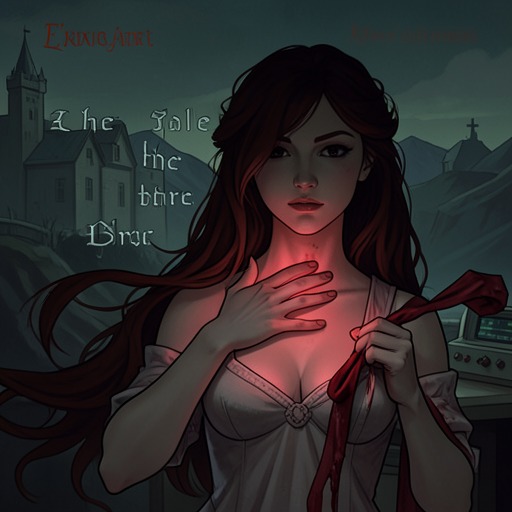
The Tale of the Vampire BrideThe Beckoning is the supernatural summons through which Vlad Dracula can compel Glynis Wright to return to him, converting their blood bond into a force she experiences in her body. Its decisive effect is not merely to remind Glynis that Vlad claims authority over her: when he calls from afar, pain overwhelms her resistance and drives her back to Dracula’s Castle. The episode at the tomb of Erzsébet Dolingen makes the mechanism vivid, while Vlad’s later instructions establish that the call is an ongoing condition of Glynis’s supposed freedom.
Nature and Operation
The novel gives the Beckoning a physical signature rather than a technical explanation. When Vlad calls Glynis away from Erzsébet’s tomb, pain tears through her abdomen and intensifies as the summons reaches her. Elina identifies what is happening and warns that the pain will worsen if Glynis does not go. Cneajna likewise senses Vlad’s power around Glynis and urges her to leave before he comes looking for them. Their responses establish that the force is perceptible to other vampires, even though its pull is directed at Glynis.
As Glynis leaves the graveyard, the surrounding night becomes hostile: the wind drives against her, and clouds gather over the moon. She hears Vlad’s voice and feels the call as an anchor lodged within her, its chain wrenching her forward. The imagery makes compulsion legible as bodily traction. Glynis hurls herself into the wind and moves rapidly through the landscape toward the castle; the narration presents her as following the pull, not choosing a destination freely. The scene does not specify a distance limit or a precise supernatural rule, but it shows that the summons can reach her away from Vlad and override her wish to remain elsewhere.
The Return from Erzsébet’s Tomb
The call interrupts a moment of female solidarity. Glynis has been with Erzsébet and the other vampire women, and has recognized herself as part of their sisterhood. That intimacy is abruptly broken when the pain begins. Elina steadies Glynis, while Cneajna insists that she must go because Vlad is calling and must not discover their gathering. The Beckoning therefore separates Glynis from the women who offer her comfort and returns her to the authority from which she is trying to make a life apart.
The journey ends at the great door of Dracula’s Castle, where the pain lessens enough for Glynis to fall into the hall. Vlad is there and directs her to follow him to the library. Still suffering, she reaches for him and asks to be released from the pain. She inadvertently clutches his medallion to keep from falling; the bond flares hot within her and then ebbs. The sequence links relief to proximity and contact with Vlad, while emphasizing that the call has brought her back before he chooses to address her. Once the force releases her, he brushes her aside and moves through the castle, leaving the compulsion’s effect distinct from any tenderness or reconciliation.
Command, Obedience, and Claimed Freedom
Vlad later makes the rule explicit. He tells Glynis that she now knows the power of the Beckoning and that whenever he calls, she must come to him. The statement turns the tomb episode from an isolated crisis into a condition of their relationship. His authority is not confined to the castle walls: he expects the bond to operate during their planned life in Buda and beyond.
Vlad presents this command alongside promises of greater independence. In Buda, he says, Glynis will be free to hunt alone and learn the powers of the night; he also frames the journey to England as a chance for her to rise to the position of his true bride. Yet the promised freedom is qualified by the non-negotiable demand that she answer every summons. The contrast exposes the difference between permission to act within Vlad’s plans and genuine autonomy. Glynis may be allowed to leave the castle, but the Beckoning keeps her reachable and subject to his call.
The supernatural force should also be distinguished from the household’s ordinary language of duty and obedience. Cneajna has earlier insisted that Glynis go to Vlad because it is her duty as the new Bride, and Glynis openly refuses to let him touch her again. That confrontation establishes social and marital pressure, but the later return from the tomb is marked by escalating pain, a sensed power, and involuntary movement. The novel thus presents overlapping forms of control without treating them as identical: a command can be resisted in speech, whereas the Beckoning makes refusal physically costly and, in this scene, unsustainable.
Narrative and Thematic Significance
Because Glynis records the episode in her own journal, the Beckoning is conveyed through the sensations and images of someone subjected to it: pain in the abdomen, the pull of an invisible chain, and the abrupt passage from the graveyard back to the castle. That account gives the rule emotional as well as plot significance. The summons interrupts a bond among the women and carries Glynis back to the person who claims her as wife, Bride, and possession. Its force makes the blood bond more than an abstract tie: it is an instrument that can govern movement and narrow the possibility of escape.
At the same time, the episode clarifies that compulsion does not erase Glynis’s awareness of captivity. She can identify the pain as Vlad’s power acting upon her, plead for its release, and register the bond’s flare and ebb when she touches his medallion. Vlad’s later promise of freedom in Buda therefore contains its own contradiction. The Beckoning permits distance only on terms that preserve his access to her; the promised independence remains shadowed by the certainty that his call can bring her back.