The Feeding on the Village Child
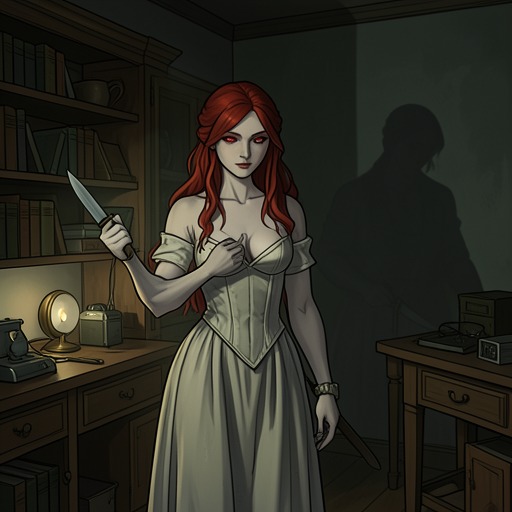
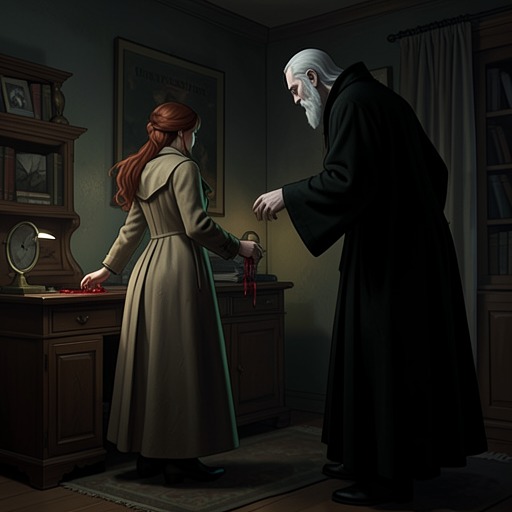
The Tale of the Vampire BrideThe Feeding on the Village Child is a brutal turning point in Glynis Wright’s struggle against her vampire nature: Vlad Dracula answers the brides’ starvation by giving them a three-year-old boy, and Glynis, despite resisting him and grieving for the child, ultimately feeds with the others. The episode makes hunger not an abstract curse but a force that turns a child’s trust and tenderness into a scene of consumption, while Vlad uses the aftermath to argue that Glynis is already like him.
Background and the Gift of a Feast
The brides have been promised food, but the previous night’s feeding has barely relieved their need. They are already pale and drawn, and hunger is growing within them. When Vlad enters carrying a sack over one shoulder, he presents its contents as a feast that will restore their bodies, youth, and beauty. His language makes the offering sound like a gift, but the sack conceals a child rather than an animal or an ordinary meal.
The boy is about three years old, with sun-browned limbs, brown hair, and wide eyes. The scene’s moral stakes are fixed in that small, vulnerable figure. Elina exclaims over his beauty, and Ariana kneels to pet him and touch his tear-stained cheeks. Their delighted attention initially resembles affectionate play; the knowledge of the brides’ hunger makes that tenderness ominous. Vlad does not conceal what he intends. He asks Glynis whether she wished to feed, then tells her to enjoy the feast and leaves the women alone with the child.
Glynis’s Resistance and the Brides’ Attention
Glynis clings to Vlad’s arm and protests that they cannot do this. Her fingers dig into his coat, but he answers with triumph rather than persuasion: they will. He vanishes, the chamber door slams, and his departure leaves Glynis physically unable to prevent what he has arranged. The previous night’s food has done little to quiet the brides’ hunger, and the need is already strong in Glynis as well as in her companions.
The women first make the boy comfortable. Cneajna embraces and kisses him; Ariana lifts him and spins him until he laughs; Elina cuddles him and sings to him. He plays hide-and-seek around the furniture, then runs to Glynis and wraps his arms around her legs. She lays a hand on his head but covers her face, unable to bear looking at him. The scene holds his trust beside her dawning horror: he is not merely a victim at a distance, but a child who seeks her out and greets her with affection.
When he runs from her, Glynis catches his shirt and pulls him into her arms. She kisses his cheek as her fangs descend, and he hugs her neck and kisses her back. She sinks to the floor holding him, while Ariana and Elina watch with bright, hungry eyes. Glynis tells him to sleep, her voice breaking into a sob. Elina says that Glynis has the right to begin because she is the first. The claim makes rank and appetite part of the scene: Glynis is not only the most reluctant participant, but is also assigned precedence among the brides.
The Feeding and Its Aftermath
Glynis holds the warm, sleeping child and can hear his heart and blood. She cries out in anguish, but Cneajna takes him from her arms. Glynis covers her face; when she looks again, Cneajna is tracing the child’s lips with her fingertips. Cneajna turns his head to expose his throat and says that this is their way. Then hunger takes over, and the brides feed. The account makes the transition from resistance to violence unmistakable: Glynis has tried to stop Vlad, cannot stop the others, and is herself part of the feeding.
Afterward, Glynis staggers through the castle, wanting to retch, but her undead body is already using the blood to restore her life. She pulls at her hair, dress, and body in distress, with no release from the agony. The feeding has satisfied the bodily need that brought the scene about, yet it leaves her horrified by what that satisfaction requires. Its consequence is not simply renewed strength but a deeper conflict between her revulsion and her participation.
Glynis finds Vlad reading an English book in the library and confronts him about giving them a child. He points to her glowing skin, sparkling eyes, and glistening hair as evidence that the boy’s blood is coursing through her, and claims she should not complain about something she enjoyed. Glynis strikes at him and calls him a monster. Vlad grips her wrists and tells her that she is what he is, forcing her down as he turns her accusation back upon her. She rejects his conclusion, but his taunt gives the feast its lasting psychological consequence: her horror at the act becomes a weapon he uses to make her question whether resistance can preserve her humanity.
Significance in Glynis’s Arc
The episode sharpens a pattern already present in Glynis’s experience of vampiric hunger. Earlier, she had drunk wine and ravenously eaten human food while starving, an attempt to answer a need that ordinary food could not satisfy. Later, she hunts independently and feeds from a farmer, choosing to take only what she needs. Against those scenes, the child feast is distinct in its coercion and its helpless victim: Vlad chooses the prey, supplies the brides, and leaves Glynis to face the consequences of his decision.
The scene also contrasts the child’s initial playfulness with the ritualized inevitability of the feeding. Kisses, embraces, and soothing words do not protect him; they make the transition from affection to predation more disturbing. Glynis’s intimate contact with him, especially her attempt to comfort him before the others feed, cannot undo her participation. Vlad’s subsequent accusation collapses the difference between his deliberate cruelty and her struggle against it, even as the narrative preserves that difference through her repeated protests, grief, and inability to stop the feast.