
Baretski's Dark Companion Arc
The Tattooist of AuschwitzThis subplot examines the strange, violent relationship between Lale and Stefan Baretski, from guard and prisoner to something almost like a distorted friendship.
increasing Bearing strength in each event
 decreasing
Bearing strength in each eventdecreasingObserving Baretski
Observing Baretski
Stefan Baretski is assigned as Lale Sokolov's personal guard. He is young, cruel, and proud of his SS uniform. Lale studies him carefully.
Finding a Weakness
Baretski loves to talk about himself and women. Lale uses this to manage the guard by asking questions and offering advice.
A Dangerous Companion
Lale knows Baretski can kill without warning. He learns to keep his face blank and his emotions hidden.
Sunday Shooting of Prisoners
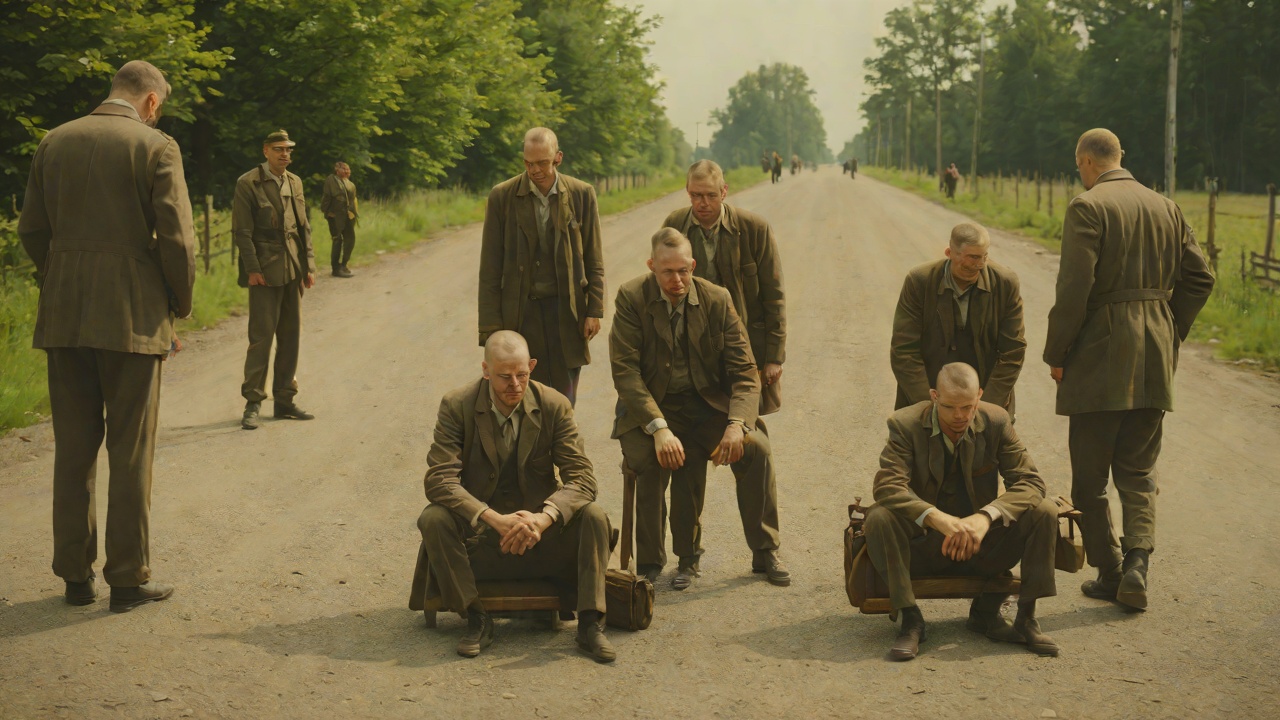
Sunday Shooting of Prisoners
On the road to Auschwitz, Stefan Baretski sees three exhausted prisoners sitting back to back. Without breaking step, he turns and opens fire on them.
A Lesson in Rage
Lale Sokolov freezes, then forces himself to catch up with Baretski. He understands that any gesture of compassion could make him the next target.
The Weight of Witness
Lale remembers the first time he witnessed such murder, on the night he arrived at Birkenau. The violence is not random; it is the daily texture of Baretski's world.
Soccer Game with SS
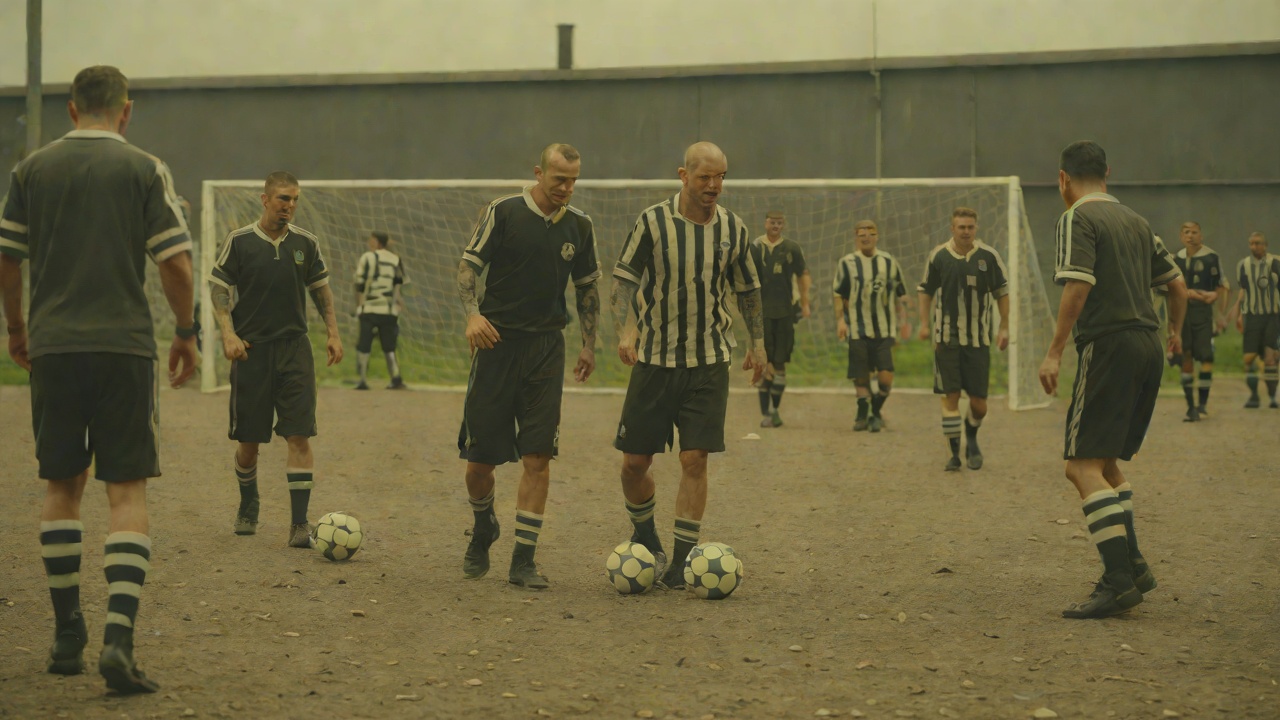
Soccer Game with SS
Stefan Baretski asks Lale Sokolov to organize a team of prisoners to play soccer against the SS. Lale assembles a team of men who once played semiprofessionally.
The Death of Winning
Lale orders his team not to humiliate the SS. They score two goals, allow the score to even, and ultimately lose by one. At the end Oberscharführer Houstek says 'Well played, Tätowierer.'
The Trophy of 1930
Schwarzhuber produces a World Cup trophy as the prize. The game is a brief, surreal moment of humanity in a place built on death, and Baretski is at the center of it, playing the role of sportsman.
Nylon Request
Nylon Request
Stefan Baretski, in a moment of almost human shyness, asks Lale Sokolov to obtain a pair of nylon stockings for his girlfriend's birthday. Lale agrees and sets Yuri on the task.
The Uniform Does Not Matter
Baretski brags about his girlfriend's love of his uniform, but Lale knows that her affection is for the power, not the man. He uses the request to keep Baretski cooperative.
A Fragile Truce
The nylons are never delivered because Lale is arrested and tortured. Baretski surprisingly mentions the failure without resentment, showing the strange bond between them.
Mirror Confrontation
Mirror Confrontation
Lale Sokolov tells Stefan Baretski that he looks into a mirror and sees a world that will bring the SS down. Baretski sneers that he could shatter that mirror with his pistol.
'You Won't Do That'
Lale holds the guard's stare and says he will live to see it. Baretski walks away, leaving the threat hanging in the cold.
The Beginning of the End
The confrontation marks Lale's growing defiance. For the first time, he speaks openly to a guard about the coming collapse.
Baretski's Trial and Suicide
Baretski's Trial and Suicide
Years after the war, Stefan Baretski is tried for war crimes in Frankfurt and sentenced to life imprisonment. In 1988, he commits suicide in a hospital in Bad Nauheim.
A Story's End
Lale Sokolov does not witness the trial, but the fate of his former guard closes a chapter of their strange relationship.
The Violent Boy
Baretski began the war as a frightened boy who brutalized others to survive. His end offers no redemption, only a final proof that the war's cruelty consumed its own servants.
summer 1942, after Lale becomes the Tätowierer
on a Sunday walk to Auschwitz, in 1943
spring 1943, on a Sunday in the compound
spring 1944, before the American plane incident
January 1945, after Leon disappears
1961–1988, in Frankfurt and Bad Nauheim
