Auschwitz
The Tattooist of AuschwitzAuschwitz is the Nazi concentration camp complex where Lale Sokolov is imprisoned in April 1942, receives the tattoo number 32407, and is eventually appointed the camp's Tätowierer (tattooist). It is the central space of the narrative, the site of both systematic atrocity and the unlikely love story between Lale and Gita Furman, and the place whose horrors shape the survivors' postwar lives. The camp functions as the story's moral and geographical anchor: the place where Lale is stripped of his identity, witnesses mass murder, and yet finds the resolve to survive and to save others. Its gates, its punishment blocks, its gas vans, and its tattoo tables all become charged symbols in a narrative that moves from the cattle train to the liberation and beyond.
Arrival and the Arbeit Macht Frei Gate
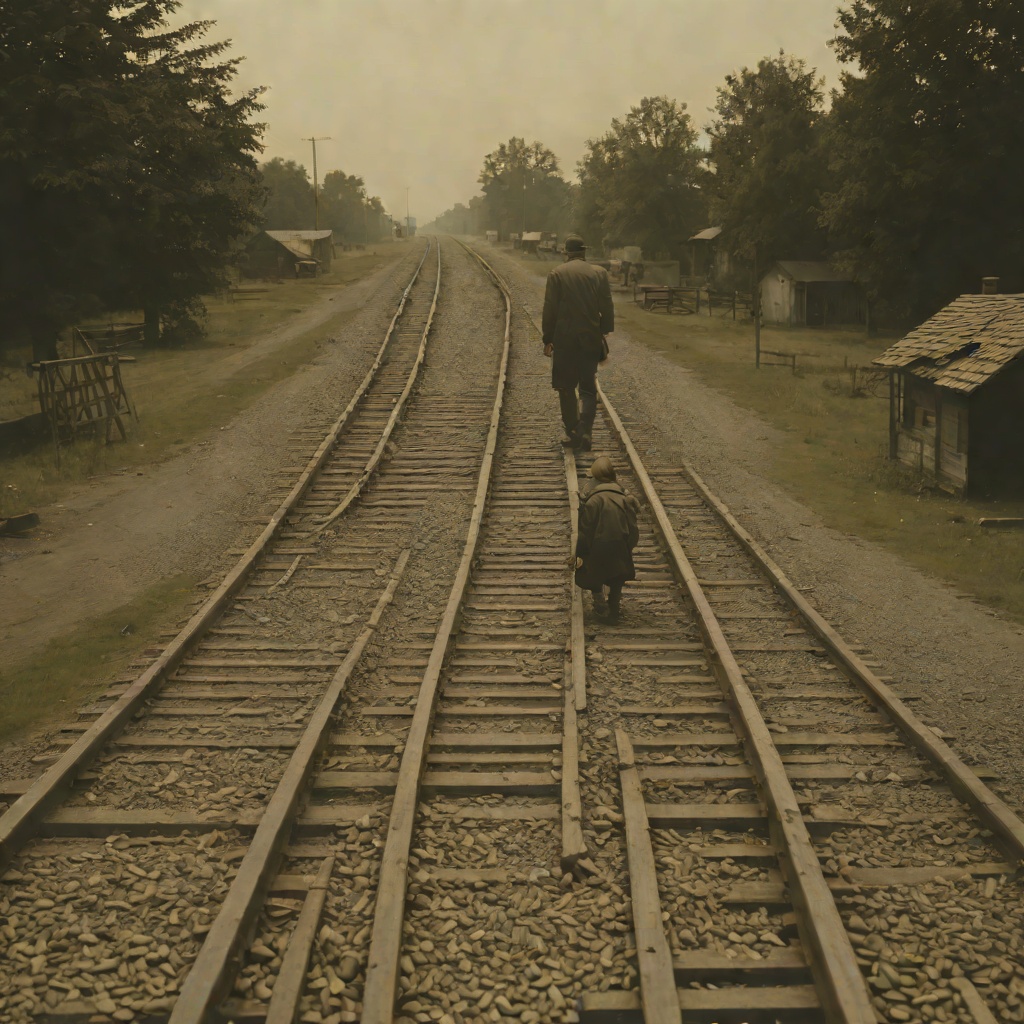
Lale's first encounter with Auschwitz comes after a two-day journey in a cattle wagon, where he is packed among countless young men in a space less than ten feet wide, dressed in his pressed suit, clean white shirt, and tie, having been given no idea where they were headed. When the train stops, a gunshot rings out and an SS officer orders the men to move. Lale watches as clothing blows away and books flap open, and small boys clamber out of trucks to snatch up the abandoned belongings. He touches his hand to his heart, to the money hidden in his jacket pocket, and thinks of his mother's books being thrown into the trucks.
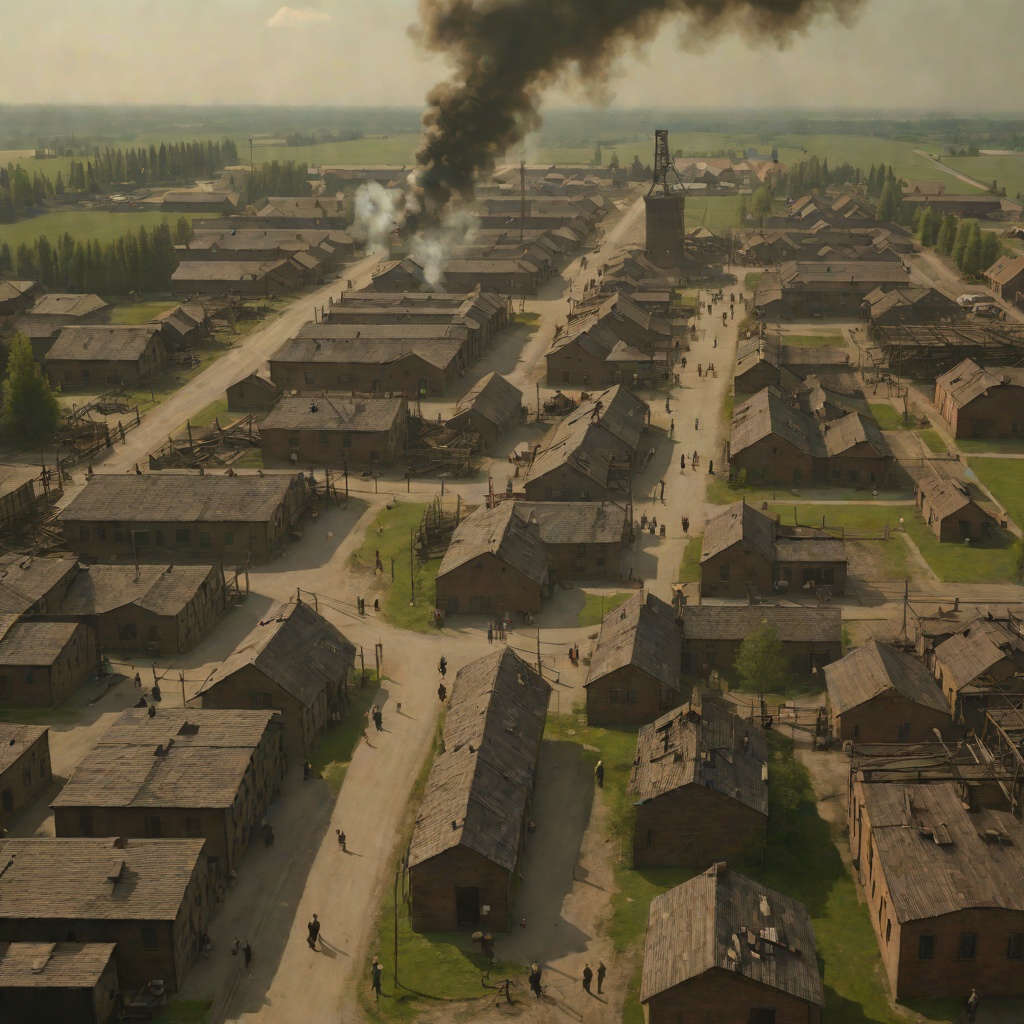
The men trudge toward looming, dirty pink-brick buildings with picture windows, trees lining the entrances flush with new spring growth. As Lale walks through the open iron gates, he looks up at the German words wrought from the metal: ARBEIT MACHT FREI. He does not know where he is or what work he will be expected to do, but the idea that it will set him free has the feeling of a sick joke. A senior officer arrives with an escort of soldiers, a man with a square jaw, thin lips, and eyes hooded by bushy black brows, his uniform plain in comparison to those guarding him. He announces, "Welcome to Auschwitz," and identifies himself as Commandant Rudolf Hoess, explaining that the gates say "Work makes you free," and that this is the prisoners' first and only lesson: work hard, do as told, and go free; disobey, and there will be consequences. He is interrupted by a large roll of thunder, mutters a few words under his breath, flicks a dismissive hand at the men, and walks away, a clumsy display but still intimidating.
The Tattoo and the Number 32407
The processing begins immediately. Lale watches as the first prisoners are shoved forward to the tables, where seated men in pajamas write down details and hand each prisoner a small receipt. When it is Lale's turn, he provides his name, address, occupation, and parents' names, and the weathered man at the table writes his answers in a neat, looping script and passes him a piece of paper with a number on it, never raising his head to meet Lale's eyes. The number is 32407.
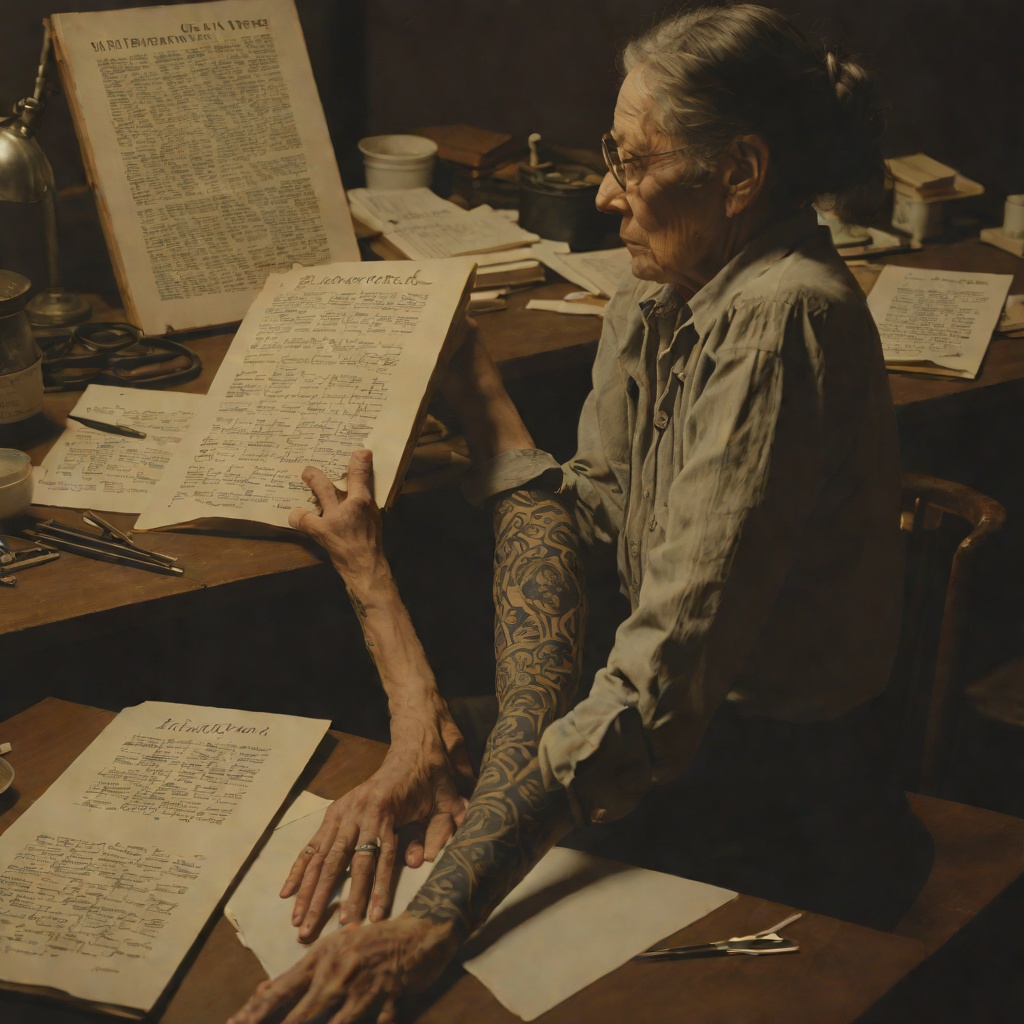
He shuffles along with the flow of men toward another set of tables, where an SS officer pulls off his jacket, rips his shirtsleeve, and pushes his left forearm flat on the table. He stares in disbelief as the numbers 32407 are stabbed into his skin, one after the other, with a piece of wood with a needle embedded in it, moving quickly and painfully. Then the man takes a rag dipped in green ink and rubs it roughly over the wound. The tattooing takes only seconds, but Lale's shock makes time stand still. He grasps his arm, staring at the number, wondering how someone can do this to another human being, and whether for the rest of his life, be it short or long, he will be defined by this moment, this irregular number: 32407. A prod from a rifle butt breaks his trance, and he collects his jacket from the ground and stumbles forward into a large brick building with bench seating along the walls, where he is ordered to strip.
The Gas Van and the Horror of Birkenau
On a beautiful spring day, not too hot, Lale watches as a large, enclosed truck continues past the usual point for unloading building supplies and drives around the back of the administration building. He knows that the boundary fence lies not far beyond and he has never dared venture to this area, but curiosity gets the better of him. He peers around the corner and sees the truck pull up beside an odd bus that has been adapted into a bunker of sorts, with steel plates nailed across the window frames. Dozens of naked men are herded out of the truck and led toward the bus. Some enter willingly; those who resist are hit with a rifle butt, and fellow prisoners drag the semiconscious objectors to their fate.
The bus is so full that the last men to board cling to the steps with their tiptoes, their naked bottoms hanging out the door. Officers shove their weight against the bodies, then the doors are slammed shut. One officer walks around the bus, rapping on the metal sheets, checking that everything is secure. A nimble officer clambers onto the roof with a canister in his hand, opens a small hatch, and upends the canister, then slams the lid down and latches it. As the guard scurries down, the bus shakes violently and muffled screams can be heard. Lale drops to his knees, retching, and remains there, sick in the dirt, as the screams fade. When the bus is still and quiet, the doors are opened, and dead men fall out like blocks of stone.
The Tätowierer's Room and the Camp's Hierarchy
Lale is eventually led to an area of the camp that is still under construction, where many of the buildings are unfinished and the eerie quiet makes him shiver. One of these new blocks is complete, and Oberscharführer Houstek shows Lale to a single room located immediately inside the door. "You will sleep here," he says. Lale puts his bag of tools on the hard floor and takes in the small, isolated room, missing his friends in Block 7 already. In his role as Tätowierer, he will receive extra rations, and he is told to take his meals in an area near the administration building. "We want our workers to have their strength," Houstek explains, motioning for Lale to take a spot in the dinner line. "Make the most of it."
The camp's hierarchy is brutal and arbitrary. Lale's position as tattooist gives him a measure of privilege, but it also isolates him. The punishment blocks, Blocks 10 and 11, are well-known for their reputation, and behind them stands the Black Wall, the execution wall. When Lale is arrested and placed in a small room in Block 11, he expects that he will be taken there after being tortured. For two days he sits in the cell, the only light coming in through a crack under the door, listening to the cries and screams of others, reliving every moment he has spent with Gita. On the third day, he is blinded by sunlight spilling into the room, and a large man blocks the doorway and hands him a bowl of liquid. As his eyes adjust, he recognizes the man: "Jakub, is that you?"
The Camp's Legacy in the Postwar World
The camp's influence extends far beyond the war. Lale's son, Gary Sokolov, recalls that both his parents were determined that he should know what they went through. When the TV series The World at War started, Gary was thirteen, and they made him watch it by himself every week, unable to watch it with them. He remembers when they were showing live footage of the camps, looking to see if he could spot his parents. His father was comfortable with talking about his adventures in the camp, but only on the Jewish festivals when he and the men would sit around the table and chat about their experiences. His mother, however, said nothing of the details except on one occasion when she told him that in the camp when she was very sick, her mother had come to her in a vision and told her, "You will get better. Move to a faraway land and have a son."
Certain things stuck with them. Gary's mother would bend down and pluck a four-or five-leaf clover from the ground, because when she was in the camp, if you found one and gave it to the German soldiers, who believed they were lucky, you received an extra portion of soup and bread. With his father, it was the lack of emotion and heightened survival instinct that remained with him, to the point even when his sister passed away he did not shed a tear. When Gary asked him about this, his father said that after seeing death on such a grand scale for so many years, and after losing his parents and brother, he found he was unable to weep—that is, until his wife passed away. It was the first time Gary had ever seen him cry. The camp's legacy is thus one of both profound trauma and an enduring, uncompromising love, a devotion that Gary describes as total and uncompromising, with his mother explaining, "Nobody is perfect. Your father has always taken care of me since the first day we met in Birkenau. I know he is not perfect, but I also know he will always put me first."