Birkenau
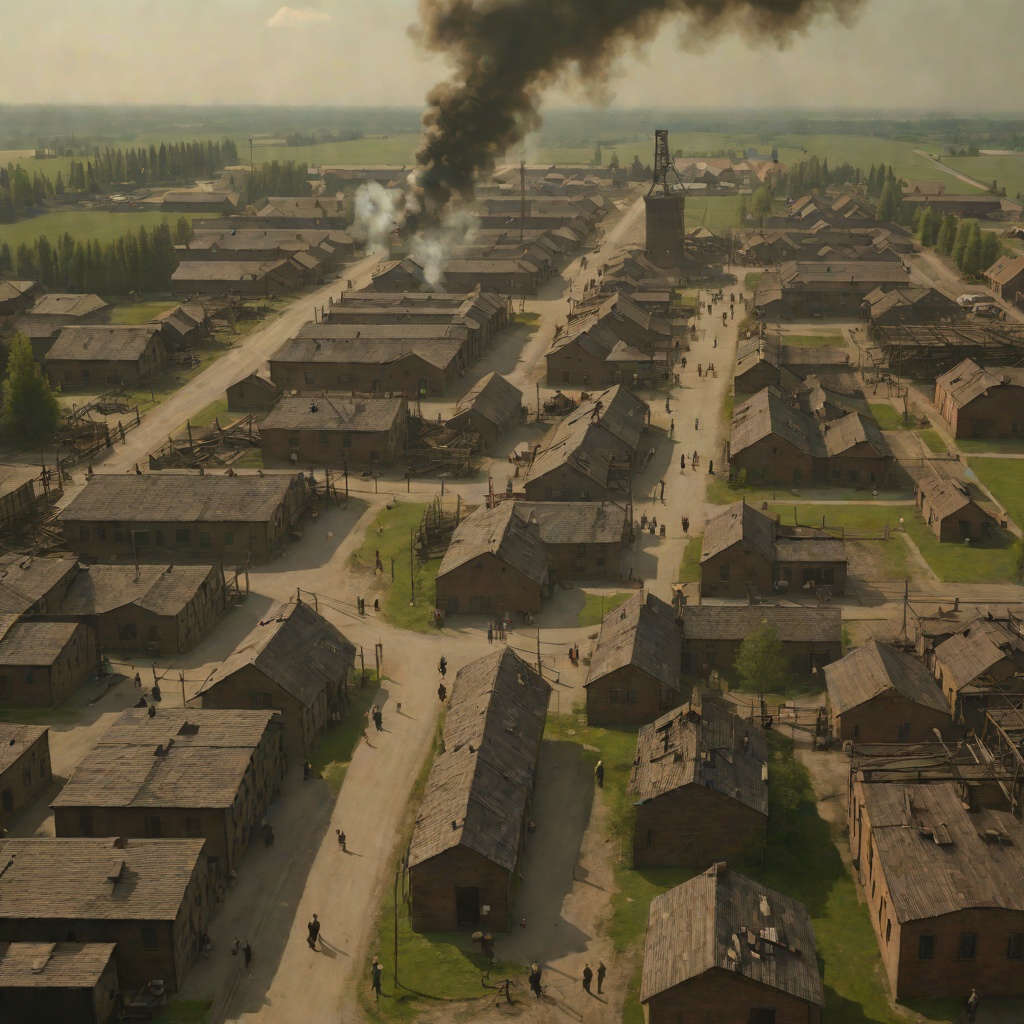
The Tattooist of AuschwitzBirkenau, also known as Auschwitz II-Birkenau, is the extermination camp that forms the dark heart of the narrative. It is the place where Lale Sokolov is brought after his initial processing at Auschwitz, where he is stripped of his identity and given a number, and where he will rise to the privileged and morally fraught position of the camp's Tätowierer. More than a setting, Birkenau is the engine of the story's horror and the crucible of its love story, for it is here that Lale first sees Gita Furman, and it is from here that both must escape to honor the promise they make to each other. The camp is defined by its brutal architecture of electrified fences, punishment blocks, and crematoria, a space designed for mass death that paradoxically becomes the site of Lale's most determined acts of survival and humanity.
Arrival and the Architecture of Terror
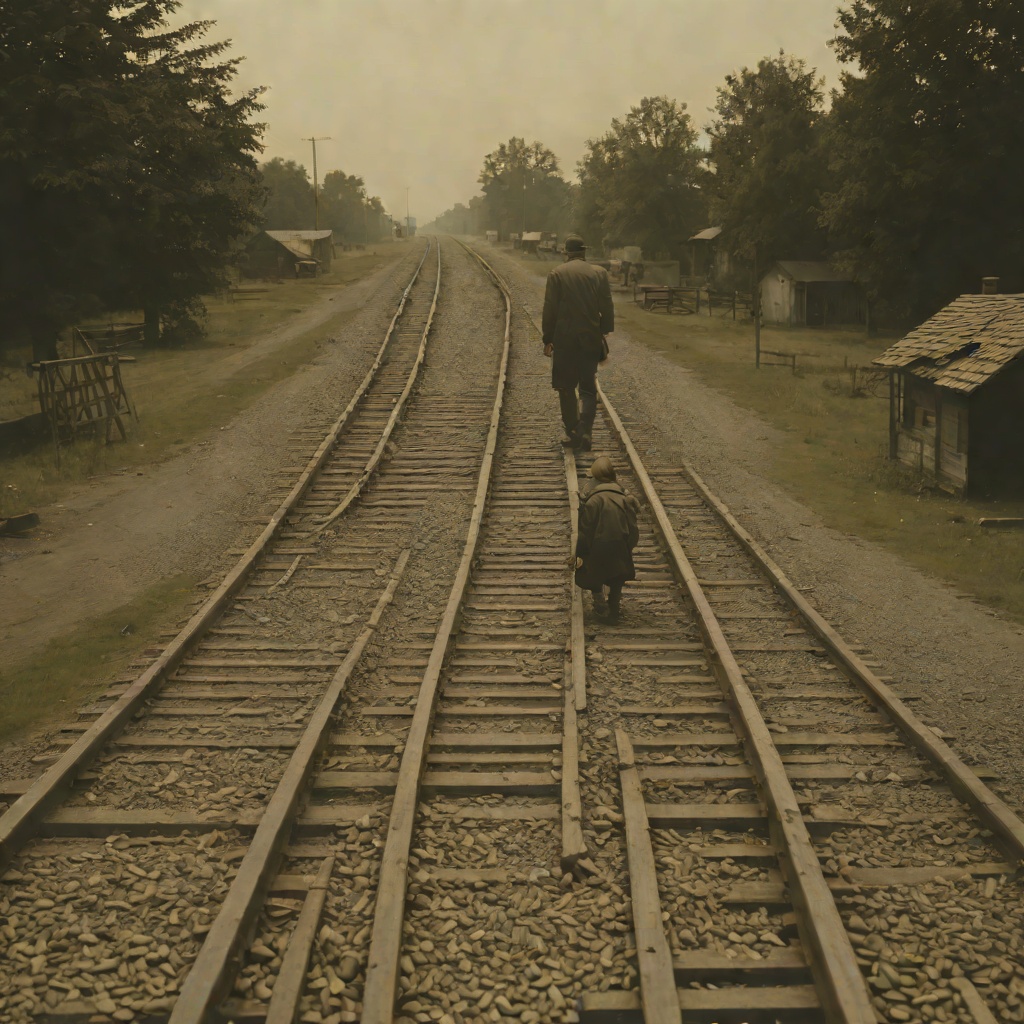
Lale's introduction to Birkenau is a descent into a nightmare that begins with a deceptive promise. After being processed at Auschwitz, where Commandant Rudolf Hoess tells the new arrivals that the gates' message, "Work makes you free," is their only lesson, Lale is marched through the rain to a second, more terrible compound. The journey is a physical ordeal; the thickening mud makes it difficult to lift his feet, and men who fall are beaten until they get back up or are shot. He is semidelirious with thirst, gulping down rain, and the distant spotlights seem like beacons calling him home. This mirage is shattered as he walks through gates that bear no message and offer no deal. Beyond the yard, he sees another compound disappearing into the darkness, its fences lined with razor wire, with SS in lookouts pointing rifles at him. A lightning strike on a nearby fence reveals that they are electrified, and the thunder cannot drown out the sound of a shot as another man falls. It is here that he is greeted by Aron, who pushes through the crowd, drenched and bedraggled but alive, with the words "We made it." The camp's defining horror is made explicit when Lale, driven by curiosity, follows a truck to the back of the administration building and witnesses the operation of a gas van. He watches as dozens of naked men are herded into an adapted bus with steel plates nailed across its windows, the last men clinging to the steps with their naked bottoms hanging out. An officer climbs onto the roof, opens a hatch, and upends a canister inside. The bus shakes violently, muffled screams are heard, and when the doors are opened, dead men fall out like blocks of stone. Lale drops to his knees and retches, sick in the dirt as the screams fade.
The Tätowierer's Domain
Within this hell, Lale is granted a paradoxical position of privilege. After being selected as the Tätowierer, he is led by Stefan Baretski to an area of the camp still under construction, where many buildings are unfinished and an eerie quiet makes him shiver. He is given a single room immediately inside the door of one complete block, a small, isolated space that separates him from his friends in Block 7. He learns that he will take his meals near the administration building and receive extra rations, with Baretski explaining, "We want our workers to have their strength." This privilege, however, comes at a cost. Transports come into Auschwitz-Birkenau at all times of day and night, and it is not unusual for Lale and his assistant Leon to work around the clock. On such days, Baretski shows his most unpleasant side, screaming abuse or beating Leon and blaming him for his slowness. Lale quickly learns that the bad treatment gets worse if he tries to prevent it. The work itself brings him face to face with the camp's human toll. On a beautiful spring day, he is stunned to see dozens of young women being escorted his way, having believed there were no girls in Birkenau, this "hell of hells." He is told that some girls have been moved from Auschwitz and need their numbers redone, and it is among these women that he will first see Gita.
Punishment and the Black Wall
The camp's capacity for punishment is embodied in Block 11, the punishment block whose reputation is well known. When Lale is arrested, he is placed in a small room in Block 11, aware that behind these secluded torture houses stands the Black Wall, the execution wall, and he expects to be taken there after being tortured. For two days he sits in the cell, the only light coming through a crack under the door, listening to the cries and screams of others while he relives every moment he has spent with Gita. On the third day, he is blinded by sunlight as a large man blocks the doorway and hands him a bowl of liquid. As his eyes adjust, he recognizes the man as Jakub, a moment of human connection in a place designed to erase it. The camp's violence also reaches into Lale's closest relationships. When Leon confesses that Josef Mengele has castrated him, the revelation is delivered with a stark, brutal directness that leaves Lale reeling in horror. Leon's words, "He cut my fucking balls off, Lale," and his explanation that "somehow you lose your appetite when they cut your balls off," expose the depth of the camp's dehumanizing cruelty, a cruelty that Lale must witness in his friend even as he struggles to maintain his own resolve.
Escape and the Promise of Return
Birkenau is not only a place of suffering but also the origin of Lale's determination to survive. His longing for Gita gives him the sense of purpose he needs to carry on, and he makes a promise to find her. After the camp's evacuation and their separation, Lale's escape from the Saurer-Werke subcamp and his subsequent flight are driven by this promise. When he eventually arrives back in Bratislava, he goes immediately to the train station and asks if survivors from the concentration camps have been coming home. With no idea where Gita might have ended up, not even which country, he decides the only thing to do is meet every train. For two weeks, he loiters at the station, approaching every disembarking woman with the question, "Were you in Birkenau?" and then, "Did you know Gita Furman? She was in Block 29." No one knows her. The camp's shadow extends even into the postwar world, shaping the lives of its survivors. Lale's son recalls that his mother, Gita, said nothing of the details of the camp except on one occasion when she told him that when she was very sick, her mother had come to her in a vision and told her, "You will get better. Move to a faraway land and have a son." The camp's legacy is also visible in Lale's own emotional landscape; after seeing death on such a grand scale and losing his parents and brother, he found he was unable to weep, a numbness that only broke when his wife passed away. Birkenau, then, is the place that defines both the horror they endured and the love that enabled them to leave it behind.