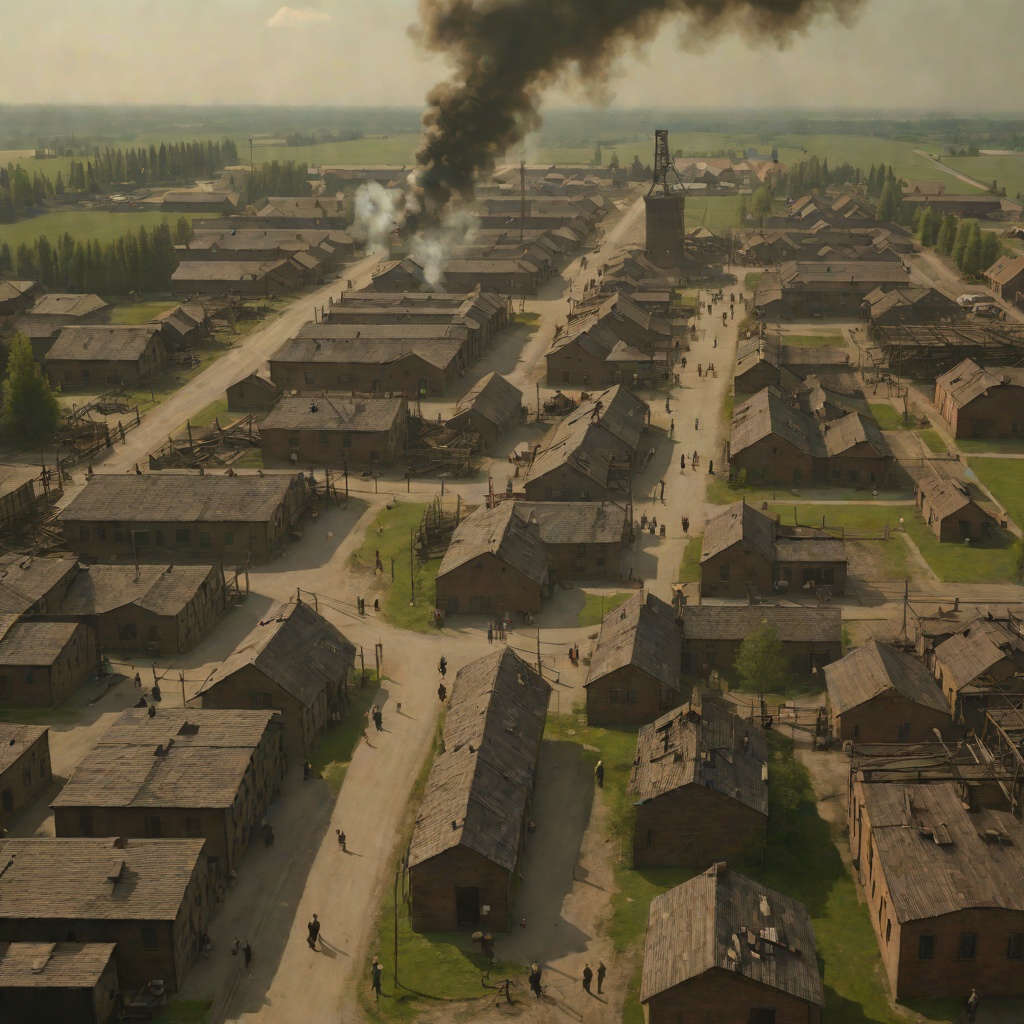
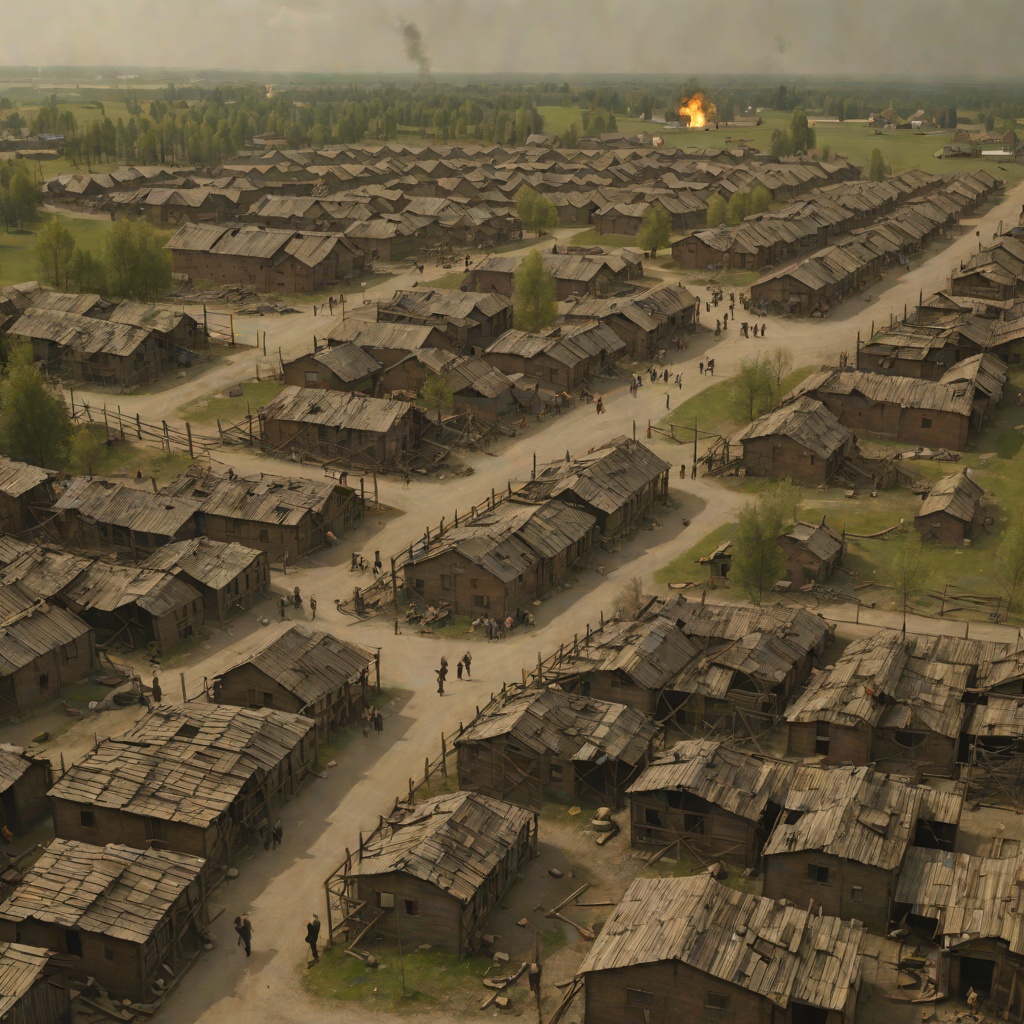
Birkenau crematoria
The Tattooist of AuschwitzThe Birkenau crematoria stand as the ultimate, horrifying expression of the Nazi genocide machine at Auschwitz-Birkenau. They are not merely buildings but the final destination for the thousands of prisoners who enter the camp, the industrial apparatus designed to erase human life on an unprecedented scale. For Lale Sokolov, the camp's Tätowierer, they are the ever-present symbol of the death that surrounds him, a constant reminder of the fate he is fighting to avoid for himself and for Gita Furman. The crematoria's presence looms over the entire narrative, from Lale's first arrival to the desperate hope of their destruction, making them a central, inescapable force in the story of survival.
The Architecture of Annihilation
The crematoria are first introduced to Lale not as a rumor but as a concrete, terrifying reality. While working on a construction site, his friend Victor reveals the purpose of a new building he has seen in the plans. "It's called Crematorium One," Victor says quietly, looking away. The name itself is a revelation, and Lale immediately grasps its chilling implication, asking, "Crematorium. One. With the possibility of a number two?" Victor's apologetic confirmation, "Sorry. I said you wouldn't like it," underscores the scale of the horror that is being built. This exchange marks a moment of terrible clarity for Lale, transforming the abstract knowledge of death into the concrete understanding of an industrial process designed for mass murder. The very name, with its numerical designation, suggests a system of production, a factory of death with the potential for expansion, a concept that is almost too monstrous to comprehend.
The Crematoria in the Camp's Machinery of Death
The crematoria are the culmination of the camp's brutal logic, the final stage in a process that begins with arrival. Lale's first experience of the camp's killing capacity is not at the crematoria themselves but at a gas van, a mobile precursor to the fixed installations. He witnesses dozens of naked men being herded into an adapted bus with steel plates nailed across the window frames. The horror of the scene is visceral: the bus is so full that the last men cling to the steps, their naked bodies hanging out the door. An officer climbs onto the roof, opens a small hatch, and upends a canister inside. The bus shakes violently, and muffled screams can be heard before the doors are opened and dead men fall out "like blocks of stone." This event, which leaves Lale retching in the dirt, is a direct precursor to the crematoria, demonstrating the same method of murder on a smaller, more mobile scale. It establishes the pattern of industrialized killing that the crematoria perfect, and it is a trauma that stays with Lale, informing his understanding of the larger, more permanent structures.
The Sonderkommando Uprising and the Destruction of Crematorium 4
The crematoria become the site of the camp's most dramatic act of resistance. As Lale and Gita hide behind the administration block, a massive explosion rings out, shaking the ground. A second explosion follows, and they see smoke rising from the nearby crematorium. Prisoners run from the building, and gunfire erupts from the roof, where members of the Sonderkommando are shooting wildly at the SS. The SS respond with heavy machine guns, and within minutes, the uprising is brutally suppressed. Lale identifies the target of the attack: "That's Crematorium 4—someone's blowing it up." The destruction of Crematorium 4 is a monumental act of defiance, a moment when the prisoners, who are forced to work in the very heart of the killing machine, turn that machinery against their captors. Though the uprising is quickly put down, the damage is done. The explosion is a physical and symbolic blow against the Nazi regime, proving that even in the depths of despair, resistance is possible.
A Glimmer of Hope and the End of the Killing
The destruction of Crematorium 4 has a profound and lasting effect on the camp. As autumn turns to a bitterly cold winter, Lale hears promising news that two of the crematoria damaged in the explosions are not going to be repaired. For the first time in his memory, more people are leaving Birkenau than are entering. The slowing of the transports has a perverse effect on the Sonderkommando, who, with less work to do, are in greater danger of execution. But for Lale and Gita, the news is a "glimmer of hope," a tangible sign that the Nazi war machine is faltering. The crematoria, once the symbol of the camp's permanence and the inevitability of death, are now a symbol of its impending collapse. The fact that they will not be repaired signals a shift in the war's momentum, offering the prisoners a reason to believe that they might outlive Auschwitz. The crematoria's destruction, therefore, is not just an act of rebellion but a turning point that fuels the will to survive.
The Crematoria as a Source of Enduring Trauma
The horror of the crematoria and the gas vans leaves an indelible mark on Lale, shaping his psyche long after the war. The trauma is so profound that it manifests in his inability to process emotion in a normal way. His son recalls that Lale lacked emotion and had a heightened survival instinct, to the point that he did not shed a tear even when his own sister passed away. When asked about this, Lale explained that after seeing death on such a grand scale for so many years, and after losing his parents and brother, he found he was unable to weep. The crematoria, as the ultimate symbol of that grand-scale death, are central to this emotional numbing. The memory of the gas van, the screams, and the dead men falling out "like blocks of stone" is a wound that never fully heals. It is only when his wife, Gita, passes away that Lale is finally able to cry, the first time his son had ever seen him do so. This final release of emotion underscores the depth of the trauma inflicted by the camp's machinery of death, a trauma that Lale carried with him for the rest of his life.