Cilka
The Tattooist of AuschwitzCilka is introduced as a young woman working in the administration building at Birkenau, where she becomes Gita's new colleague. When the two women first meet, Cilka identifies herself simply by her name and her block, telling Gita, "I'm Cilka. I'm in Block 25," to which Gita responds, "I'm Gita, Block 29." This brief exchange, occurring as the girls leave the administration building for their blocks, establishes the ordinary human connection that the camp's machinery of terror will soon violate. The heavy SS presence prevents Lale from approaching Gita at this moment, and the girls walk together talking, their conversation a fragile pocket of normalcy within the brutal order of the camp.
The Assault by Schwarzhuber
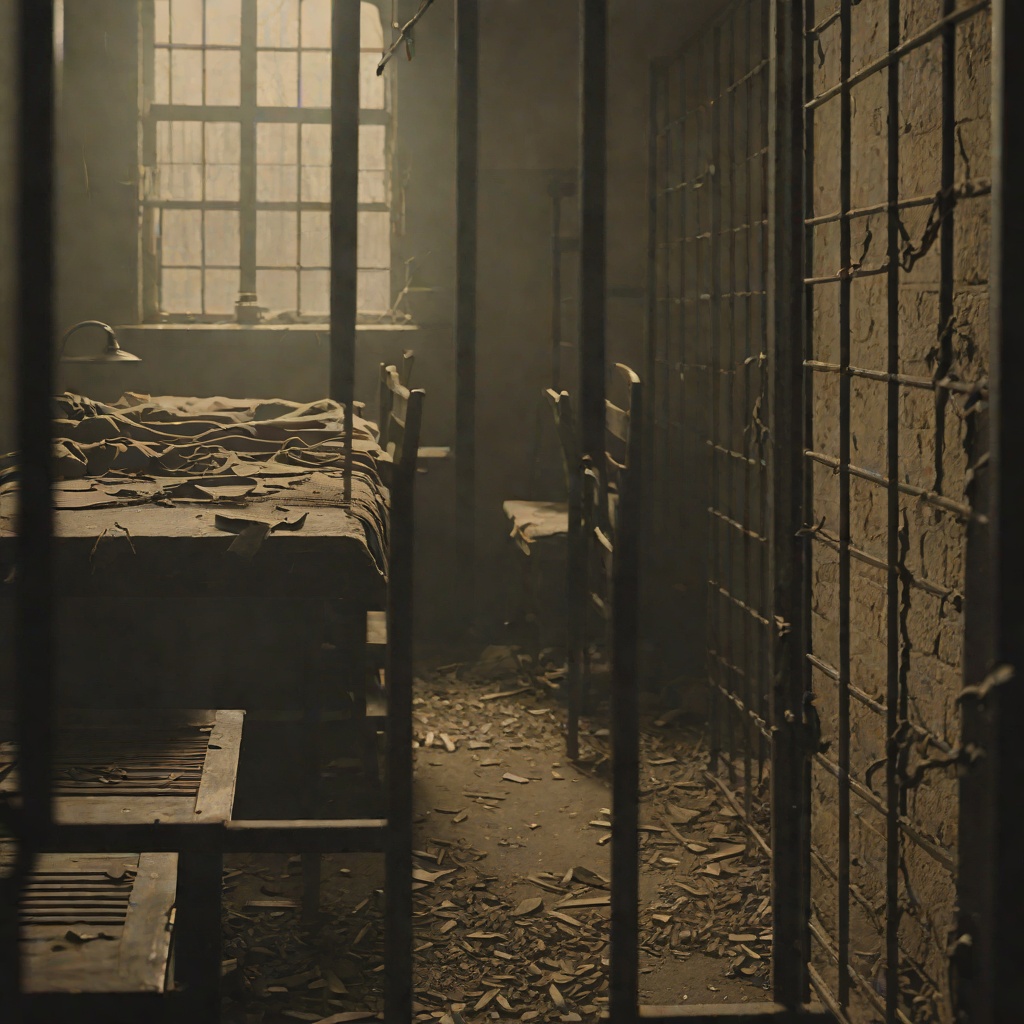
Cilka's life is shattered when two SS officers approach her and Gita without warning in the administration building. One of them grabs Cilka by the arm, jerking her to her feet, and marches her from the room while she looks back with confused and pleading eyes. Gita, who watches helplessly, is struck across the head by an administrative SS officer as a clear message to get back to work. Cilka tries to resist as she is dragged down a long corridor to an unknown part of the building, but she is no match for the two men, who open a closed door and literally throw her inside. She picks herself up and finds herself in a room dominated by a large four-poster bed, with a dresser, a bedside table with a lamp, and a chair. Someone sits in the chair: Schwarzhuber, the head of Birkenau, an imposing man rarely seen in the camp. He sits tapping his tall leather boot with his swagger stick, staring from an expressionless face at a space above Cilka's head. When she backs up against the door and her hand goes to the door handle, the swagger stick hurtles through the air and strikes her hand. She cries out in pain and slides down to the floor.
Schwarzhuber walks over to her, picks up his stick, and stands over her, his nostrils distending as he breathes heavily and glares at her. He takes off his hat and throws it across the room, continuing to hit his leg firmly with his swagger stick, and with every whack Cilka flinches, expecting to be struck. He uses the stick to push up her shirt, and realizing what is expected, with shaking hands she undoes the top two buttons. He then places his stick under her chin and forces her to rise to her feet, where she is dwarfed by the man. His eyes seem to see nothing; this is a man whose soul has died and whose body is waiting to catch up with it. He holds out both his arms, and she interprets this gesture as "undress me." She takes a step closer, still at arm's length, and begins undoing the many buttons on his jacket. A whack across her back with the stick hurries her up. Schwarzhuber is forced to drop the stick so she can slide his jacket off, and he throws it after his hat. He removes his own shirt, and Cilka begins undoing his belt and zipper. Kneeling down, she pulls his trousers down to his ankles but cannot get them over his boots. The scene is rendered with clinical precision, the swagger stick and the four-poster bed becoming the instruments of a power that reduces a human being to a disposable object.
Lale's Tribute and the Question of Guilt
Cilka's role in the camp extends beyond her own suffering to acts that save others. When Lale is arrested and tortured in Block 11, it is Cilka who asks Schwarzhuber to free him, an intervention that Lale never forgets. In the final parting scene at the camp, Lale turns to Cilka and Ivana and wraps them both in a bear hug. To Cilka, he says, "You are the bravest person I have ever met. You must not carry any guilt for what has happened here. You are an innocent—remember that." In between sobs she replies, "I did what I had to do to survive. If I hadn't, someone else would have suffered at the hands of that pig." Lale responds, "I owe my life to you, Cilka, and I will never forget that." This exchange crystallizes the moral complexity of her survival: she has endured sexual exploitation at the hands of the camp's highest authority, and yet she frames her submission as a protective act, a way of shielding others from the same fate. Lale's insistence on her innocence and bravery stands as a counter-narrative to any judgment that might condemn her for what she was forced to do.
Aftermath: Siberia and the Return
Cilka's postwar fate is marked by a cruel irony. After the war, she is charged as a Nazi conspirator and sentenced to fifteen years' hard labor, which she serves in Siberia. The woman who was herself a victim of the camp's most intimate brutality is thus punished as though she had been a collaborator. Afterward, she returns to Bratislava. She and Gita meet only once, in the mid-1970s, when Gita goes to visit her two brothers. This single reunion, decades after the war, is the only recorded contact between the two women who once worked side by side in the administration building. Cilka's story, told largely through the eyes of Lale and Gita, becomes a testament to the ways in which the camp's horrors did not end with liberation, and to the enduring bonds of gratitude and memory that survived even the most degrading circumstances.