Cilka and Schwarzhuber's relationship
The Tattooist of AuschwitzThe relationship between Cilka and Schwarzhuber begins as an act of pure predation and ends as one of the most morally tangled bonds in the entire Auschwitz story. Schwarzhuber is the head of Birkenau, an imposing man rarely seen in the camp, and Cilka is a young prisoner working at a desk in the administration building when two SS officers approach her without warning. One grabs her by the arm and jerks her to her feet; her friend Gita Furman watches helplessly as Cilka is marched from the room, looking back with confused and pleading eyes. Gita herself is struck across the head by an administrative SS officer, a clear message to get back to work. Cilka tries to resist as she is dragged down a long corridor to an unknown part of the building, but she is no match for the two men, who open a closed door and literally throw her inside.
The First Encounter
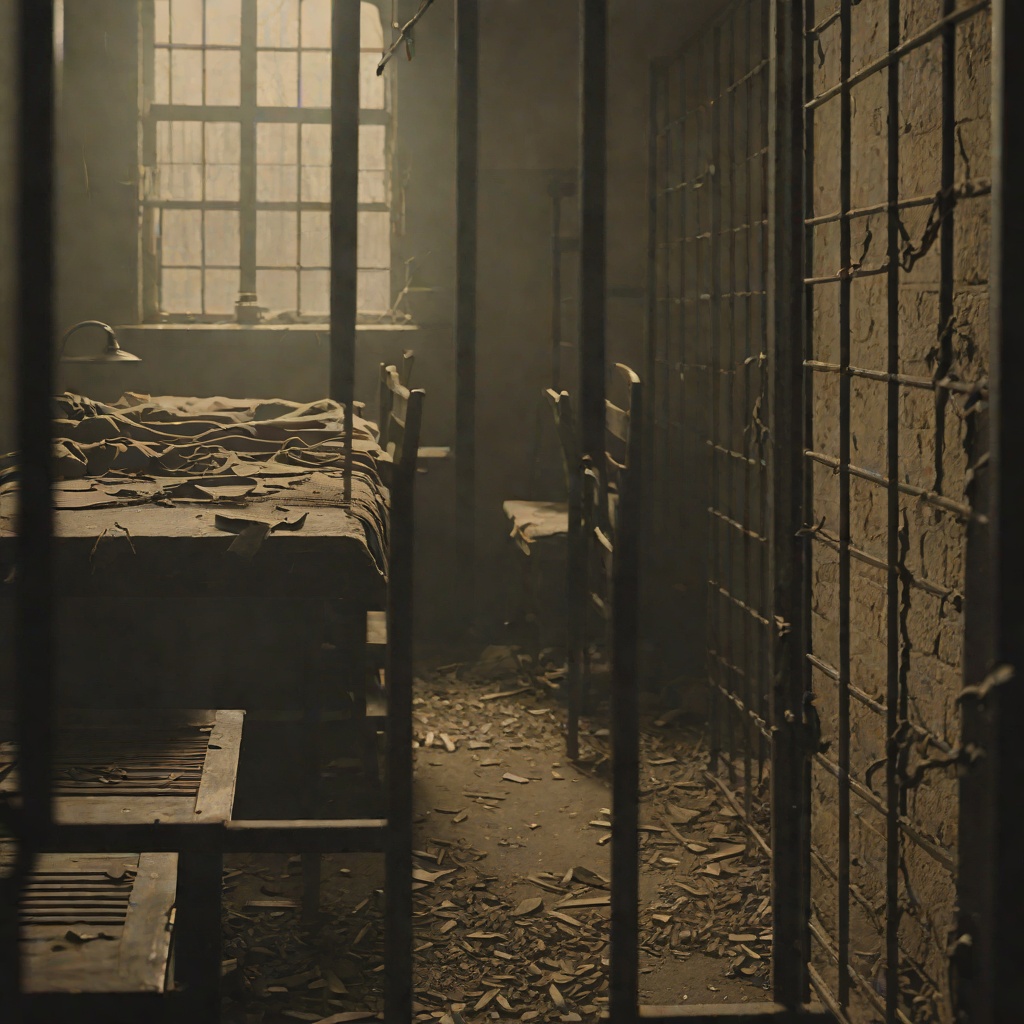
The room into which Cilka is thrown is dominated by a large four-poster bed, with a dresser, a bedside table holding a lamp and a chair. Someone sits in the chair: Schwarzhuber, tapping his tall leather boot with his swagger stick, staring from an expressionless face at a space above Cilka's head. She backs up against the door and reaches for the handle; in a flash the swagger stick hurtles through the air and strikes her hand. She cries out in pain and slides down to the floor. Schwarzhuber walks over, picks up his stick, and stands over her, his nostrils distending, breathing heavily and glaring. He takes off his hat and throws it across the room, then uses the stick to push up her shirt. Realizing what is expected, with shaking hands Cilka undoes the top two buttons of her shirt. He places the stick under her chin and forces her to rise; she is dwarfed by the man. His eyes seem to see nothing; the narrative's judgment is stark: this is a man whose soul has died and whose body is waiting to catch up with it.
He holds out both arms, and she interprets the gesture as "undress me." She steps closer, still at arm's length, and begins undoing the many buttons on his jacket; a whack across her back with the stick hurries her up. Schwarzhuber is forced to drop the stick so she can slide his jacket off, and he throws it after his hat. He removes his own shirt; Cilka undoes his belt and zipper, then kneels and pulls his trousers down to his ankles, but cannot get them over his boots. Off balance, she falls heavily when he pushes her over. Dropping onto his knees, he straddles her. Terrified, she attempts to cover herself as he rips her shirt open. She feels the back of his hand across her face as she closes her eyes and gives in to the inevitable.
The Shape of the Bond
The relationship that follows is not a single act but a condition of camp life. That same night, in a grand four-poster bed, Schwarzhuber and Cilka lie in each other's arms; his hands explore her body as she stares into nothing, feeling nothing, numb. The parallel with Lale and Gita is deliberate and brutal: at the very hour Lale lies on his bed the happiest he has been for as long as he can remember, and Gita lies awake reliving his kisses, Cilka lies in the arms of the man who raped her, her body present and her self absent. She has become, in effect, Schwarzhuber's plaything, a fixture of his quarters rather than a prisoner in the ordinary sense. Yet the relationship develops a strange texture over time. On a later night, lying in his arms and sensing that he is not yet asleep, Cilka opens her mouth to speak but is silenced by him retrieving his arm from underneath her. She asks tentatively if he is all right, fearing he will be suspicious of such an intimate question; he answers simply, "Yes." There is a softness in his voice she has not heard before, and, emboldened, she presses on: "I have never said no to anything for you, have I? And I've never asked you for anything before?" He confirms that this is true. "Can I ask for one thing?" she says.
The Favor That Saves a Life
That one thing is Lale's life. Lale has been arrested and thrown into Block 11, the punishment block whose reputation is well known, with the Black Wall, the execution wall, standing behind it. For two days he sits in a cell, the only light coming through a crack under the door, listening to the cries and screams of others while reliving every moment he has spent with Gita. On the third day he is blinded by sunlight and recognizes the large man who hands him a bowl of liquid: Jakub, who will torture him. Meanwhile, as Lale is being marched back into the camp carrying one of the murdered men, his attention is caught by two people standing just beyond the fence that separates the prisoners' blocks from the staff quarters: the diminutive Cilka beside Schwarzhuber. Lale stops, slackening his grip on the corpse, which causes the prisoner at the other end of the body to stumble and fall. Cilka peers back at him before saying something to Schwarzhuber; he nods and points to Lale. Cilka and Schwarzhuber walk away as a guard approaches Lale and says, "Come with me." Lale rests the legs he has been carrying on the ground, looks for the first time at the dead man's face, and bows his head at this tragic end to yet another life. The other inmates of Block 31 all stare after him. The favor has been granted; Lale is freed.
The Farewell and Its Aftermath
When the camp is being evacuated and Lale prepares to part from the women he has come to love as friends, he turns to Cilka and Ivana and wraps them both in a bear hug. To Cilka he says, "You are the bravest person I have ever met. You must not carry any guilt for what has happened here. You are an innocent—remember that." In between sobs she replies, "I did what I had to do to survive. If I hadn't, someone else would have suffered at the hands of that pig." Lale answers, "I owe my life to you, Cilka, and I will never forget that." The exchange captures the full moral weight of her position: she has done what she had to do, and in doing so she has saved not only herself but Lale, and her survival has come at the cost of a guilt she is explicitly told not to carry.
The aftermath is as cruel as the relationship itself. After the war, Cilka is charged as a Nazi conspirator and sentenced to fifteen years' hard labor, which she serves in Siberia. Afterward she returns to Bratislava. She and Gita meet only once, in the mid-1970s, when Gita goes to visit her two brothers. The woman who saved Lale's life at the cost of her own body is punished by the very system that liberated her, her coerced intimacy with Schwarzhuber read as collaboration rather than survival. The relationship thus stands as the narrative's darkest counterpoint to the love between Lale and Gita: where their bond is built on mutual devotion and grows into a lifelong marriage, Cilka's is built on violence and numbness, yet it too produces an act of saving grace. The man whose soul had died, who raped a girl in a room with a four-poster bed, nonetheless nods when she asks for a life. The relationship is never sentimentalized and never condemned outright; it is simply recorded, in all its horror and its strange, terrible fruit.