Crematorium 4
The Tattooist of AuschwitzCrematorium 4 stands as one of the most charged locations in the Auschwitz-Birkenau complex, a building whose very name became synonymous with both the industrialized murder of the Holocaust and the most dramatic act of prisoner resistance within the camp. In the narrative of Lale Sokolov, the camp's Tätowierer, Crematorium 4 is not merely a backdrop but a fulcrum: it is the site where the Sonderkommando uprising erupts, where the structure is blown up by the prisoners themselves, and where the possibility of liberation first becomes tangible. Its destruction, witnessed directly by Lale, transforms the crematorium from a symbol of the Nazi extermination machine into a symbol of defiance, and it reshapes the story's trajectory from one of endurance to one of imminent, if perilous, hope.
The Crematorium Within the Camp's Geography of Death
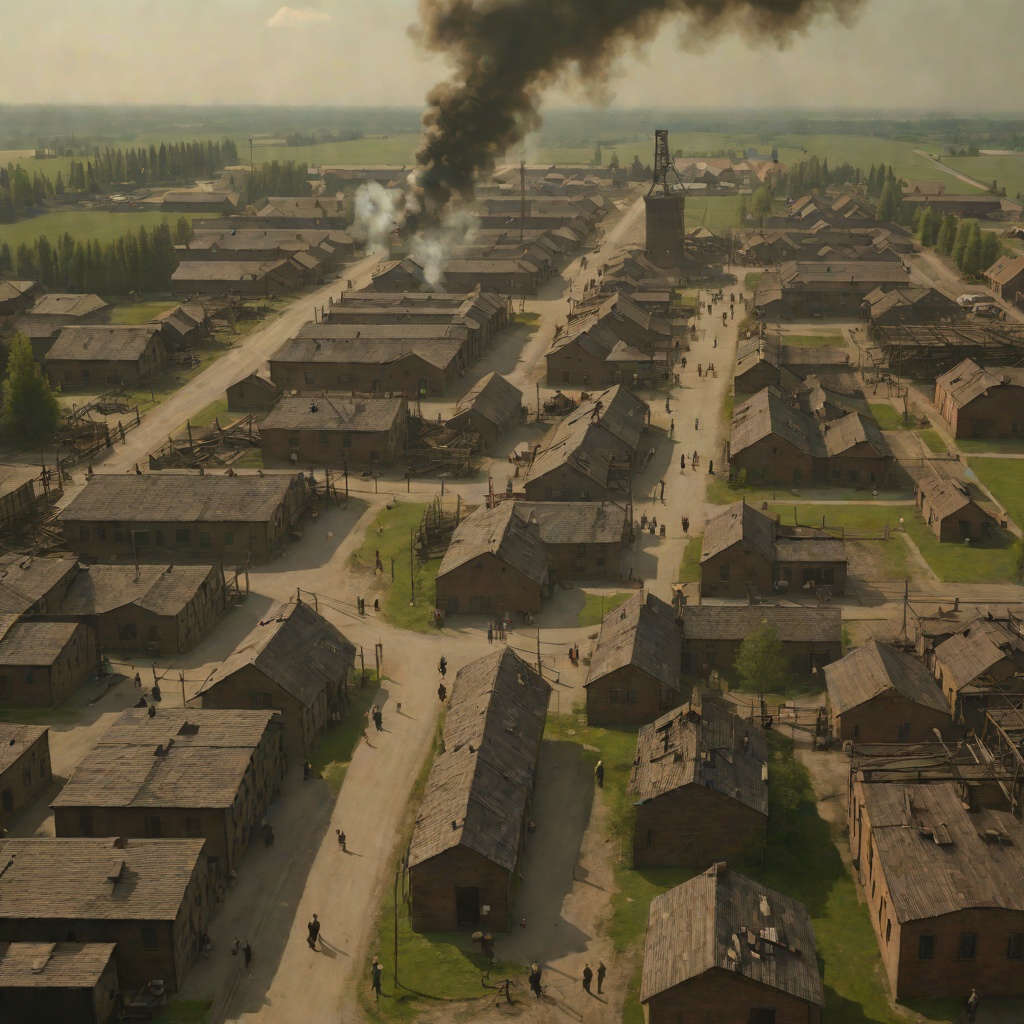
Crematorium 4 belonged to the network of Birkenau crematoria that formed the core of the Nazi extermination apparatus. The camp itself, which Lale first entered through the iron gates bearing the wrought-iron words "ARBEIT MACHT FREI," was a place where the promise of freedom through work was a sick joke, as Lale immediately understood. The crematoria were the ultimate expression of this deception, buildings designed to process and destroy human beings on an industrial scale. The very existence of Crematorium 4, alongside its counterparts, was part of the machinery that Lale witnessed in operation from his earliest days in the camp, when he saw the gas van murders at Birkenau, watching as dozens of naked men were herded into an adapted bus with steel plates nailed across the window frames, the doors slammed shut, and a canister upended into a hatch on the roof, followed by the violent shaking of the bus and muffled screams. The dead men fell out like blocks of stone when the doors were opened. This was the world in which Crematorium 4 operated, a place where the boundary between the living and the dead was enforced by the SS with rifles, dogs, and the systematic theft of all belongings.
The Sonderkommando Uprising and the Destruction of Crematorium 4
The pivotal moment involving Crematorium 4 comes during the Sonderkommando revolt, an event that Lale witnesses firsthand. As bullets strike the ground around him and the SS take aim at anyone in their sights, Lale pulls Gita up hard against a building, and a loud explosion rocks the camp. He identifies the source immediately: "That's Crematorium 4—someone's blowing it up. We have to get out of here." The destruction of the crematorium is not an accident but the culmination of a carefully planned act of resistance. That night, Lale breaks his rule and joins the men, mostly Hungarians, in his block to learn what he can about the afternoon's events. He discovers that female prisoners working in a nearby ammunition factory have been smuggling tiny amounts of gunpowder back to Birkenau, pushed up into their fingernails. This gunpowder was passed to the Sonderkommando, who used it to make crude grenades out of sardine tins. They had also been stockpiling weapons, including small arms, knives, and axes. The uprising was planned to coincide with the arrival of the advancing Russians, to assist them in liberating the camp. The explosion that Lale hears is the sound of that plan being enacted, the sound of prisoners turning the tools of their own destruction against their captors.
The Aftermath and the Shift Toward Hope
The destruction of Crematorium 4 marks a profound shift in the narrative's emotional and political landscape. For Lale, the event is both terrifying and revelatory. He admonishes himself for not having made friends with his block companions sooner, recognizing that not having this knowledge nearly got Gita killed. He questions the men extensively about the Russians and when they are likely to arrive, and their replies, though vague, are enough to provoke slight optimism. It has been months since the American plane flew overhead, and the transports have kept coming, with no lessening of the dedication of the Nazi machine to the extermination of Jews and other groups. Yet the uprising at Crematorium 4, and the knowledge that the Russians are advancing, changes the calculus of survival. Lale is determined to tell Gita what he has learned and to ask her to be vigilant in the office, to glean any information she can. The crematorium's destruction is thus not an end but a beginning, a sign that the camp's power is not absolute and that liberation may be coming.
Crematorium 4 in the Larger Narrative of Survival and Memory
The significance of Crematorium 4 extends beyond the immediate event of its destruction. It is part of the larger geography of atrocity that shapes Lale's identity and his postwar life. The camp's horrors, including the crematoria, are the reason Lale develops the heightened survival instinct that remains with him for the rest of his life, to the point where he is unable to weep even when his sister passes away, until his wife Gita's death. The memory of Crematorium 4 and what it represented is woven into the fabric of the survivors' experience, a trauma that is both personal and collective. The uprising at Crematorium 4 stands as a counterpoint to the passive suffering of the camp, a moment when the prisoners seized agency and struck back. In the story of Lale Sokolov, Crematorium 4 is thus a place of death that becomes a place of resistance, a symbol of the human will to survive and to fight, and a turning point that makes the eventual liberation and reunion with Gita possible. It is a location whose name carries the weight of both the worst of humanity and the most defiant assertion of the human spirit.