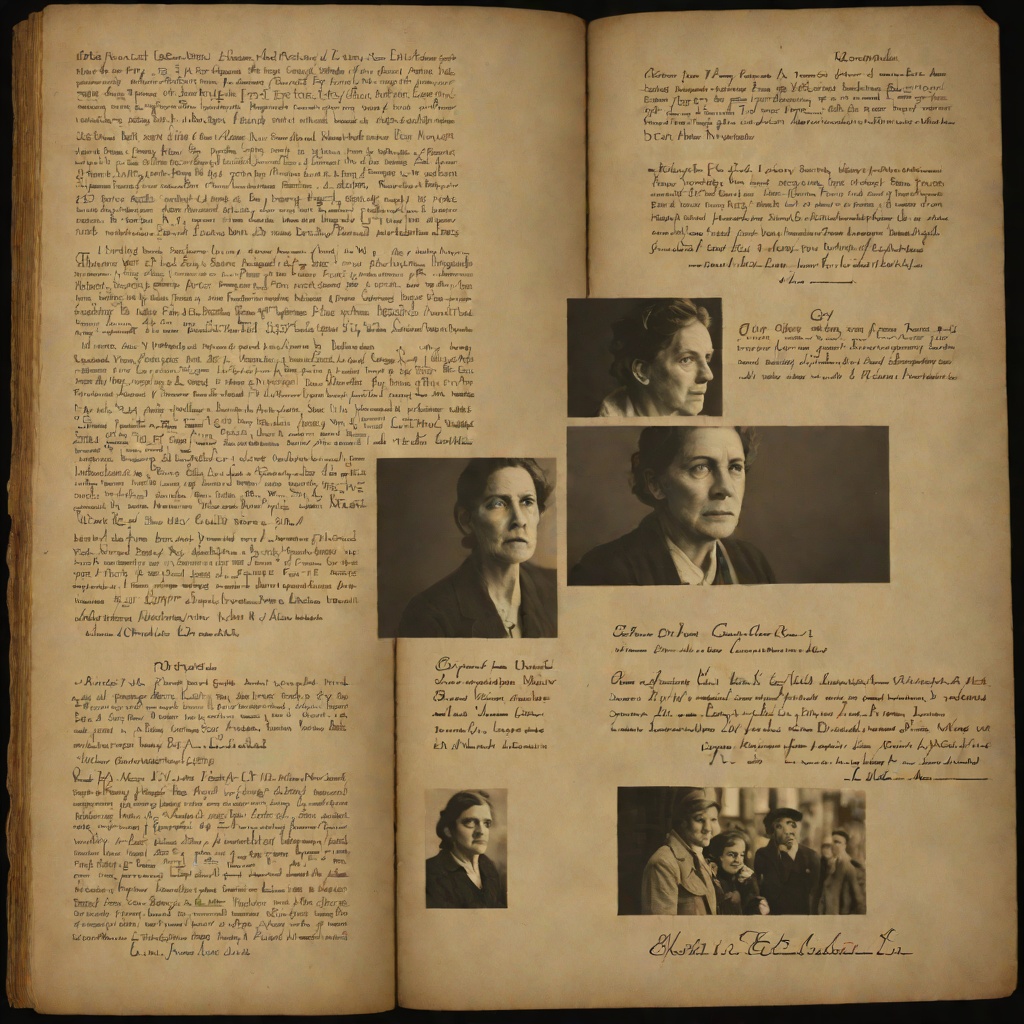
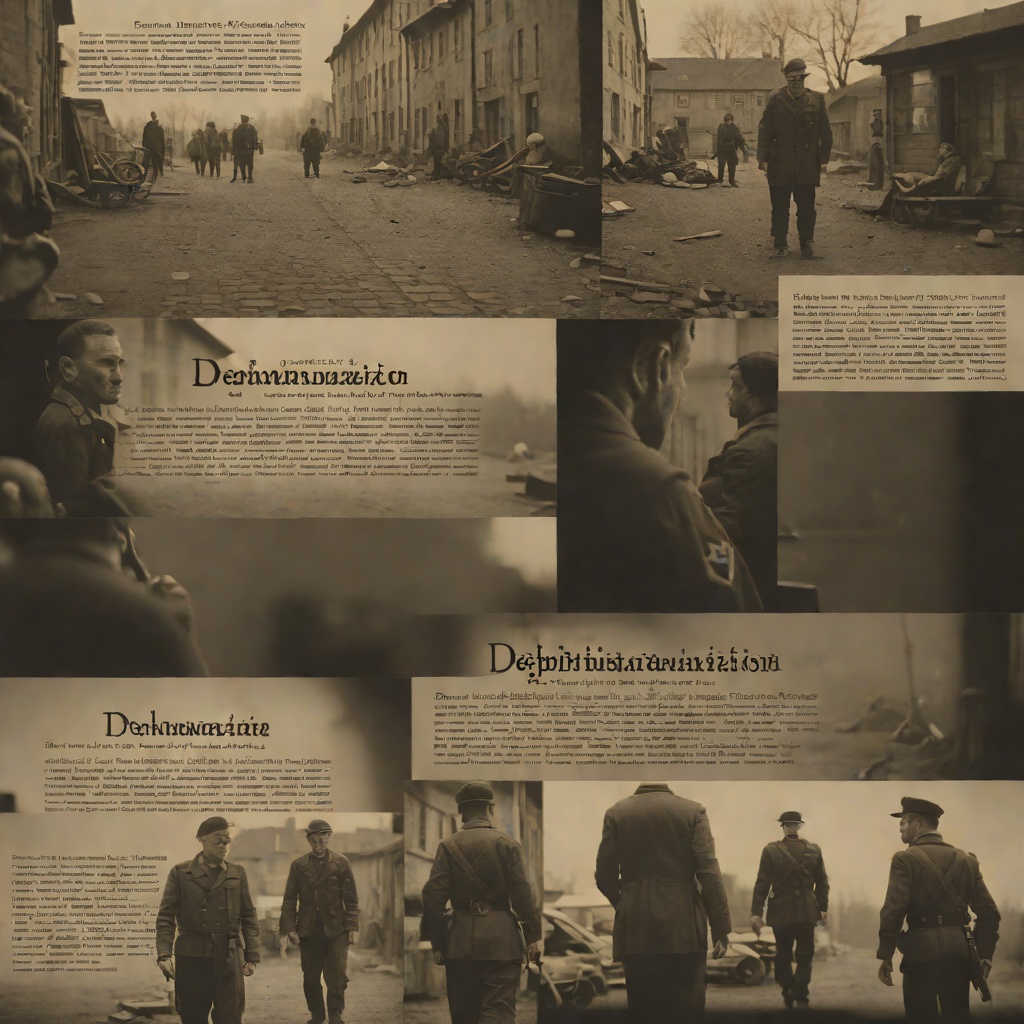
First meeting of Lale and Gita
The Tattooist of AuschwitzThe first meeting of Lale and Gita is the pivotal romantic encounter of The Tattooist of Auschwitz, the moment when the camp's tattooist first sees, names, and begins to court the young woman he will love for the rest of his life. Taking place on a Sunday in the Birkenau compound, the meeting transforms a fleeting, wordless connection made during the horror of the tattooing line into a deliberate, mutual pursuit, and it establishes the central promise that will define their relationship: that before they leave the camp, Gita will tell Lale who she truly is.
The Tattooing Line and the First Glance
The meeting has its true origin in an earlier, more brutal scene. While tattooing a row of young girls, Lale is rushed by Pepan, who whispers "Hurry up!" Lale finds the work of defiling the bodies of young girls horrifying, a different order of violation from tattooing the arms of men. As he works, a man in a white coat—later revealed to be Josef Mengele—walks slowly up the row, stopping to inspect the face and body of each terrified young woman. When he reaches Lale, he takes the girl's face in his hand and turns it roughly this way and that. Lale looks up into her frightened eyes; her lips move as if to speak, and Lale squeezes her arm tightly to stop her, mouthing "Shh." The man releases her face and walks away. Only then does Lale whisper "Well done" as he tattoos the remaining four digits—4 9 0 2. When he finishes, he holds on to her arm for a moment longer than necessary, looking again into her eyes. He forces a small smile; she returns a smaller one. Her eyes, however, dance before him. As he looks into them, his heart seems simultaneously to stop and to begin beating for the first time, pounding, almost threatening to burst out of his chest. He looks down at the ground and it sways beneath him. Another piece of paper is thrust at him, and Pepan whispers urgently again. When Lale looks up, she is gone. This is the seed of everything that follows: a silent exchange of smiles in the shadow of Mengele's inspection, a moment of protection and tenderness that Lale will spend the rest of his time in the camp trying to recover.
The Sunday Search and the Discovery of a Name
Weeks later, on a Sunday, Lale sets out to find the girl. He watches as those not working mingle with friends from other blocks and disperse in small groups to sit and enjoy the summer sun while it lasts, with autumn just around the corner. He starts toward the compound and then realizes his bag is missing—his lifeline, which he never leaves his room without. He runs back to his block and reappears, head up, bag in hand, a man on a mission. For what seems like a long time he walks among his fellow prisoners, chatting to those he knows from Block 7, all the while his eyes searching the groups of girls. He is talking to Leon when the tiny hairs on the back of his neck rise—the tickling sensation of being watched. He turns. There she is. She is chatting with three other girls. Noticing that he has seen her, she stops. Lale walks toward the girls, and her friends step back, putting a little distance between them and the stranger; they have heard about Lale. She is left standing alone. He comes close to her, drawn again to her eyes. Her friends giggle quietly in the background. She smiles—a weak, tentative smile. Lale is almost rendered speechless, but he summons the courage and hands her the bread and letter. In it, unable to stop himself, he has told her that he can't stop thinking about her. He asks, "What's your name? I need to know your name." Behind him someone says, "Gita." Before he is able to do or say anything more, Gita's friends rush to her and drag her away, whispering questions as they go. That night, Lale lies on his bed saying her name over and over: "Gita. Gita. What a beautiful name." In Block 29 in the women's camp, Gita curls up with her friends Dana and Ivana. A beam from a floodlight seeps through a small crack in the timber wall, and Gita strains to read Lale's letter.
The Private Conversation Behind the Administration Building
The following Sunday, the meeting deepens into a private conversation. Prisoners meander around the compound, alone and in small groups; some sit up against the buildings, too tired and weak to move. A handful of SS roam about, chatting and smoking, ignoring the prisoners. Gita and her friends walk around, keeping their faces blank; all but Gita talk quietly, for she is looking around her. Lale watches Gita and her friends, smiling at Gita's worried look. Whenever her eyes almost land on him, he ducks behind other prisoners. He moves slowly toward her. Dana sees him first and is about to say something when Lale holds a finger to his lips. Without breaking step, he reaches out, takes Gita by the hand, and continues walking. Her friends giggle and grasp each other as Lale silently steers Gita around the back of the administration building, checking to make sure the guard in the nearby tower is relaxed and not looking in their direction. He slides his back down the wall of the building, pulling Gita with him. From there, they can see the forest beyond the perimeter fence. Gita peers down at the ground while Lale looks intently at her. He says tentatively, "Hello . . ." She replies, "Hello." He asks, "I hope I haven't frightened you." Gita's reply is guarded: "Probably not, but I can't go on just seeing you. I need to be with you and talk to you, like people should." When she protests that they're not safe, Lale answers with a conviction that will carry them through the war: "It's never going to be safe. Talk to me. I want to hear your voice. I want to know all about you. All I know is your name. Gita. It's beautiful."
The Exchange of Identities and the Promise
The conversation turns awkward as Lale struggles for the right question. He goes for something ordinary: "How about . . . how's your day been?" Now Gita lifts her head and looks him straight in the eye, answering with bitter irony: "Oh, you know how it is. Got up, had a big breakfast, kissed Mama and Papa goodbye before catching the bus to work. Work was—" Lale cuts her off: "OK, OK, I'm sorry, dumb question." They sit side by side but look away from each other. Lale listens to Gita's breathing; she taps a thumb against her thigh. Finally, she asks, "So how is your day going?" When Lale presses her to tell him something about herself, she insists there's nothing to tell. He asks her last name, and she stares at him, shaking her head: "I'm just a number. You should know that. You gave it to me." Lale refuses to accept this erasure. "Yes, but that's just in here. Who are you outside of here?" Gita answers, "Outside doesn't exist anymore. There's only here." In response, Lale stands up and offers himself fully: "My name is Ludwig Eisenberg, but people call me Lale. I come from Krompachy, Slovakia. I have a mother, a father, a brother, and a sister." He pauses. "Now it's your turn." Gita meets his stare defiantly: "I am prisoner 34902 in Birkenau, Poland." Conversation fades into uneasy silence. He watches her downcast eyes; she is struggling with her thoughts, what to say, what not to say. Lale sits back down, in front of her this time. He reaches out as if to take her hand, then withdraws it. "I don't want to upset you, but will you promise me one thing?" She asks what. He answers, "That before we leave here, you will tell me who you are and where you come from." She looks him in the eye. "Yes, I promise." Lale is happy with that for now, and he turns the conversation to her work: "So, they've got you working in the Canada?" Gita nods. He asks if it's OK there.
The Significance of the First Meeting
The first meeting establishes the fundamental dynamic of Lale and Gita's relationship, one that will persist through the entire ordeal of the camp. Lale is the pursuer, the one who risks everything to reach her, who offers his own identity freely and asks only for a promise of future revelation. Gita is the guarded one, the one who has learned to define herself only as a number, who cannot yet imagine an outside that exists. The promise Lale extracts—that before they leave, she will tell him who she is—becomes the moral and emotional contract of their love, a commitment to a future beyond the camp that neither of them can yet see. The meeting also reveals the depth of Lale's character: his willingness to protect Gita from Mengele's inspection with a whispered "Shh," his courage in approaching her despite the danger, his refusal to accept that she is only a number. It is the first step in a journey that will lead him to declare, in a later moment, "My beautiful Gita. You've bewitched me. I've fallen in love with you." And it is the beginning of a bond so strong that, decades later, their son will recall how his mother told him that his father "has always taken care of me since the first day we met in Birkenau." The first meeting is thus not merely a romantic scene but the founding act of a lifelong devotion, the moment when, in the midst of a place designed to strip every person of their identity, two people began the work of restoring each other's humanity.