Gita and Cilka's friendship
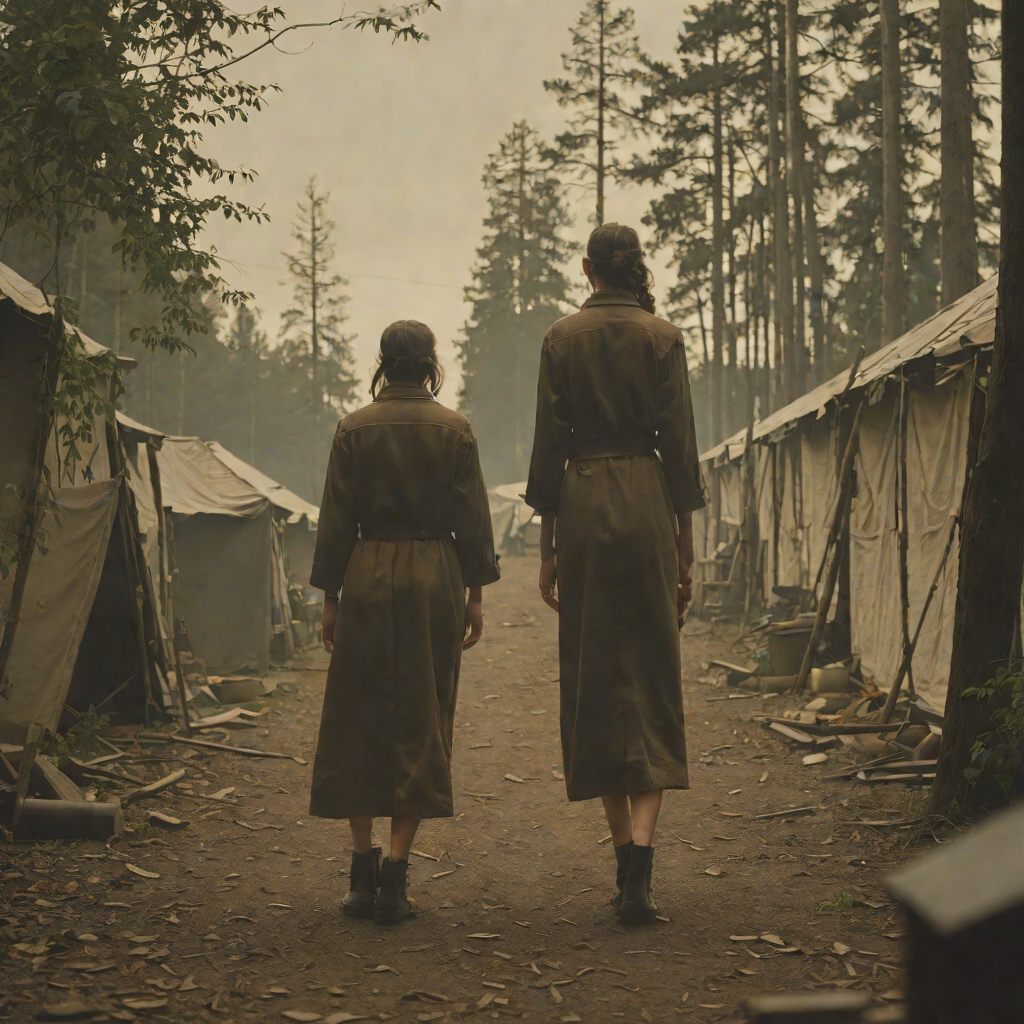
The Tattooist of AuschwitzThe friendship between Gita Furman and Cilka begins in the administrative heart of Birkenau, where both young women are assigned to work at desks. Their first exchange is simple and direct: Cilka introduces herself as being from Block 25, and Gita responds that she is from Block 29. Yet from this ordinary beginning grows a bond that will prove extraordinary in its resilience and significance. Cilka, described by Gita's friend Ivana as beautiful "even dressed in rags," possesses a grace that seems untouched by the horror surrounding them. Gita immediately recognizes something deeper in her new colleague, noting that Cilka has been "throwing me little smiles all day, just enough to reassure me," and concluding that "her beauty goes beyond the surface." This early perception of Cilka's inner quality becomes the foundation of a friendship built on mutual recognition and trust.
Early Bonds and Shared Work
The two women's friendship deepens through their shared labor in the administration building, where they work side by side at their desks. This relative comfort sets them apart from many other prisoners, a fact that Gita worries about, fearing that her friends Dana and Ivana might resent her new role. When Gita brings Cilka to meet her established friends, however, Dana and Ivana greet Cilka with immediate warmth and hugs, and Gita smiles, happy that her friends are so accepting of another girl in their midst. The friendship between Gita and Cilka thus becomes woven into a larger circle of women's solidarity in the camp, with Cilka's beauty and poise earning her a place among them. When Cilka departs for her block, Ivana watches her go with admiration, and Gita affirms her own appreciation of Cilka's character, establishing a bond that will be tested by the cruelty of their circumstances.
The Crisis of Cilka's Seizure
The friendship faces its first severe test when two SS officers approach Gita and Cilka without warning while they work at their desks. One officer grabs Cilka by the arm, jerking her to her feet, and Gita watches helplessly as her friend is marched from the room, looking back with confused and pleading eyes. When Gita fails to immediately return to work, she is struck across the head by an administrative SS officer, a clear message to get back to work. That evening, Gita runs from the office to her block with tears streaming down her face, and Dana and Ivana find her sobbing on their bunk, inconsolable, able only to tell them that Cilka has been taken away. The seizure reveals the precariousness of even the relative safety of administrative work and the depth of Gita's distress at losing her friend to an unknown fate. Cilka is dragged to a room dominated by a large four-poster bed, where Schwarzhuber, the head of Birkenau, sits tapping his tall leather boot with his swagger stick, and the encounter that follows marks a brutal turning point in Cilka's experience of the camp.
Cilka's Role in Lale's Rescue
Cilka's friendship with Gita becomes crucial when Lale is arrested and imprisoned in Block 11, the punishment block where he expects to be taken to the Black Wall after being tortured. Baretski enters the women's camp as the women are lining up for dinner and points at Gita, delivering a message that causes her to cover her face with her hands before she runs back into her friends' arms. "He's alive! Lale is alive," she tells them, explaining that Lale has insisted she tell Cilka that he is in Block 31. When Dana asks what Cilka can do to help, Cilka looks away, her mind working feverishly, and replies, "I will think about it." This quiet promise leads to Cilka's intervention with Schwarzhuber, the very man who assaulted her, to secure Lale's release. The friendship between Gita and Cilka thus becomes a conduit for Lale's survival, with Cilka's willingness to approach her abuser on behalf of her friend's beloved representing an act of extraordinary courage and self-sacrifice.
The Final Embrace and Lasting Legacy
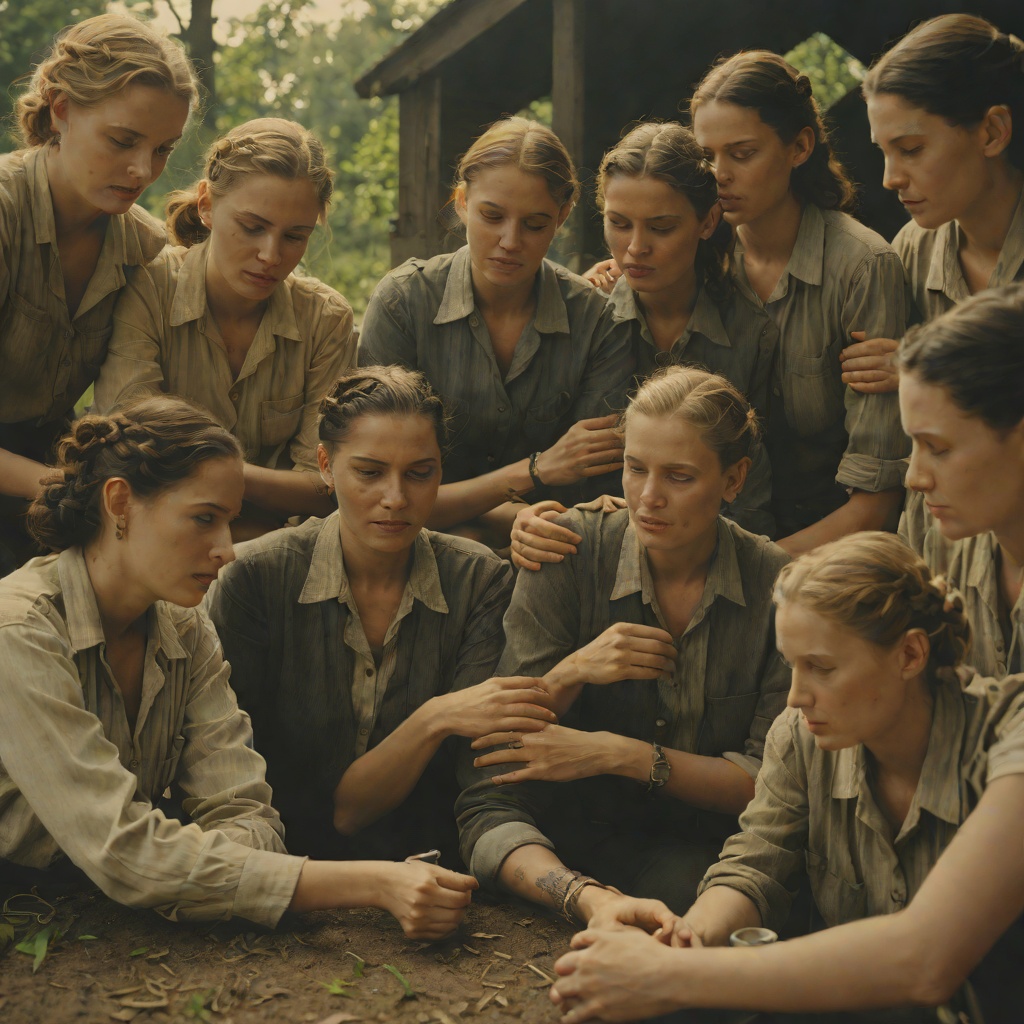
As the Russians approach and the SS begin destroying records, Lale runs to the women's camp and finds the women huddled together at the back of Block 29, with even Cilka present. In the gathering of frightened women, Lale takes Dana by both hands to express his gratitude for her friendship to Gita, then turns to Cilka and Ivana and wraps them both in a bear hug. To Cilka, he says, "You are the bravest person I have ever met. You must not carry any guilt for what has happened here. You are an innocent—remember that." In between sobs, Cilka replies, "I did what I had to do to survive. If I hadn't, someone else would have suffered at the hands of that pig." Lale responds, "I owe my life to you, Cilka, and I will never forget that." This exchange reveals the depth of Cilka's sacrifice and the moral complexity of her survival, as well as the profound gratitude that Lale and Gita feel toward her. After the war, Cilka is charged as a Nazi conspirator and sentenced to fifteen years' hard labor in Siberia, and afterward she returns to Bratislava. She and Gita meet only once more, in the mid-1970s, when Gita visits her two brothers. The friendship that began with a simple introduction in the administration building thus endures as a testament to the bonds women formed in the face of unimaginable horror, bonds that could compel one woman to confront her own abuser for the sake of another's beloved.