Jozef Eisenberg
The Tattooist of AuschwitzJozef Eisenberg is a figure defined less by his own actions within the narrative than by the profound and hidden consequences of his fate. He is the father of Lale Sokolov, the man who would become the Tätowierer of Auschwitz. His story is one of silent tragedy: transported to the camp as part of the machinery of the Holocaust, he was murdered immediately upon arrival, a fact that remained unknown to his son for the rest of Lale's life. This hidden loss forms a foundational layer of grief beneath Lale's entire survival story, shaping his emotional responses long after the war ended.
Identity and Background
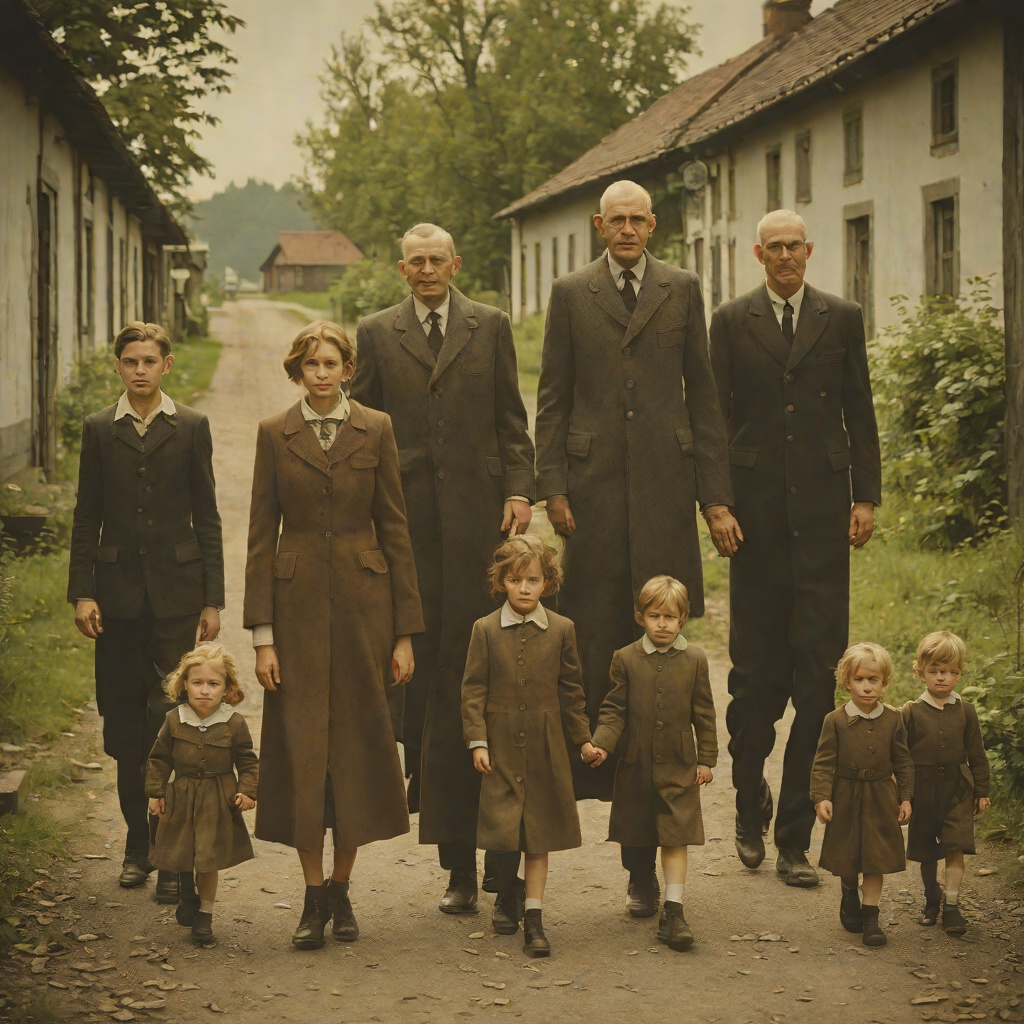
Jozef Eisenberg was the father of Lale Sokolov, who was born Ludwig Eisenberg. The family name itself carries the weight of identity and survival; after the war, Lale changed his name to Sokolov, the Russian last name of his married sister, a name more readily accepted than Eisenberg in Soviet-controlled Slovakia. This act of renaming, while practical, also served to distance Lale from the name he shared with his father and the family he had lost. Jozef's wife was Serena Eisenberg, and together they had at least two sons, Lale and another son whose loss is later referenced, as well as a married daughter whose surname Lale would eventually adopt.
The Fate at Auschwitz
Jozef and Serena Eisenberg were transported to Auschwitz on March 26, 1942, at a time when Lale was still in Prague. The circumstances of their arrival were brutal and immediate. Research has uncovered that they were killed immediately upon arrival at the camp, a fate shared by countless others who were deemed unfit for labor. This information, however, was not known to Lale during his own imprisonment. He was transported to Auschwitz on April 23, 1942, nearly a month after his parents, and was tattooed with the number 32407. The fact of his parents' deaths was discovered only after Lale's own death, meaning he lived his entire post-war life without the closure of knowing their specific fate, carrying instead the general and pervasive grief of their loss.
The Burden of Loss and Its Legacy
The loss of his parents and brother is a recurring, unspoken weight in Lale's story. This profound grief is directly linked to a notable emotional characteristic that persisted throughout his life: a lack of emotion and a heightened survival instinct. This was so pronounced that even when his sister passed away, he did not shed a tear. When asked about this, Lale explained that after seeing death on such a grand scale for so many years, and after losing his parents and brother, he found he was unable to weep. This emotional armor, forged in the crucible of the camp and the loss of his family, remained intact until the death of his wife, Gita. It was only then, after a lifetime of suppressed grief, that he was finally able to cry, the first time his son had ever seen him do so. The memory of Jozef, therefore, is not a series of scenes but a persistent absence that defined Lale's emotional capacity and his relationship with death itself.
Narrative Role and Significance
Jozef Eisenberg's role in the narrative is primarily that of a silent, foundational loss. He represents the personal cost of the Holocaust that extends beyond the camp's walls, touching the families who were separated and destroyed. His death, unknown to Lale, underscores the theme of incomplete knowledge and the enduring trauma of uncertainty. The fact that Lale never knew his parents were killed immediately upon arrival adds a layer of tragic irony to his own survival; he spent years in the camp, and decades after, believing they might have suffered a different, perhaps survivable, fate. Jozef's story, pieced together only after Lale's death, highlights the fragmented nature of memory and history, and how the full truth of even the most intimate losses can remain hidden for a lifetime. He is a testament to the many victims whose stories are known only through the lives they left behind, and his memory is a key to understanding the deep, unspoken well of grief that Lale carried with him.