Krompachy
The Tattooist of AuschwitzKrompachy is the small town in Slovakia where Lale Sokolov grew up and where his family home stood. It is the fixed point of origin in his story: the place he left voluntarily to protect his family, the place he thought of constantly while imprisoned in Auschwitz, and the place he walked hundreds of miles to reach after liberation. More than a geographical setting, Krompachy represents the ordinary, loving life that the Holocaust destroyed and the home that, in the end, no longer existed for him to return to.
A Town Under Threat
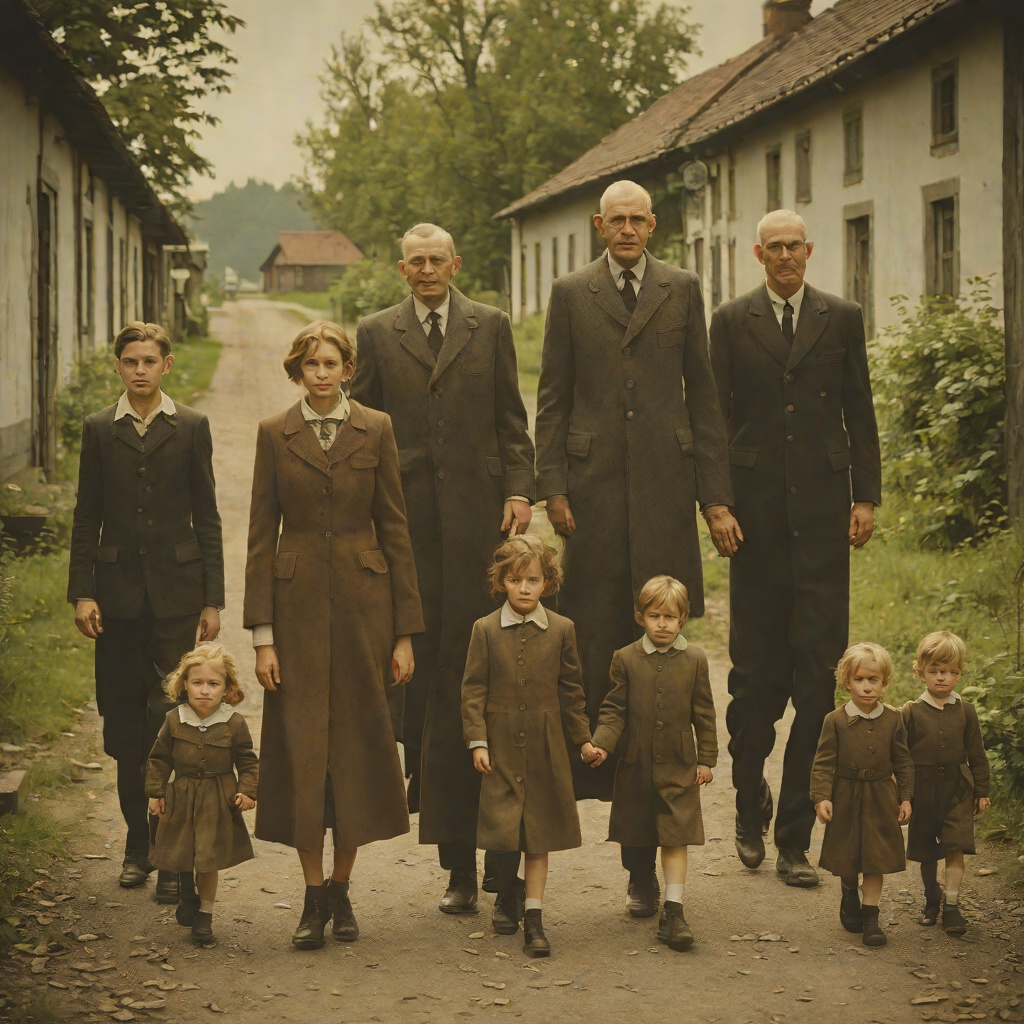
Krompachy was Lale's family home, the place where his parents, his older brother Max, his sister, and his young nephews lived together. When news reached the town that Jews in small towns were being rounded up and transported to work for the Germans, Lale returned to his parents' home. He knew that Jews were no longer allowed to work and that their businesses had been confiscated. For nearly four weeks he helped around the house, fixing things with his father and brother, and building new beds for his young nephews who had outgrown their cribs. His sister was the only family member earning an income, working as a seamstress; she had to travel to and from work in secret, before dawn and after dark, because her boss was prepared to take the risk for his best employee.
The threat reached Krompachy directly when Lale's sister returned home one evening with a poster her boss had been asked to put in the shop window. The poster demanded that each Jewish family hand over a child aged eighteen or older to work for the German government. The whispers and rumors about what had been happening in other towns had finally come to Krompachy. The poster warned in bold type that if any family had such a child and did not surrender them, the whole family would be taken to a concentration camp. Max, Lale's older brother, immediately said he would go, but Lale would not hear of it. Max had a wife and two young children; he was needed at home.
The Voluntary Sacrifice
Lale reported to the local government department in Krompachy, offering himself for transportation. The officials he dealt with had been his friends—they had gone to school together and knew each other's families. He was told to make his way to Prague, report to the appropriate authorities, and await further instructions. This act of volunteering defined Lale's moral identity for the rest of his life. On the cattle train, as he was carried toward Auschwitz, he thought of his family back home, safe, and told himself he had made the sacrifice and had no regrets. He would make it again and again to keep his beloved family at home, together.
The town itself, however, offered no protection. The officials who had been his friends processed his transport without hesitation. The poster that demanded a child from each Jewish family had been given to his sister's boss to display in his shop window. Krompachy was not a place of refuge but a place where the machinery of deportation reached into ordinary homes, where neighbors became bureaucrats, and where a family's love for one another became the very reason one of them had to leave.
The Long Road Home
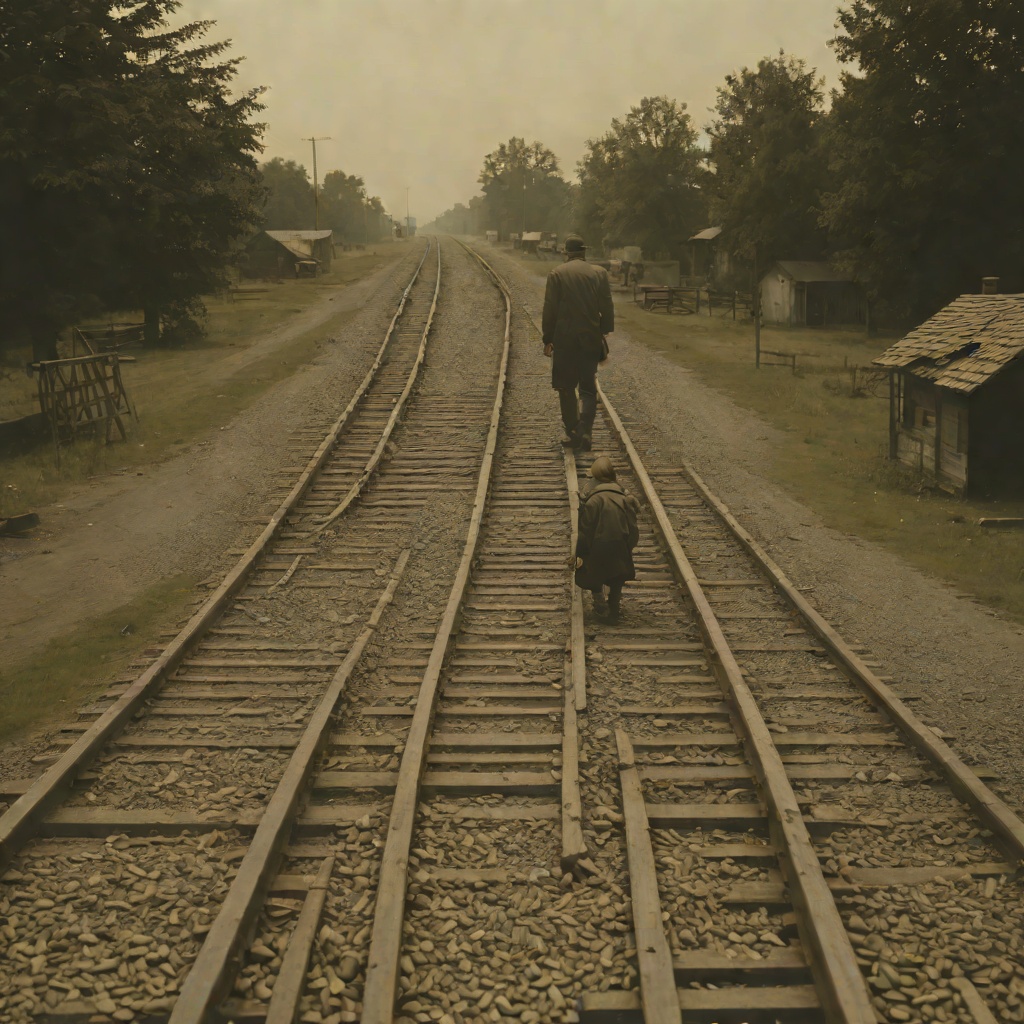
After the war, Lale stepped off the train in Bratislava, the city where he had lived and been happy, where his life should have been playing out for the last three years. He wandered through districts he used to know so well, many now barely recognizable due to bombing. There was nothing for him there. He had to find a way back to Krompachy, some two hundred and fifty miles away. It took him four days of walking, interspersed with occasional rides in horse-drawn carriages, a bareback ride on a horse, and a ride on a tractor-drawn cart. He paid, when he needed to, the only way he could: a diamond here, an emerald there.
Finally he walked down the street he grew up on and stood across from his family home. The palings of the front fence were gone, leaving just the twisted posts. The flowers, once his mother's pride and joy, had been strangled by weeds and overgrown grass. Rough timber was nailed over a broken window. An elderly woman came out of the house opposite and stomped over to him. The home he had sacrificed himself to protect was empty and ruined; the family he had volunteered to save was gone. Krompachy, the place that had sent him away, was no longer a home to return to.
The Town in Memory
Krompachy remained a reference point in Lale's memory throughout his imprisonment. On the cattle train, when other men tried to engage him in conversation, he responded with words of encouragement, trying to turn their fear into hope, saying, "We stand in shit but let us not drown in it." He thought of his family back home, safe, and repeated to himself that he had made the sacrifice willingly. The memory of Krompachy was what he held onto—the image of his family together, the reason he had volunteered, the life he was trying to preserve.
In the camp, the distance from Krompachy was measured in suffering. When Lale watched the gas-van murders at Birkenau, when he recited the kaddish over the bodies of Romany children, when he thought about the date April 4, 1944, and realized that in three weeks he would have been in the camp for two years, he wondered how he was still breathing when so many weren't. He thought back to the vow he had made at the beginning: to survive and to see those responsible pay. The memory of home, of the family he had volunteered to protect, was part of what kept him alive.
The town also shaped the way Lale understood his own identity in the camp. When he learned the system of Nazi concentration camp badges, he was told that he and his friends wore the yellow star, and that his crime was to be Jewish. He had come from Krompachy as a volunteer, dressed in a pressed suit, clean white shirt, and tie, always dressing to impress, and he carried with him the manners and confidence of a young man from a small town who believed he could talk his way through anything. That confidence, born in Krompachy, was what allowed him to become the Tätowierer and to survive.
A Place That No Longer Exists
The postwar return to Krompachy completed the arc of Lale's story. He had left as a volunteer sacrifice, certain that his family would be safe because of his choice. He returned to find the house empty, the fence gone, the flowers strangled, and the family gone. The town itself had been changed by bombing and by the war, but the deeper loss was personal. The home he had given himself up to protect no longer existed. The sacrifice had been made in vain, and the place that had sent him away had nothing left to give him back.
Krompachy thus functions as the emotional anchor of Lale's narrative. It is the place of origin, the place of sacrifice, and the place of loss. It is where he was a son and a brother, where he fixed things with his father and built beds for his nephews, where his sister worked in secret as a seamstress. It is also the place where the poster appeared in the shop window, where his friends in the local government processed his transport, and where he returned to find nothing. The town is both the beginning of his story and the measure of everything the Holocaust took from him.