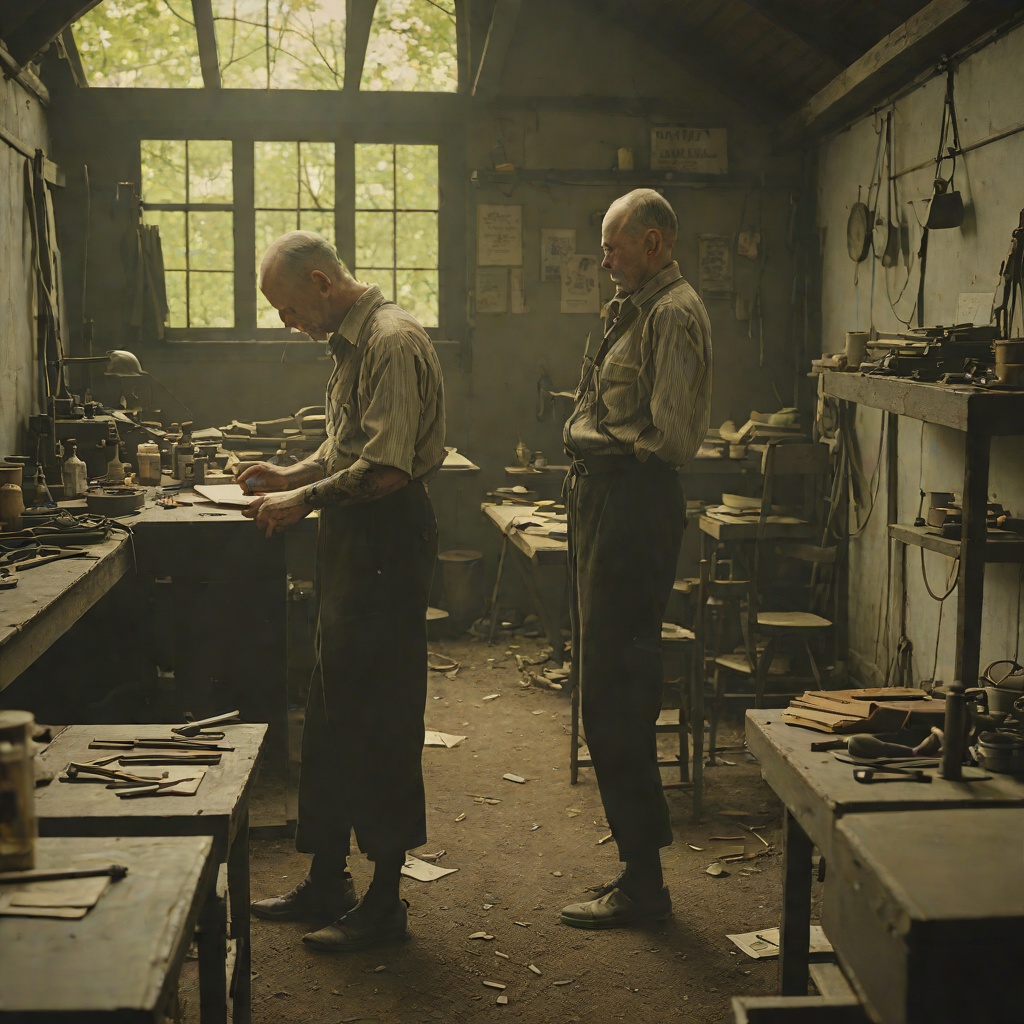
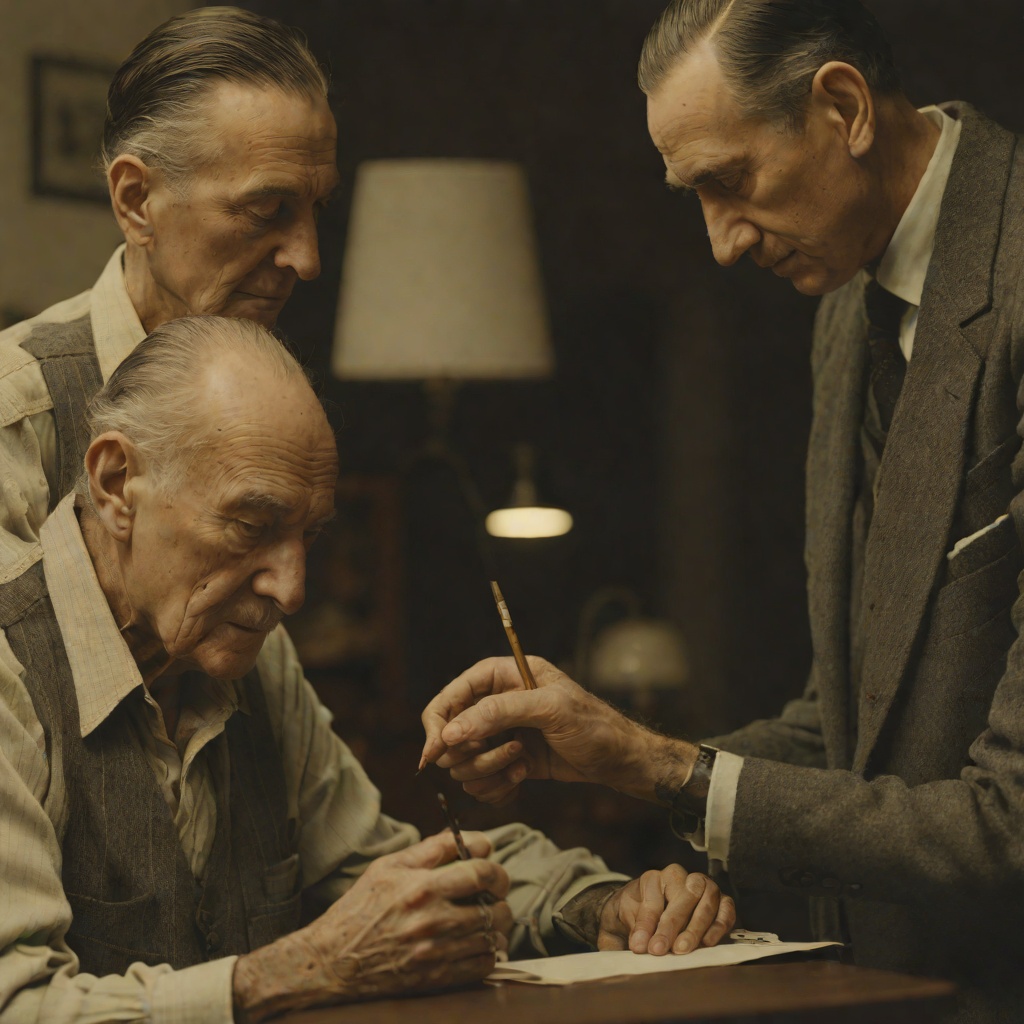
Lale and Pepan's relationship
The Tattooist of AuschwitzLale and Pepan's relationship is the foundational bond of The Tattooist of Auschwitz, the chain of events that transforms Lale Sokolov from a helpless, half-dead prisoner into the camp's Tätowierer and, ultimately, into a man defined by his capacity to save others. It begins not with a conversation but with an act of rescue, and it ends with a silent succession that leaves Lale alone with a job he never wanted and a responsibility he could not refuse. More than any other connection in the book, this relationship establishes the ethical core of the narrative: that in a place designed to strip away humanity, one person's choice to save another is the only meaningful defiance.
The Rescue from the Death Cart
The relationship is born out of a moment of pure, uncalculated courage. Lale, struck down by typhus, is thrown onto a cart for the dead and dying, destined for an early grave. As Pepan later recounts, he was walking past Lale's block just as the body was being loaded, and a young man was pleading with the SS to leave him, saying he would take care of him. When the SS went into the next block, this unknown young man pushed Lale off the cart and began dragging him back inside, and Pepan went to help him. This act of rescue is the seed of everything that follows. Pepan does not merely save Lale's body; he witnesses a stranger risk his life for another, and that sight becomes the reason he later chooses Lale for the most consequential job in the camp. The identity of the young man who pushed Lale from the cart remains unknown to Pepan, who admits they never exchanged names, but the deed itself becomes the moral currency of their entire relationship.
The Revelation of the Tätowierer
When Lale finally recovers, he is escorted outside into a cloudless day, and the world spins beneath him. A stranger supports him and leads him to a pile of timber. Pulling up Lale's sleeve, the man points to the tattooed number and introduces himself: "My name is Pepan. I am the Tätowierer. What do you think of my handiwork?" The revelation is shocking to Lale, who asks, "You mean, you did this to me?" Pepan shrugs, looking Lale directly in the eye, and answers, "I wasn't given a choice." This exchange establishes the central moral tension of the Tätowierer's role: it is a job performed under duress, a defilement of innocent people that no one would willingly choose. Lale, still weak and disoriented, responds with dark humor, saying the number wouldn't have been his first choice of tattoo, and Pepan asks what he would have preferred. The banter is a small act of humanity in a place that denies it, and it signals the rapport that will grow between them.
The Burden of the Job and the Choice of Successor
Pepan does not immediately offer Lale the job. Instead, he presents it as a moral dilemma, pulling back his own sleeve to reveal his number and admitting, "It hurts like hell. If you don't take the job, someone will who has less soul than you do, and he will hurt these people more." This is the argument that ultimately convinces Lale: the job is not a privilege but a burden, and the only way to minimize the harm is for someone with a conscience to do it. Lale resists, insisting that working for the kapo is not the same as defiling hundreds of innocent people, but Pepan's logic is inescapable. When Lale finally asks why he has been chosen, Pepan answers with the memory of the rescue: "I saw a half-starved young man risk his life to save you. I figure you must be someone worth saving." The choice is not based on skill or experience but on character, on the evidence of a single selfless act. Pepan tells Lale he will come for him the next morning, and the succession is set in motion.
Working Together and the First Meeting with Gita
The two men work side by side, and Pepan becomes Lale's guide into the grim mechanics of the camp. It is Pepan who prepares Lale for the day the girls are moved from Auschwitz to Birkenau, explaining that some of them need their numbers redone because they were made with a stamp, which was inefficient. "No time to admire them, Lale—just do your job," he warns, but Lale cannot help himself. When he tattoos the girl who will become Gita Furman, prisoner 34902, he holds on to her arm for a moment longer than necessary, and his heart seems simultaneously to stop and to begin beating for the first time. Pepan's urgent whispers—"Hurry up, Lale!"—are the backdrop to the most important moment of Lale's life, and they underscore the danger of the work. The relationship between the two men is one of mentorship and mutual respect, but it is also a constant reminder of the peril they are in, with Pepan's repeated warnings to be quick and careful.
The Silent Succession
Several weeks later, Lale reports for work as usual, but his table and equipment are already laid out and Pepan is nowhere to be seen. He is startled by the approach of Oberscharführer Houstek, accompanied by a young SS officer, and he remembers Pepan's words: Do not underestimate him. Houstek tells Lale he will be working alone, and when Lale asks where Pepan is, Houstek glares back at him and delivers the news: "You are the Tätowierer now." There is no explanation, no farewell, no chance for Lale to thank the man who saved his life. Pepan simply vanishes from the narrative, and Lale is left to wonder, "Pepan, you said this job might help save my life. But what has happened to you?" The silence around Pepan's fate is one of the most haunting absences in the book, a reminder that in Auschwitz, people could disappear without a trace, and that even the most meaningful relationships could be severed without resolution. The succession is complete, but it is a succession born of loss, not of celebration.
The Legacy of Pepan's Choice
The relationship does not end with Pepan's disappearance; it lives on in everything Lale does afterward. The ethical framework Pepan established—that the job must be done by someone with a soul, that saving one person is worth the risk—becomes Lale's own guiding principle. When Lale later risks his life to rescue Mendel Bauer, changing the boy's tattoo into a snake so that his number cannot be seen, he is acting on the lesson Pepan taught him. He tells the boys looking on, "Where Mendel is going, no one is numbered. It wouldn't take long for his number to be seen, and then he would be right back here, to keep his appointment with the hangman." This is the Tätowierer's creed, passed from Pepan to Lale: the job is not just about marking people but about protecting them. The relationship also shapes Lale's identity in the long term. When he changes his name to Sokolov after the war, taking the Russian last name of his married sister because it is more readily accepted than Eisenberg in Soviet-controlled Slovakia, he is completing a transformation that began with Pepan's choice. The half-starved young man who was worth saving becomes a man who saves others, and the legacy of that first act of rescue endures for the rest of his life.
Narrative Significance and the Ethics of Memory
The relationship between Lale and Pepan is also central to the book's meditation on memory and storytelling. The author, who sat with Lale at his kitchen table for three years, describes how Lale shed the burden of guilt he had carried for more than fifty years, the fear that he and Gita might be seen as Nazi collaborators. Pepan's role in Lale's story is part of that burden and that redemption: Pepan was the one who gave Lale the job, and Lale spent the rest of his life trying to justify it by using it to save others. The author notes that Lale's memories were remarkably clear and precise, matching her research into people, dates, and places, and that there was no parting of memory and history for this beautiful old man—they waltzed perfectly in step. Pepan is one of the figures in that waltz, a man whose name and fate remain uncertain but whose influence is unmistakable. The relationship between the two men is a testament to the idea that in the darkest of times, a single act of kindness can ripple outward and shape a life, and that the choice to save one person is, in the end, a choice to save the world.