Lale tattoos Gita (prisoner 34902)
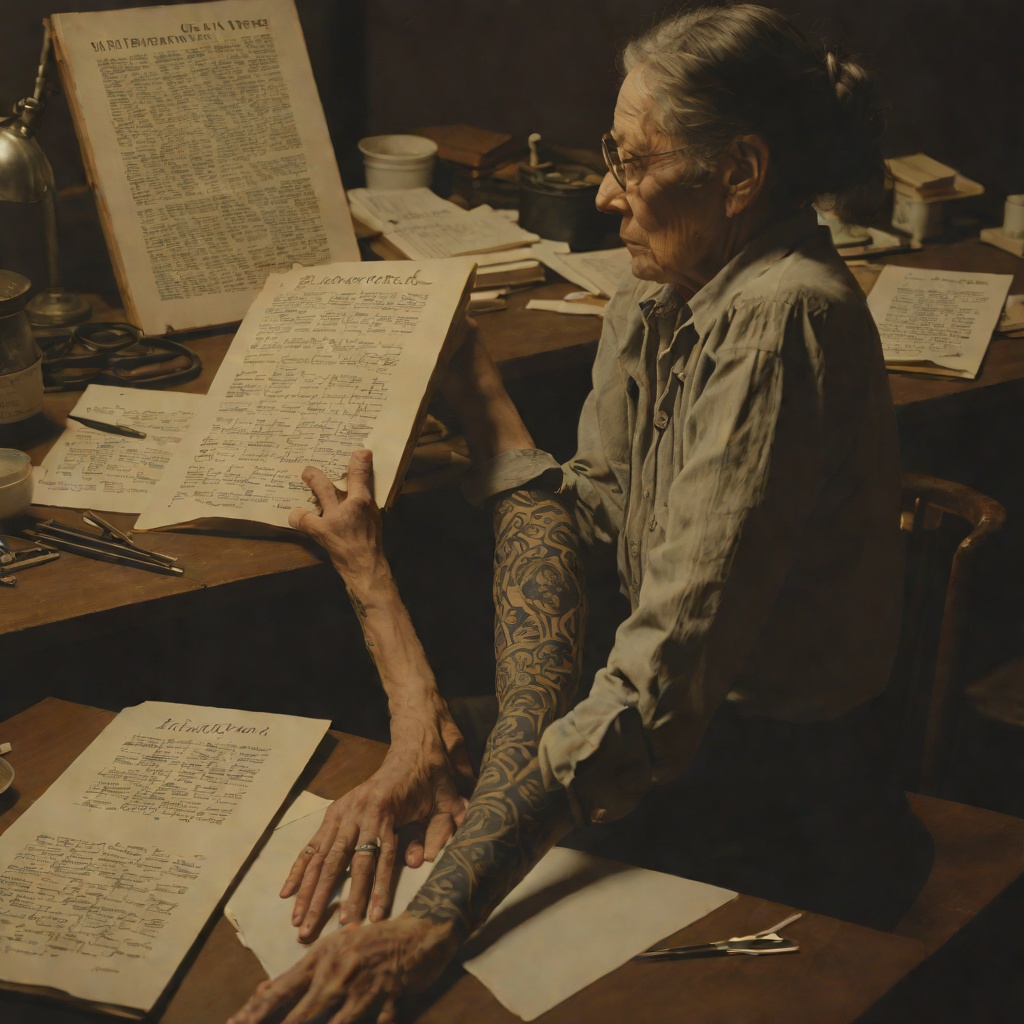
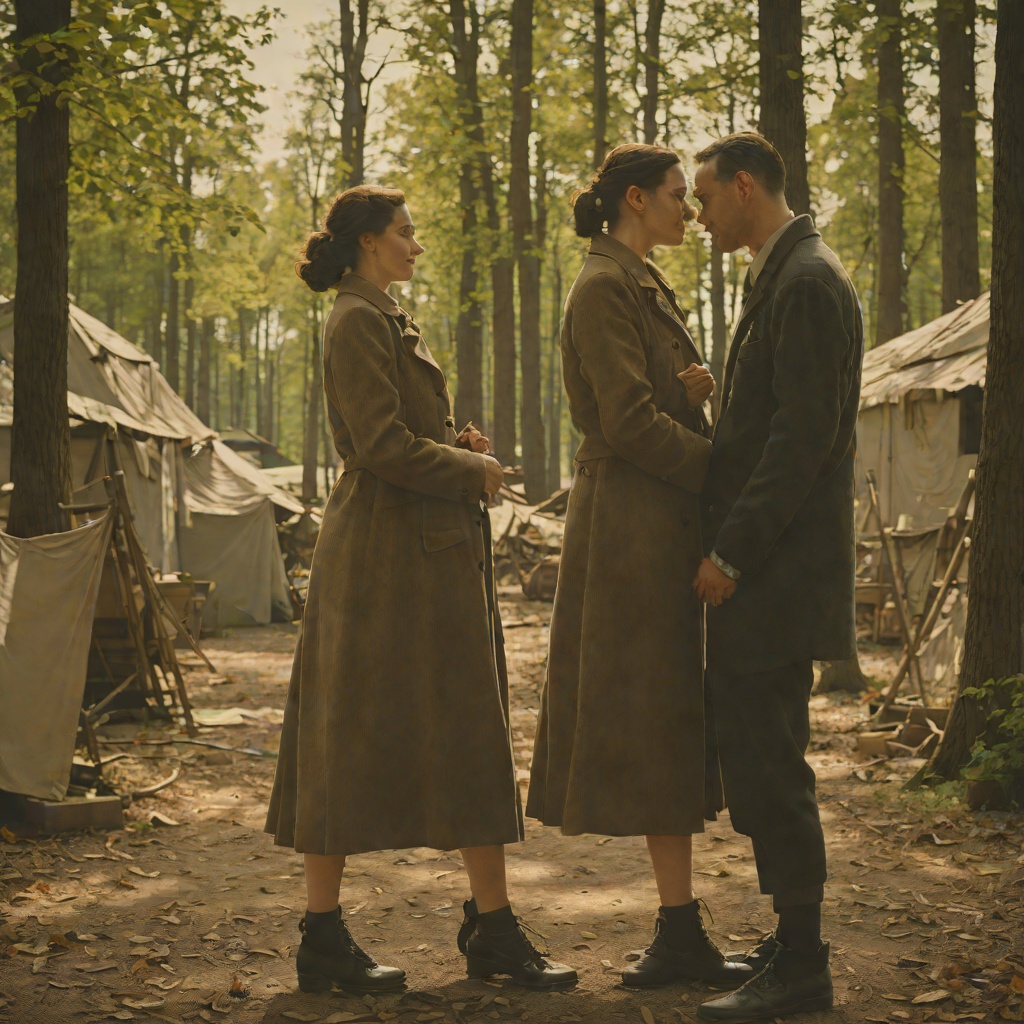
The Tattooist of AuschwitzLale tattoos Gita (prisoner 34902) is the pivotal action in which Lale Sokolov, the camp tattooist at Birkenau, retattoos the faded number on the arm of a young woman who will become Gita Furman, the love of his life. This single act of forced labor transforms into the moment of their first meeting, the genesis of a love story that endures through the Holocaust and beyond. The event establishes the central romantic relationship of the narrative, introduces the dehumanizing tattoo system, and marks the beginning of Lale's secret campaign to protect Gita, a commitment that will define his actions for the rest of their time in the camp.
The Setting and the Task
The event takes place in Birkenau, the "hell of hells," on a morning when the sun threatens to shine a little light on the bleak compound after days of rain. Lale and his mentor Pepan are preparing their work area, which consists of two tables, bottles of ink, and plenty of needles. Pepan warns Lale to get ready, and Lale looks up to be stunned at the sight of dozens of young women being escorted their way. He had known there were girls in Auschwitz, but not here, not in Birkenau. Pepan explains that some girls have been moved from Auschwitz to Birkenau and that some of them need their numbers redone because the original numbers were made with a stamp, which was inefficient. The row of young girls snakes back beyond Lale's vision.
Lale is horrified by the task. He protests to Pepan, saying he cannot do it, that they cannot do it. Pepan insists, telling him that if he does not, someone else will, and that his saving Lale will have been for nothing. Pepan holds Lale's stare, and dread settles deep in Lale's bones. He realizes Pepan is right: he either follows the rules or risks death. This moment establishes the brutal logic of the camp, where even an act of compassion is framed as a choice between obedience and annihilation.
The Act of Tattooing
Lale starts the job, trying not to look up. He reaches out to take the piece of paper being handed to him, on which he must transfer the five digits onto the girl who held it. There is already a number there, but it has faded. He pushes the needle into her left arm, making a three, trying to be gentle. Blood oozes, but the needle has not gone deep enough, and he has to trace the number again. She does not flinch at the pain Lale knows he is inflicting. They have been warned to say nothing and do nothing. He wipes away the blood and rubs green ink into the wound. Pepan whispers at him to hurry up, as Lale is taking too long. Tattooing the arms of men is one thing; defiling the bodies of young girls is horrifying.
As Lale works, he glances up and sees a man in a white coat slowly walking up the row of girls, stopping every now and then to inspect the face and body of a terrified young woman. Eventually the man reaches Lale. While Lale holds the arm of the girl in front of him as gently as he can, the man takes her face in his hand and turns it roughly this way and that. Lale looks up into her frightened eyes. Her lips move in readiness to speak, and Lale squeezes her arm tightly to stop her. She looks at him, and he mouths, "Shh." The man in the white coat releases her face and walks away. This tense encounter underscores the constant threat of violence and the need for absolute silence, even in the face of terror.
The First Meeting and Its Aftermath
After the man in the white coat departs, Lale whispers "Well done" as he sets about tattooing the remaining four digits: 4 9 0 2. When he has finished, he holds on to her arm for a moment longer than necessary, looking again into her eyes. He forces a small smile, and she returns a smaller one. Her eyes, however, dance before him. As he looks into them, his heart seems simultaneously to stop and to begin beating for the first time, pounding, almost threatening to burst out of his chest. He looks down at the ground, and it sways beneath him. Another piece of paper is thrust at him, and Pepan whispers urgently for him to hurry up. When Lale looks up again, she is gone.
This moment of connection is the seed of the entire love story. The physical act of tattooing, an instrument of dehumanization, becomes the occasion for the most human of experiences: falling in love. The girl's number, 34902, is not just a mark of her imprisonment but the identifier through which Lale will come to know her as Gita Furman. The event also establishes the pattern of their relationship: Lale's protective instinct, his willingness to risk himself for her, and the constant pressure of the camp's surveillance that forces their connection to remain hidden.
The Significance of the Tattoo System
The event is inseparable from the broader context of the Auschwitz tattoo system. Lale himself was tattooed with the number 32407 upon his arrival, when an SS officer pulled off his jacket, ripped his shirtsleeve, and pushed his left forearm flat on the table, stabbing the numbers into his skin with a piece of wood with a needle embedded in it. The shock of that moment made time stand still for Lale, and he wondered if for the rest of his life, be it short or long, he would be defined by that irregular number. The tattoo system reduces individuals to numbers, stripping them of identity and humanity. In retattooing Gita's number, Lale is both an agent of this system and a witness to its cruelty, a duality that will define his role in the camp.
The tattoo also carries a social hierarchy within the camp. Lale later works out that the higher the number on a person's arm, the less respect they receive from everyone else. Every time another nationality arrives in large numbers, turf wars ensue. This understanding of the tattoo's social meaning deepens the significance of the act: Lale is not just marking Gita but assigning her a place in the camp's brutal pecking order. Yet his personal connection to her transcends this system, as he will later risk everything to save her and others, embodying the principle that to save one is to save the world.