Lale's escape from the Saurer-Werke subcamp
The Tattooist of AuschwitzLale's escape from the Saurer-Werke subcamp is the decisive act of self-liberation in The Tattooist of Auschwitz, the moment when the man who had spent three years as the camp's Tätowierer finally refuses to give the Nazis one more day of his life. It is a desperate flight through forest and freezing river, under the cross fire of two warring armies, that turns a prisoner defined by his tattooed number into a free man who seizes his own fate. The escape is the fulfillment of a vow he had carried since his arrival at Auschwitz, and it clears the way for his reunion with Gita in Bratislava.
The Decision to Flee
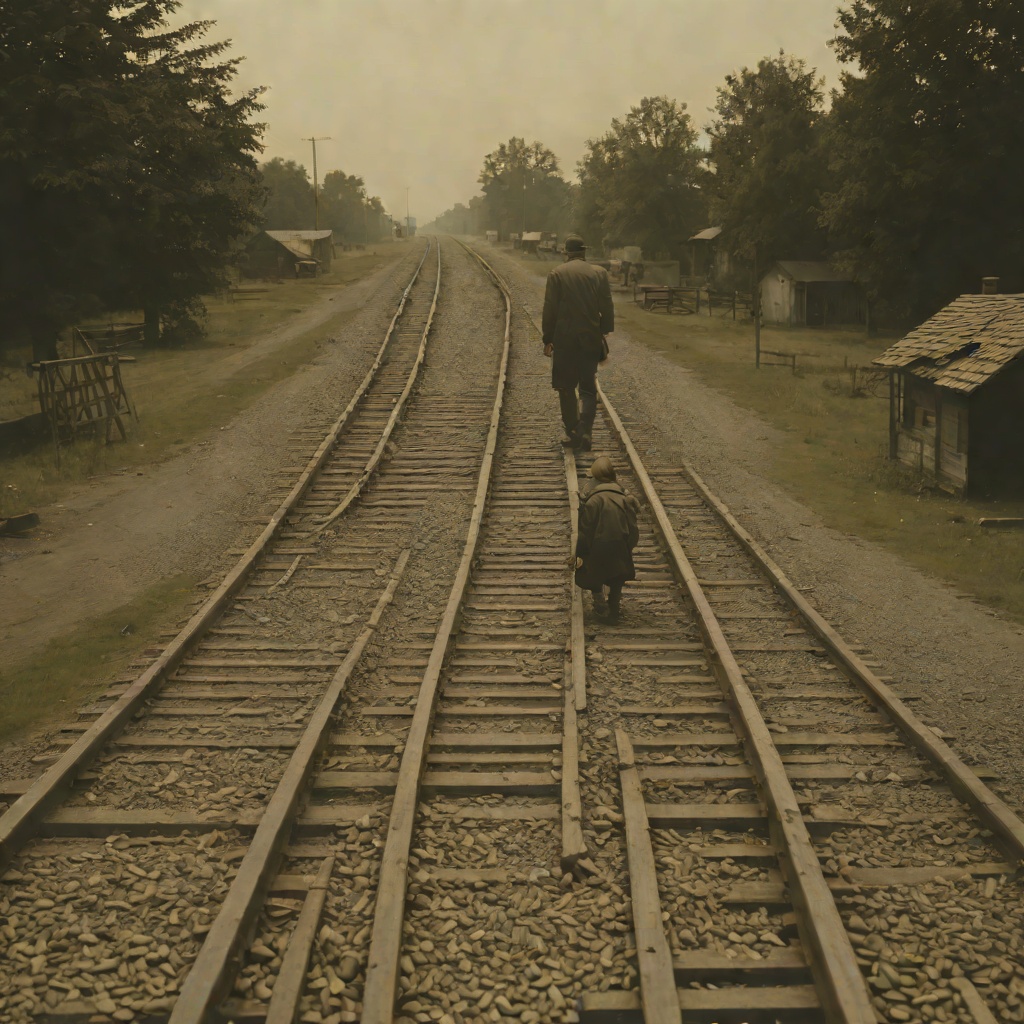
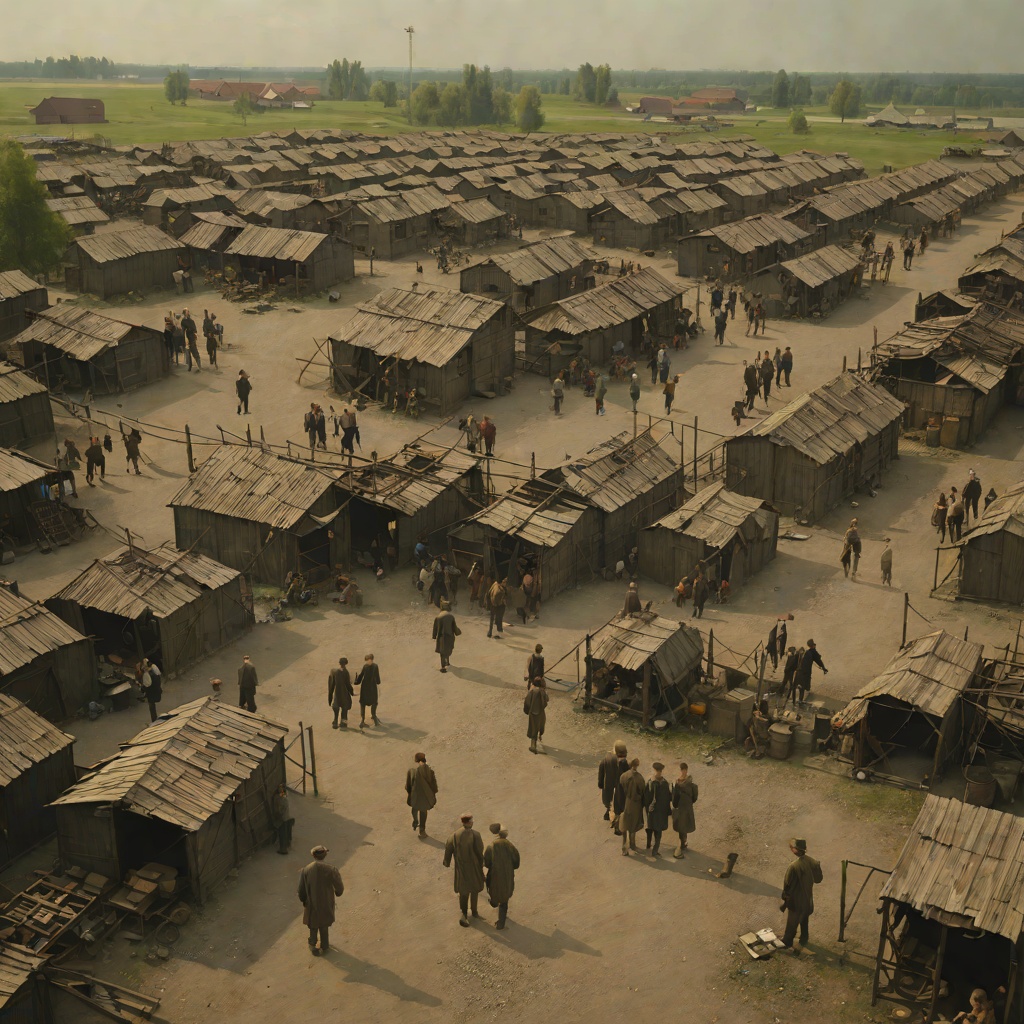
The escape begins not with a plan but with a reckoning. On the twenty-third of April, Lale asks a fellow prisoner for the date, and the answer lands on him with the force of a blow: three years have passed since he was transported to Auschwitz on April 23, 1942, and tattooed with the number 32407. Standing outside, looking at the prisoners sitting lazily around the compound and the guards who look even lazier, he makes a private declaration: "Three years. You've taken three years of my life. You will not have one more day." The words are not spoken aloud to anyone; they are a vow he makes to himself, the same kind of inner resolve that had sustained him since the cattle train, where he told his fellow prisoners, "We stand in shit but let us not drown in it." He walks along the back of the blocks, shaking the fence, searching for a weak point. It does not take him long to find one: the fence comes away at ground level, and he is able to pull it toward him. Without even bothering to see if anyone is watching, he crawls under and walks calmly away.
The Flight Through Forest and River
The forest provides him with cover from any patrolling Germans, but it offers no safety. As he walks deeper in, he hears the sound of cannons and rifle fire, and he does not know whether to walk toward it or run the other way. During a brief cease-fire, he hears the running of a stream. To reach it, he must get closer to the shooting, but he has always had a good internal compass, and that direction feels right. If it is the Russians, or even the Americans, on the other side of the stream, he will gladly surrender to them. As the daylight fades into evening, he can see the flash of gunfire and cannons in the distance. Still, it is the water he wants to get to, and hopefully a bridge and a route away. When he gets there, a river confronts him rather than a stream. He looks across and listens to the cannon fire, thinking, "It must be the Russians. I'm coming your way." Lowering himself into the water, he is shocked at the freezing cold. He swims slowly out into the river, careful not to disturb the water too much with his strokes in case he is seen. Pausing, he raises his head and listens. The gunfire is closer. "Shit," he mutters. He stops swimming and lets the current carry him directly under the cross fire, just another log or dead body to be ignored. When he thinks he has safely cleared the warring armies, he swims frantically to the far bank. He hauls himself out and drags his drenched body into the trees before collapsing in shivers and passing out.
The Aftermath and the Road Home
Lale wakes to the feeling of the sun on his face. His clothes have dried out a bit, and he can hear the sound of the river running below him. He crawls on his belly through the trees that have hidden him overnight and reaches the crest of a road. Russian soldiers are walking along it. He watches for a few moments, fearing gunfire, but the soldiers are relaxed. He decides to accelerate his plan to get home. The escape from the Saurer-Werke subcamp is thus not an end but a beginning: it is the threshold between his life as a prisoner and his life as a free man, the moment that makes possible his eventual reunion with Gita in Bratislava and their flight from Czechoslovakia. The river crossing, in particular, carries a symbolic weight: the freezing water that nearly kills him also washes away the identity of the tattooed prisoner, leaving behind a man who can walk toward the Russians without fear.
The Significance of the Escape
The escape is the culmination of everything Lale had endured and everything he had refused to become. It stands in stark contrast to the passivity and degradation of his arrival at Auschwitz, where he was processed, stripped, shaved, and tattooed with the number 32407, where an SS officer ripped his shirtsleeve and stabbed the numbers into his skin with a piece of wood with a needle embedded in it. It also contrasts with the torture he suffered in the Strafkompanie, the penal unit where he was imprisoned from June 16 to July 10, 1944, and where Jakub beat him, handcuffed him to a chain, and lashed him with a birch rod. In those moments, Lale was the object of violence; in the escape, he becomes the agent of his own liberation. The escape also fulfills the promise he made to himself early in his imprisonment: "I will live to leave this place. I will walk out a free man. If there is a hell, I will see these murderers burn in it." The escape is the proof that he kept that promise. It is also the moment that separates him from the fate of so many others: the prisoners who were beaten for falling in the mud, the men who were shot for not getting back up, the millions who never walked out of the camps. Lale's escape is thus not merely a personal triumph; it is a testament to the power of the will to live, the same will that had carried him through three years of horror and that would carry him, eventually, back to Gita.