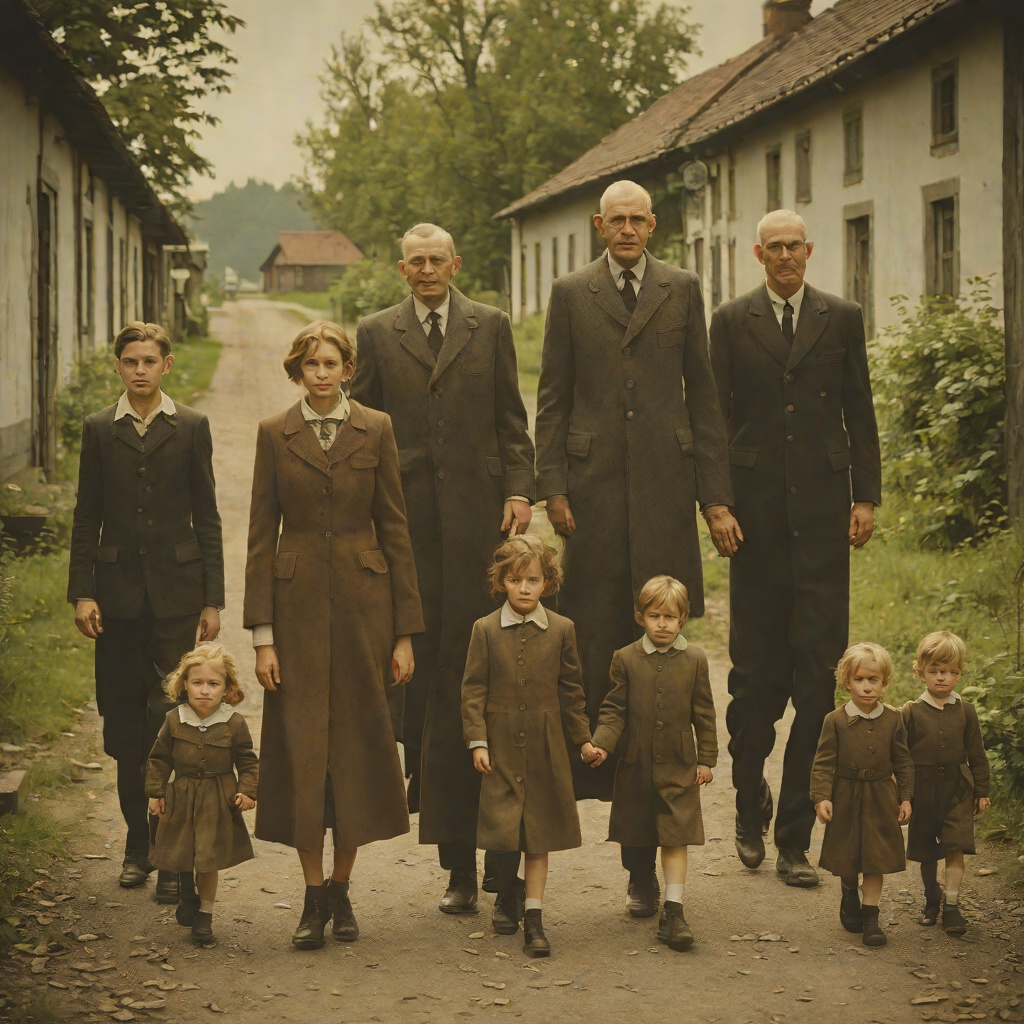
Max Eisenberg
The Tattooist of AuschwitzMax Eisenberg is the older brother of Lale Sokolov, a figure whose presence in the narrative is brief but whose moral weight is profound. He is introduced as a married man with a wife and two young children, a man whose responsibilities and quiet strength define him. In the story, Max's role is largely defined by a single, decisive act of self-sacrifice that sets the entire plot of Lale's survival in motion, and his memory continues to haunt Lale at the most critical moments of his ordeal. He is a touchstone of family duty and love, a brother whose example Lale strives to follow even in the depths of Auschwitz.
Identity and Family Role
Max Eisenberg is Lale's older brother, described as "older and wiser" in Lale's own reflections. He is a family man, with a wife and two young children who depend on him. When the threat of deportation to German labor camps reaches their hometown of Krompachy, Slovakia, Max's position as a husband and father makes him the natural protector of his immediate family. His younger brother Lale, who has no such dependents, sees Max's obligations as paramount, a fact that shapes the brothers' fateful decision about who will surrender to the authorities.
The Sacrifice in Krompachy
The pivotal moment for Max comes when Lale's sister returns home with a poster demanding that each Jewish family hand over a child aged eighteen or older to work for the German government. The poster warns that if a family fails to surrender such a child, the entire family will be taken to a concentration camp. Max immediately volunteers to go, but Lale refuses to allow it. Lale argues that Max has a wife and two young children and is needed at home. In a reversal of the expected order, the younger brother steps forward to take the older brother's place, offering himself for transportation to the authorities in Krompachy. This act of substitution is the engine of the entire narrative: it is Lale, not Max, who ends up in Auschwitz, and it is Lale who must survive the camp. Max's willingness to sacrifice himself, and Lale's insistence on taking that burden, establishes the deep bond and mutual devotion between the brothers.
Memory and Conscience in Block 11
Max's memory returns to Lale at his darkest hour. When Lale is arrested and taken to Block 11, the punishment block at Auschwitz, he is driven in a truck to face what he believes will be torture and execution. During the two-and-a-half-mile drive, Lale mentally says goodbye to each member of his family. When he thinks of Max, he tells him, in his mind, that he hopes he hasn't let him down, that he has tried to act as Max would have in his place. This internal address reveals the depth of Lale's respect for his brother and the standard of conduct Max represents. Max is not merely a family member; he is a moral benchmark against which Lale measures his own actions in the camp. The memory of Max's wisdom and his example of selfless duty becomes a source of strength and a guide for Lale's own behavior, even as he sits in a cell listening to the cries and screams of other prisoners.
Death and Aftermath
The narrative reveals Max's fate only after the war, when Lale returns home to Bratislava and reunites with his sister, Goldie. The news is bleak: Max went off to join the partisans and was killed fighting the Germans. His wife and their two small boys were taken away, their destination unknown. Max's death is a stark counterpoint to Lale's survival. While Lale endured the camp and eventually escaped, Max chose active resistance and paid for it with his life. The brothers represent two different responses to the Nazi occupation: Lale's pragmatic survival within the camp system, and Max's armed defiance. Both are forms of courage, but only one survives. The loss of Max, along with the disappearance of his parents, contributes to the profound grief that Lale carries, a grief that, according to his son Gary, left him unable to weep for decades. The memory of Max's sacrifice and death is part of the burden Lale carries, a burden that only lifts when he finally tells his story.
Thematic Significance
Max Eisenberg embodies the theme of family sacrifice that underpins the entire narrative. His willingness to volunteer for transport, and Lale's refusal to let him, establishes the moral economy of the Sokolov family: each member is willing to give everything for the others. Max's death as a partisan also introduces the theme of resistance, contrasting with Lale's more ambiguous position as the camp tattooist, a role that could be seen as collaboration. Max's fate serves as a reminder of the high cost of defiance, while Lale's survival suggests a different, more complex path. In Lale's memory, Max remains a figure of wisdom and moral clarity, a brother whose example he tried to follow. The story of Max is a story of what was lost, and it deepens the reader's understanding of Lale's own choices and the guilt he carried for surviving when so many, including his own brother, did not.