Mengele castrates Leon
The Tattooist of AuschwitzThe castration of Leon by Josef Mengele stands as one of the most harrowing and consequential acts of violence in the Auschwitz narrative, a moment when the camp's pseudoscientific cruelty reached directly into the circle of Lale Sokolov's closest companions. Leon, who had served as Lale's young assistant in the grim work of tattooing incoming prisoners, was singled out, marched away, and surgically mutilated by the camp doctor whose whistling had already become a signal of terror. The event did not merely wound one man; it shattered Leon's body and spirit, and it planted in Lale a burning, helpless rage that would shape his conduct for the remainder of his time in the camp. It is a stark demonstration of how the SS could destroy not only life but also identity, dignity, and the very possibility of a future, and it stands as a permanent scar in the moral landscape of the story.
The Whistling Doctor and the Selection
The event unfolded on a day when Lale and Leon found themselves at Auschwitz again, tasked with numbering young women. The whistling doctor, Josef Mengele, was present, standing before the parade of girls and deciding their fate with a flick of his hand: right, left, right, right, left, left. Lale could see no logic to the decisions, for the girls were all in the prime of their lives, fit and healthy. Mengele's presence was a palpable threat, and Lale could not take his eyes away as the doctor grabbed the next girl's face in his big hands, twisted it backward and forward and up and down, and opened her mouth. With a slap to her face, he pushed her to the left, rejected. Lale stared him down, a dangerous act of defiance that did not go unnoticed. Mengele called an SS officer over and spoke to him, and the officer looked over at Lale and began walking in his direction.
The March of Leon
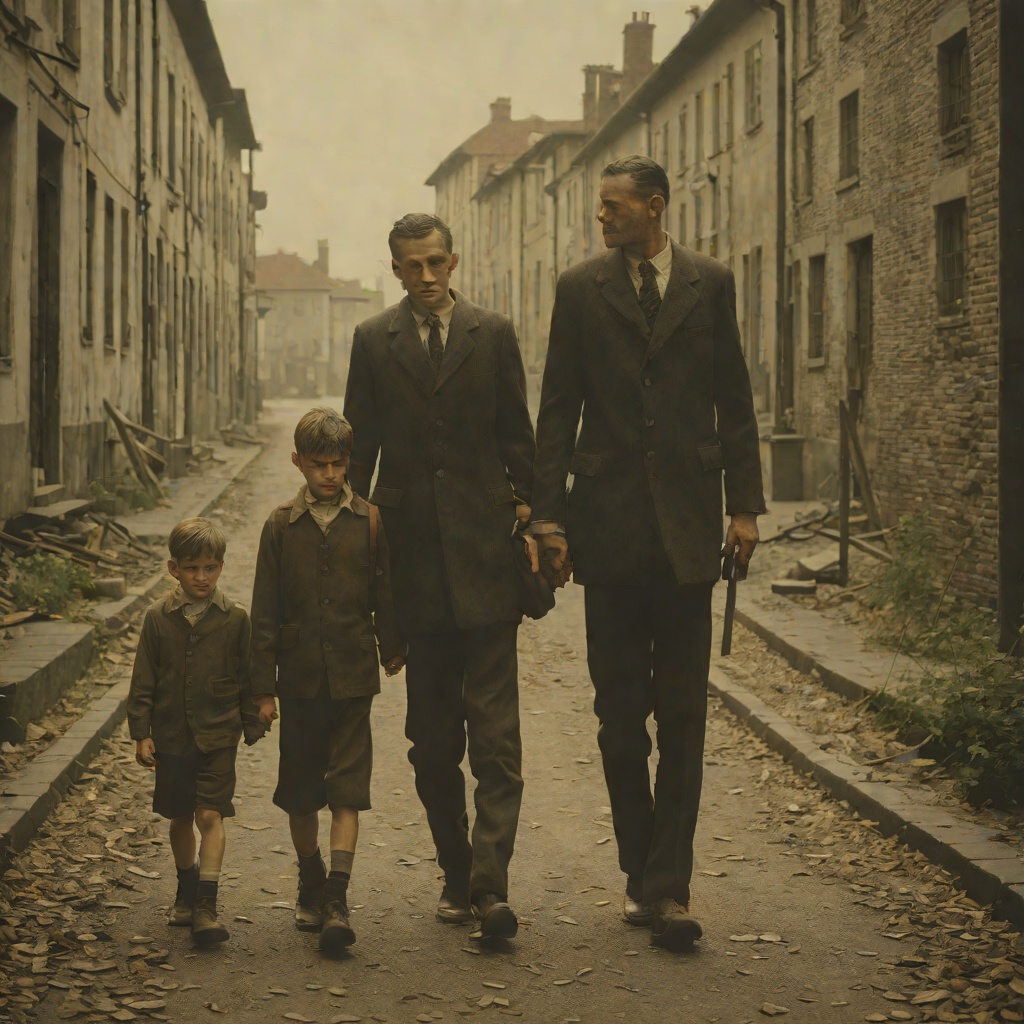
When the SS officer reached Lale, he demanded, "What do you want?" with more confidence than he felt. The officer's response was curt and chilling: "Shut up, Tätowierer." He turned to Leon and ordered him to leave his things and come along. Lale, now terrified on his young assistant's behalf, protested, "Wait a minute—you can't take him. Can't you see the number of people still to be done?" The officer was unmoved, warning that if Lale did not get on with his work, he would be there all night, and Herr Doktor would not like that. Lale pleaded, "Leave him, please. Let us get on with our work. I'm sorry if I've done something to upset Herr Doktor," but the officer pointed his rifle at him and asked if he wanted to come too. Leon, showing a quiet courage, said, "I'll go. It's OK, Lale. I'll be back as soon as I can." Lale could no longer look at his friend, and could only murmur, "I'm sorry, Leon." Leon reassured him, "It's all right. I'll be all right. Get back to work," and was marched off. Lale was left alone, greatly distressed, trudging back to Birkenau with his head down, the weight of his powerlessness pressing on him.
The Return of the Broken Man
The next time Lale saw Leon, the change was devastating. Before Lale could look up, he heard a familiar voice, no more than a whisper: "Hello, Lale." Leon stood beside Stefan Baretski—pale, thinner, stooped, carefully placing one foot in front of the other. Baretski, smiling, left them to get reacquainted. Lale rushed to embrace him, crying, "Leon, oh my god, you're alive." He could feel every bone through his friend's shirt. Holding him at arm's length, examining him, Lale asked, "Mengele. Was it Mengele?" Leon could only nod. Lale gently ran his hands down Leon's skinny arms and touched his face, his anger rising. "The bastard. One day he'll get his. As soon as I've finished here, I can get you plenty of food. Chocolate, sausage, what do you want? I'll fatten you up." But Leon's response stopped him cold: "If only that was all it was." When Lale asked what he meant, Leon stared directly into his eyes and said, his voice strong and steady, "He cut my fucking balls off, Lale. Somehow you lose your appetite when they cut your balls off." Lale reeled back in horror and turned away, not wanting Leon to see his shock. Leon fought back a sob and struggled to find his voice as he searched the ground for something to focus on. He apologized for his bluntness, saying, "I'm sorry, I shouldn't have said it like that. Thank you for your offer. I am grateful to you." Lale breathed deeply, trying to control his anger. He badly wanted to lash out, to take revenge for the crime committed against his friend.
The Wound That Defined Loyalty and Rage
The castration of Leon was not an isolated atrocity but a catalyst that deepened Lale's understanding of the camp's inhumanity and his own role within it. The event echoed Lale's earlier confrontation with the moral compromises of his position, when he had been told that working for the kapo was not the same as defiling hundreds of innocent people, and had been accused of being a Nazi puppet doing their dirty work. Now, the mutilation of his friend made the stakes brutally personal. Lale's subsequent actions, from his black-market smuggling to his risky rescue of Mendel Bauer, were fueled by a determination to resist the dehumanizing machinery that had destroyed Leon. When Lale later changed Mendel's number into a snake to conceal it, he explained, "Where Mendel is going, no one is numbered. It wouldn't take long for his number to be seen, and then he would be right back here, to keep his appointment with the hangman." This act of concealment was a direct defiance of the very system that had branded Leon and then broken him. The memory of Leon's mutilation also lingered in Lale's private moments of tenderness, as when Gita ran her fingers softly over the welts on his back after his own beating, a gesture of care that stood in stark contrast to the violence Mengele had inflicted. The event remained a touchstone of the camp's capacity for evil, a wound that never fully healed, and a reminder of the cost of survival.