Prisoner number
The Tattooist of AuschwitzThe prisoner number is the central symbol of dehumanization and identity erasure in The Tattooist of Auschwitz, marking Lale Sokolov's transformation from a named individual into the camp's designated tattooist and defining his and Gita Furman's survival. It functions as both the instrument of Nazi bureaucratic violence and, paradoxically, the means by which Lale asserts his humanity, ultimately becoming his sole form of identification at the Slovak border.
The Marking of Lale Sokolov
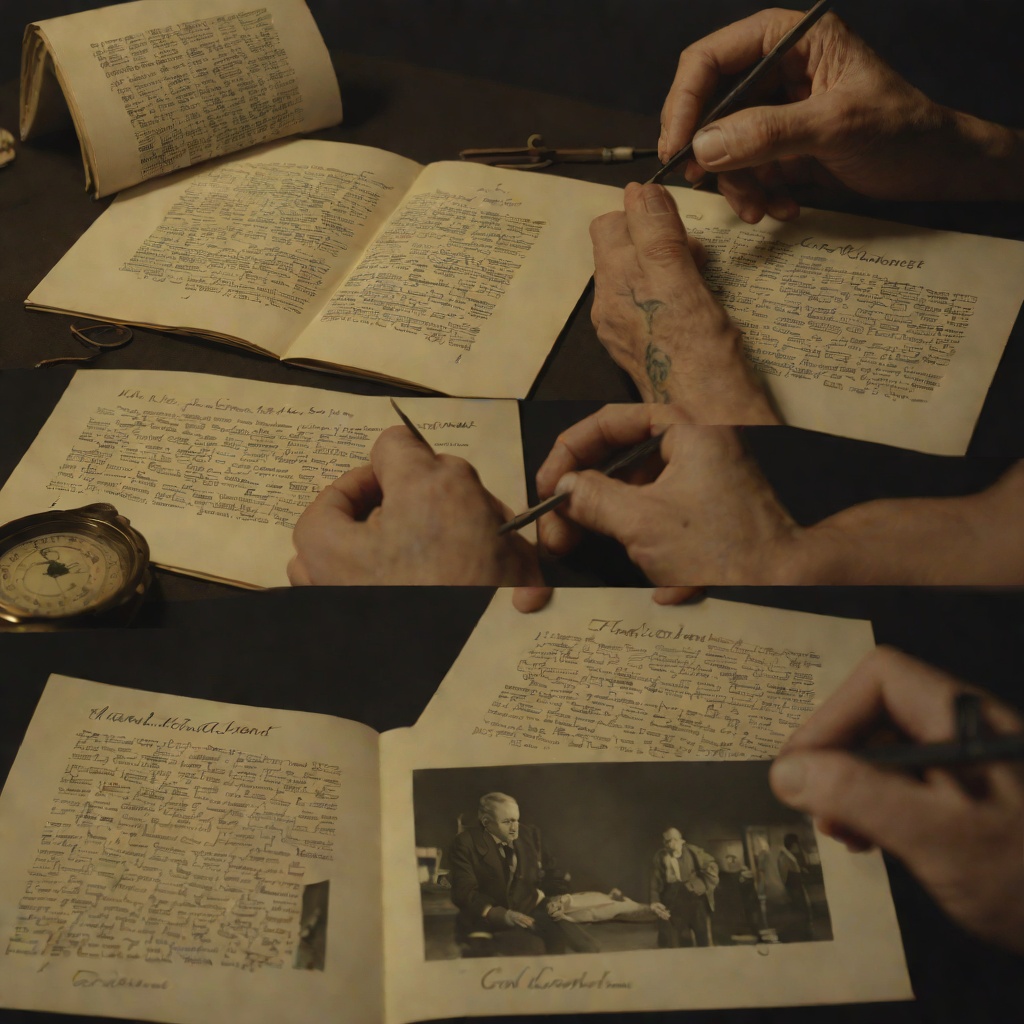
Lale's induction into the prisoner number system begins with the processing at Auschwitz, where he provides his name, address, occupation, and parents' names to a weathered man at a table who writes the answers in a neat, looping script and passes him a piece of paper with a number on it, never raising his head to meet Lale's eyes. The number is 32407. He shuffles along with the flow of men toward another set of tables, where an SS officer pulls off his jacket, rips his shirtsleeve, and pushes his left forearm flat on the table. The numbers 32407 are stabbed into his skin, one after the other, with a piece of wood with a needle embedded in it, moving quickly and painfully. Then the man takes a rag dipped in green ink and rubs it roughly over the wound. The tattooing takes only seconds, but Lale's shock makes time stand still. He grasps his arm, staring at the number, wondering if for the rest of his life, be it short or long, he will be defined by this moment, this irregular number: 32407. A prod from a rifle butt breaks his trance, and he collects his jacket from the ground and stumbles forward.
The Number as Identity
The prisoner number becomes the sole marker of identity within the camp, replacing names entirely. When Lale, now the Tätowierer, asks Gita Furman for her last name, she stares at him, shaking her head, and says, "I'm just a number. You should know that. You gave it to me." When he presses her, asking who she is outside of here, she replies, "Outside doesn't exist anymore. There's only here." This exchange reveals the profound psychological erasure the number enacts: Gita has internalized the camp's logic, seeing herself not as a person with a past but as a numerical designation. Lale's role as the one who gives her that number makes him complicit in her dehumanization, even as he tries to reach past it to the person she was before.
The Number as Identification Beyond the Camp
The prisoner number outlasts the camp itself, serving as Lale's only form of identification when he reaches the border with Slovakia after his escape. An official approaches him and asks for his papers. Lale rolls up his sleeve to show his only form of identification: 32407. "I am Slovak," he says. The official responds, "Welcome home." The number, which was meant to strip him of his identity, becomes the very proof of his identity and his nationality. It is the only document he possesses, and it is accepted as sufficient. This moment reverses the number's meaning: what was imposed as a mark of dehumanization becomes a badge of survival and a passport home.
The Number in the Context of Camp Violence
The prisoner number system is inseparable from the broader machinery of violence at Auschwitz. Lale's own tattooing occurs amid the chaos of processing, where prisoners are shoved forward to tables and SS officers stand by with rifles. The number is not merely a bureaucratic label but a physical wound, inflicted with a needle and green ink, a permanent scar that marks its bearer as property of the camp. The system extends beyond the tattoo itself: Lale witnesses the gas-van murders at Birkenau, where dozens of naked men are herded into an adapted bus with steel plates nailed across the window frames, and the doors are slammed shut before a canister is upended through a hatch on the roof. The prisoner number is the first step in this process of dehumanization that culminates in mass murder, reducing individuals to numbers that can be processed, counted, and eliminated.
The Number and the Tätowierer's Role
Lale's position as the Tätowierer gives him a unique relationship to the prisoner number. He is the one who inflicts the number on others, as he does on Gita when she is retattooed in July after moving from Auschwitz to Birkenau. His role grants him privileges: he is given a single room immediately inside the door of a new block, takes his meals near the administration building, and receives extra rations, with the explanation, "We want our workers to have their strength." Yet the number also ties him to the camp's power structure, making him an instrument of the very system that dehumanizes him. His isolation in the single room makes him miss his friends in Block 7, and his role sets him apart from other prisoners. The number is thus both his burden and his means of survival, the mark of his complicity and his lifeline.
The Number in Memory and History
The prisoner number persists in the historical record as a marker of individual fate. Lale was born Ludwig Eisenberg on October 28, 1916, in Krompachy, Slovakia, and was transported to Auschwitz on April 23, 1942, and tattooed with the number 32407. Gita was born Gisela Fuhrmannova (Furman) on March 11, 1925, in Vranov nad Topl'ou, Slovakia, and was transported to Auschwitz on April 13, 1942, and tattooed with the number 34902. The numbers anchor the historical account, connecting the personal story to the larger record of the Holocaust. The author notes that Lale's memories were, on the whole, remarkably clear and precise, matching her research into people, dates, and places, and that there was no parting of memory and history for him—they waltzed perfectly in step. The prisoner number is one of those precise details that links memory to history, a concrete fact that grounds the narrative in verifiable reality.
The Number's Enduring Significance
The prisoner number outlives its bearers as a symbol of the Holocaust's dehumanizing logic. It is the mark that Lale carries for the rest of his life, the irregular number 32407 that he wonders if he will be defined by. It is also the mark that Gita carries, the number he gave her, which she uses to define herself when all other identity has been stripped away. The number is the camp's final word on its victims, reducing them to data points in a system of mass murder. Yet in Lale's case, it becomes something else: a proof of survival, a testament to his endurance, and ultimately a means of return. The number that was meant to erase him becomes the evidence of his existence, the mark that allows him to say, "I am Slovak," and to be welcomed home.