Sonderkommando uprising at Auschwitz-Birkenau
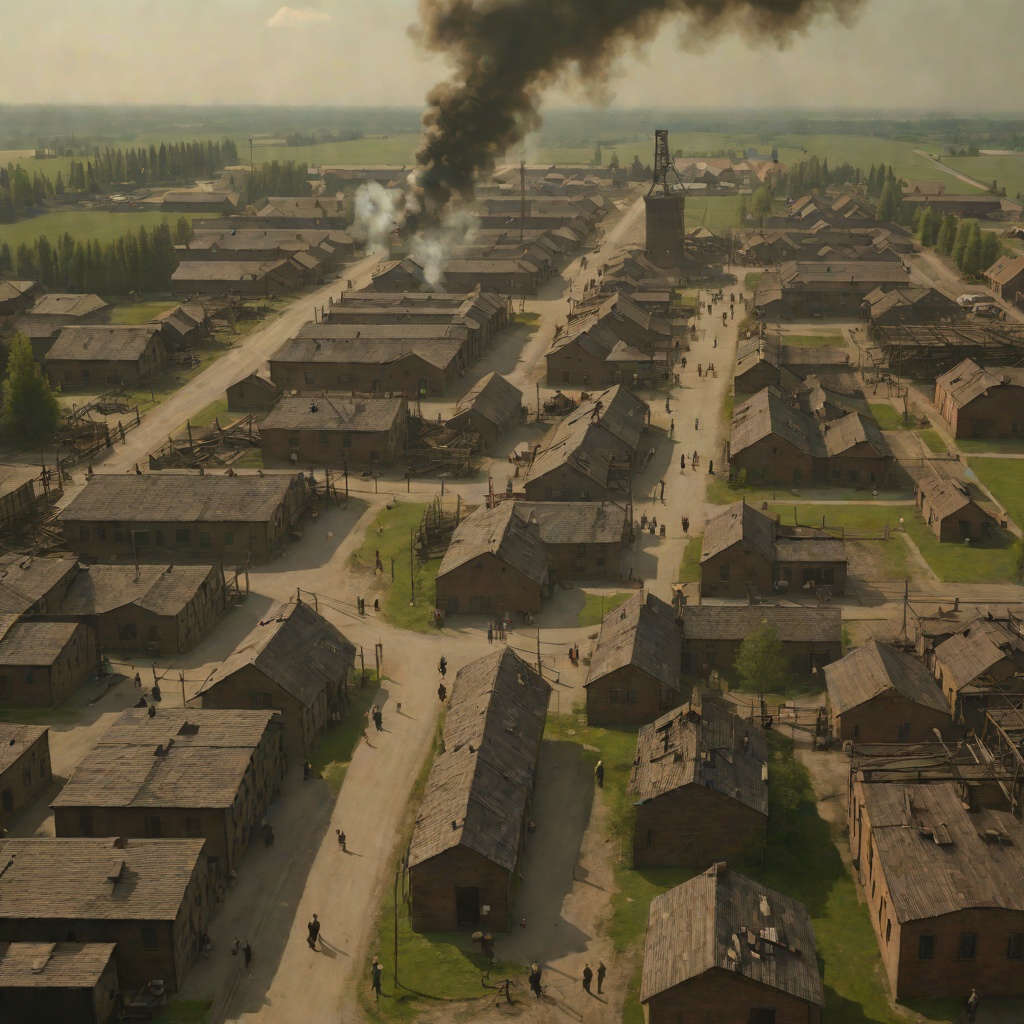
The Tattooist of AuschwitzThe Sonderkommando uprising at Auschwitz-Birkenau is the narrative's most explosive moment of inmate resistance, a sudden, violent rupture in the daily horror of the camp. It erupts without warning on an afternoon when Lale Sokolov and Gita Furman are together, hidden behind the administration block, and it transforms the landscape of the camp in minutes. The revolt is centered on the destruction of Crematorium 4, an act of sabotage that sends smoke rising into the sky and gunfire echoing across the grounds, and it stands as the single most direct challenge to the SS authority that Lale witnesses during his entire imprisonment. For Lale, the uprising is a double-edged revelation: it offers a glimmer of hope that the Nazi machine can be fought and that liberation may be approaching, yet it also thrusts Gita into mortal danger, nearly costing her life as the SS open fire on anyone in their sights.
The Eruption of the Revolt
The uprising begins with a massive explosion that shakes the ground beneath Lale and Gita as they stand together behind the administration block. The blast is so powerful that they jump to their feet and run to the front of the building, where a second explosion draws their eyes toward the nearby crematorium. Smoke rises and pandemonium breaks out as prison workers flee the building, most of them racing toward the fence that surrounds the camp. Gunfire erupts from the top of the crematorium, where Lale looks up and sees members of the Sonderkommando shooting wildly at the SS below. The SS respond with heavy machine guns, and within minutes they have put an end to the shooting. Bullets strike the ground around Lale and Gita as the SS take aim at anyone in their sights, forcing Lale to pull Gita up hard against a building for cover. Another loud explosion follows, and Lale identifies the source: "That's Crematorium 4—someone's blowing it up. We have to get out of here." Prisoners running from the administration building are gunned down in the chaos, and Lale's sole focus becomes getting Gita back to her block, the only place he believes she will be safe.
The Smuggled Gunpowder and the Plan
That night, Lale breaks his usual rule of keeping to himself and joins the men in his block—mostly Hungarians—to learn what he can about the afternoon's events. He discovers that the uprising was not a spontaneous outburst but the culmination of a carefully orchestrated plan. Some of the female prisoners working in a nearby ammunition factory had been smuggling tiny amounts of gunpowder back to Birkenau, pushing it up into their fingernails to evade detection. This gunpowder was passed to the Sonderkommando, who used it to make crude grenades out of sardine tins. The prisoners had also been stockpiling weapons, including small arms, knives, and axes, preparing for a coordinated strike. The men in Lale's block tell him of rumors about a general uprising that they had wanted to join but did not believe was meant to happen on that particular day. They had heard that the Russians were advancing, and the uprising was planned to coincide with their arrival, to assist them in liberating the camp. Lale admonishes himself for not having made friends with his block companions sooner, realizing that his lack of knowledge nearly got Gita killed. He questions the men extensively about the Russians and when they are likely to arrive, and though the replies are vague, they are enough to provoke a slight optimism in him.
A Glimmer of Hope Amid the Horror
The uprising comes at a moment when hope has been in short supply. It has been months since an American plane flew overhead, and the transports have kept coming without pause. Lale has seen no lessening of the dedication of the Nazi machine to the extermination of Jews and other groups. Yet these latest arrivals have a more recent connection with the outside world, and the revolt itself proves that the prisoners are not entirely passive victims. The destruction of Crematorium 4 is a symbolic blow against the machinery of death, and the fact that the Sonderkommando were willing to fight and die rather than continue their grim work resonates deeply with Lale. He is determined to tell Gita what he has learned and to ask her to be vigilant in the office, to glean any information she can about the Russians' advance. For the first time in months, there is a glimmer of hope that liberation might actually come.
The Revolt in the Context of Camp Resistance
The uprising stands in stark contrast to the helplessness Lale has felt since his arrival at Auschwitz. From the moment he walked through the iron gates beneath the words ARBEIT MACHT FREI, he has been subjected to a system designed to strip him of his humanity. He witnessed the gas-van murders at Birkenau, where naked men were herded into an adapted bus with steel plates nailed across the window frames, and he watched as the doors were slammed shut and a canister was upended through a hatch on the roof, the bus shaking violently as muffled screams faded into silence. He has seen the SS's capacity for arbitrary cruelty, from the castration of his friend Leon to the torture he himself endured in Block 11, where he sat for two days in a cell with only a crack of light under the door, listening to the cries and screams of others. The uprising is a moment when the prisoners finally turn the tables, however briefly, and strike back at their oppressors. It is a reminder that even in the most dehumanizing circumstances, the will to resist can survive.
Aftermath and Significance
The immediate aftermath of the uprising is brutal: the SS gun down prisoners fleeing the administration building, and the Sonderkommando who led the revolt are killed or captured. Yet the event leaves a lasting impression on Lale. It reinforces his determination to survive and to protect Gita at all costs, and it gives him a renewed sense of purpose. The revolt also foreshadows the coming liberation, as the Russians' advance becomes a tangible possibility rather than a distant rumor. For the reader, the uprising is a testament to the courage of those who fought back against the Nazi machine, and it serves as a counterpoint to the overwhelming despair of the camp. It is a moment of defiance that echoes beyond the walls of Auschwitz, a reminder that even in the darkest of times, resistance is possible. The destruction of Crematorium 4 is not just an act of sabotage; it is a symbolic reclaiming of agency by those who had been stripped of everything, and it stands as one of the most powerful acts of rebellion in the entire narrative.