Typhus
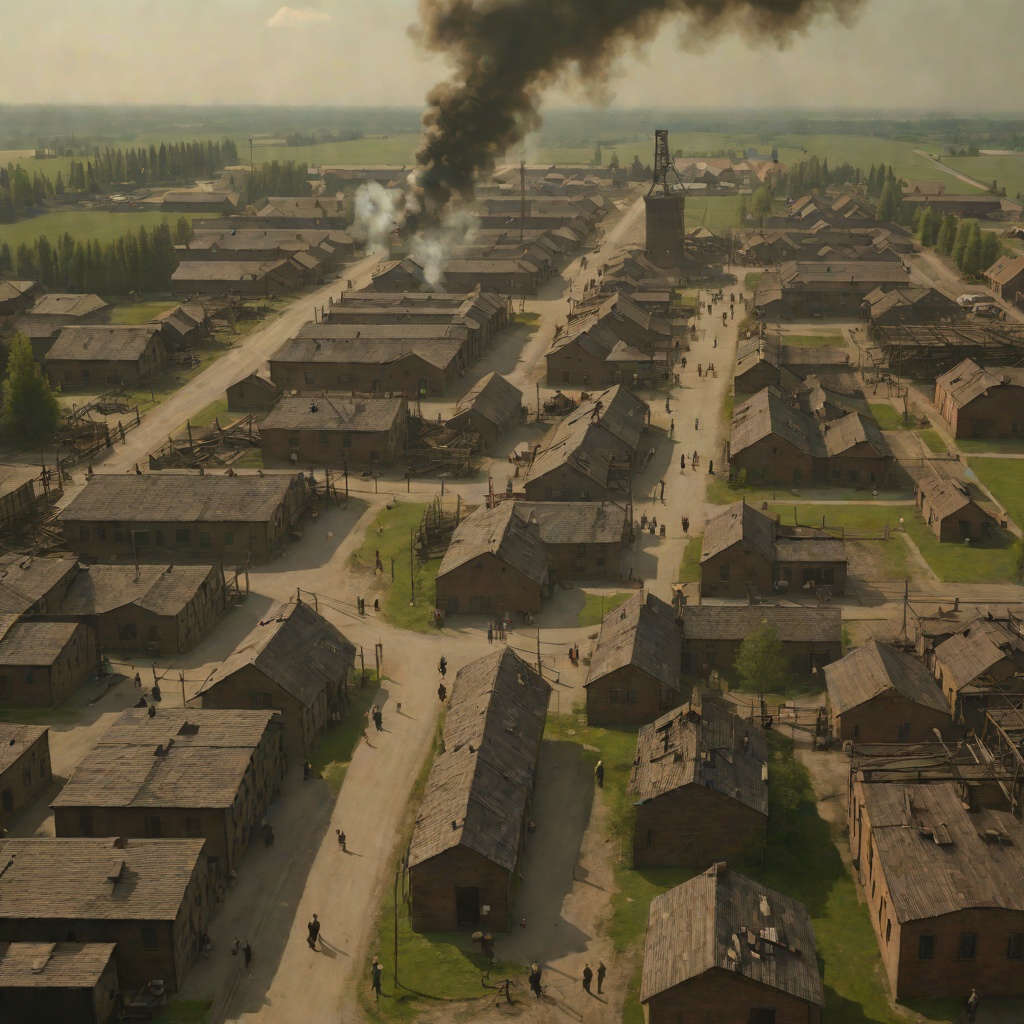
The Tattooist of AuschwitzTyphus, the louse-borne epidemic fever, operates throughout the Auschwitz-Birkenau narrative as a constant, invisible executioner that rivals the SS in its capacity to kill. It is a disease that strikes without regard for the camp's hierarchies, claiming prisoners and shaping the fates of the central characters. More than a medical condition, typhus functions as a narrative engine: it nearly kills Lale Sokolov, it threatens to take Gita Furman, and it leaves a trail of orphaned survivors like Nadya. The disease's presence underscores the camp's brutal conditions, where starvation, overcrowding, and filth make epidemic illness as deadly as any deliberate act of violence.
The Disease in the Camp's Ecology
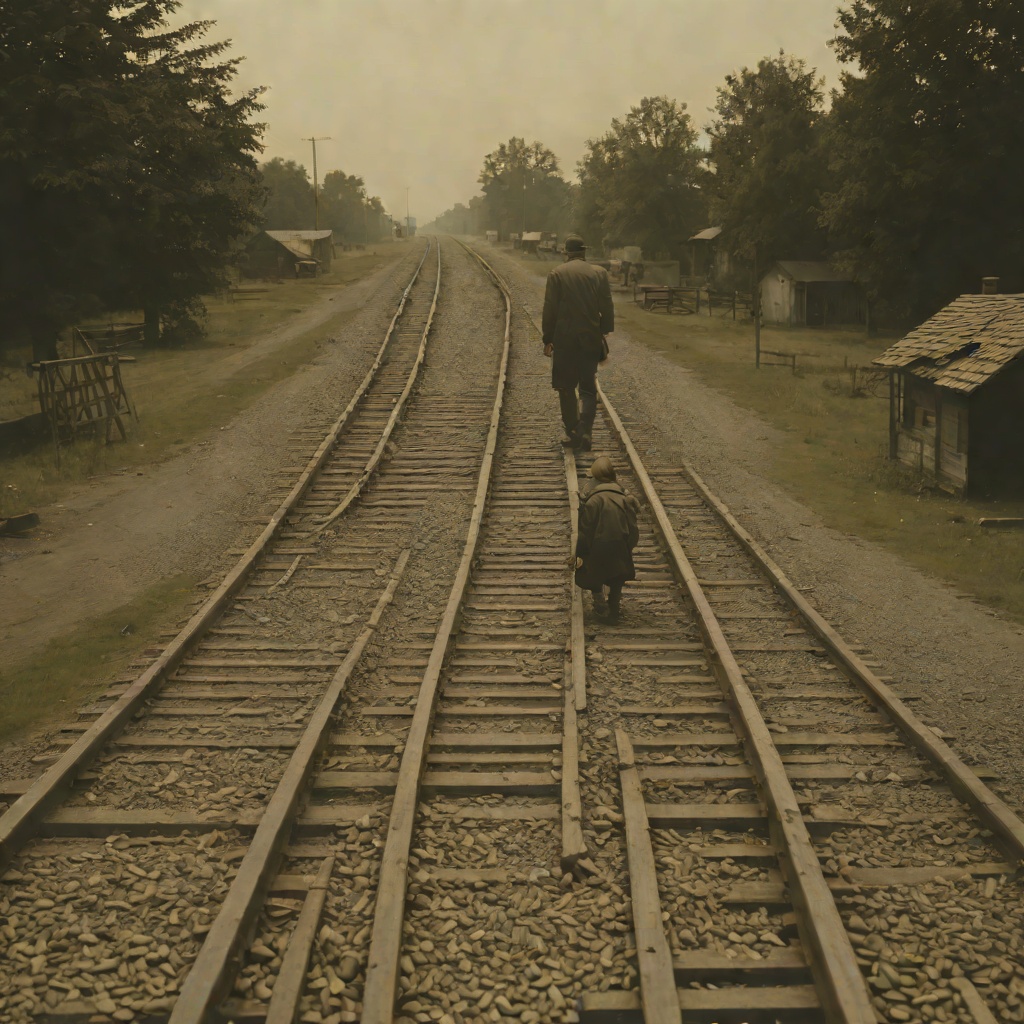
Typhus thrives in the exact conditions that define the prisoners' existence: overcrowding, poor sanitation, and physical exhaustion. The cattle train that carries Lale and hundreds of other young men toward Auschwitz is a perfect breeding ground for the disease. In the wagon, less than ten feet wide, the men cannot sit, let alone lie down, and two buckets substitute for toilets. As the buckets fill, a fight breaks out as men try to get away from the stench, and the buckets are knocked over, spilling their contents. Lale clings to his suitcase, hoping that with the money and clothes he has, he might be able to buy himself out from wherever they are headed. These conditions—the filth, the crowding, the desperation—are the preconditions for the typhus that will later fell him. The disease is thus not an accident of the camp but a direct consequence of its design, a biological weapon of neglect.
The camp's processing procedures further spread the disease. When Lale is tattooed with the number 32407, the piece of wood with a needle embedded in it moves quickly and painfully, and the man takes a rag dipped in green ink and rubs it roughly over the wound. The shared, unsterilized equipment and the close physical contact of the registration lines create ideal vectors for transmission. Later, in the shower block, hundreds of shivering men stand shoulder to shoulder as cold water rains down on them, and they tilt their heads back to drink the rank water desperately. The very systems designed to process and 'clean' the prisoners instead facilitate the spread of the epidemic.
Lale's Near-Death from Typhus
Lale's own encounter with typhus is a brush with death that he only learns about after the fact. He is struck down by the disease and, in the camp's brutal calculus, is deemed beyond saving. His body is thrown onto a cart for the dead and dying, destined for the crematorium or a mass grave. A young man, Aron, pleads with the SS to leave Lale, saying that he would take care of him. When the SS go into the next block, Aron pushes Lale off the cart and starts dragging him back inside. A French prisoner, walking past the block, sees the commotion and goes to help Aron. This act of mercy saves Lale's life, but he remains unconscious and unaware of his own rescue.
When Lale finally wakes, he is confused and disoriented. He asks the Frenchman what happened to him, and the answer is stark: "Typhus. You were destined for an early grave." Lale shudders and asks why he is still sitting there, alive. The Frenchman explains the rescue, and Lale learns that his survival was not a matter of his own strength or will, but of the compassion of two strangers who refused to let him die. This experience marks Lale profoundly. It is his first direct confrontation with the arbitrary nature of death in the camp, and it forges a deep bond of gratitude and responsibility toward Aron, who will become one of his closest allies. The typhus episode also establishes a pattern: Lale's survival is repeatedly owed to the intervention of others, and his own later acts of rescue—particularly of Gita—are shaped by this understanding that no one survives alone.
The physical and psychological scars of the illness linger. Lale's recovery is slow, and the experience of being thrown onto a death cart, of being counted among the dead while still alive, becomes a defining trauma. It is a moment that separates his life into a before and an after, and it instills in him a fierce determination to live. The typhus, in a sense, becomes the first of many deaths he will witness and survive, hardening his resolve to walk out of the camp a free man.
Gita's Illness and the Fight for Penicillin
Typhus next strikes at the heart of Lale's world when Gita Furman falls ill. The news reaches Lale through Dana, Gita's friend, who blocks his entry to the women's block with a warning: the kapo is in a terrible mood and wants to call the SS to have Gita taken away. Lale pleads with Dana not to let them take her, asking what is wrong. Dana's answer is grim: "We think it's typhus. We've lost several girls in our block this week." The disease is not an isolated case but a wave of death sweeping through the women's camp, claiming victims with terrifying speed.
Lale's response is immediate and desperate: "Then she needs medicine, penicillin." But Dana's reply exposes the cruel logic of the camp: if they go to the hospital and ask for penicillin, the SS will simply take Gita away, likely to her death. The hospital is not a place of healing but a gateway to the gas chambers or the crematoria. Dana pleads with Lale, revealing her own devastation: "I can't lose her. I've lost all my family. Please, can you help us, Lale?" This plea sets in motion one of the central acts of Lale's camp life: his black-market smuggling operation to obtain penicillin. The typhus epidemic thus becomes the catalyst for Lale's most dangerous and defining work, forcing him to leverage his position as the Tätowierer and his network of contacts to save the woman he loves. The disease, in this sense, is not only a killer but also a test of love and resourcefulness, and Lale's success in obtaining the medicine becomes a testament to his devotion and his willingness to risk everything.
The illness also reveals the depth of Gita's vulnerability and the fragility of her existence in the camp. She is not merely a love interest but a woman fighting for survival against both the SS and the invisible enemy of disease. Her recovery, made possible by Lale's efforts, deepens their bond and reinforces the theme that their love is a form of resistance against the camp's dehumanizing forces.
Typhus as a Force of Orphanhood and Loss
Beyond the central characters, typhus operates as a force of mass orphanhood and loss, shaping the lives of those who survive it. Nadya, a woman Lale meets while she is putting children to bed, embodies this tragedy. When Lale asks if she has any family in the camp, she shakes her head sadly and says, "My husband and son died of typhus. It's only me now." The disease has stripped her of her entire family, leaving her alone in a world designed to kill her. Lale discovers that Nadya is only forty-one years old, and that her son had been six when he died three years ago, two days before his father. The specificity of these details—the ages, the timing—makes the loss visceral and concrete. Typhus is not an abstract threat but a personal catastrophe that has already claimed millions of individual stories.
Lale's response to Nadya is telling. He finds her answers similar to those his mother would give, and he is drawn to protect her the way he wants to protect Gita. The typhus that orphaned Nadya creates a new, improvised family in the camp, as Lale takes on the role of a protector and confidant. He tells her of his family back in Slovakia and of his love for Gita, and she listens, becoming a surrogate mother figure. The disease, in destroying one family, inadvertently forges another, a fragile network of care and connection that becomes the prisoners' only defense against despair.
The Lingering Shadow of Typhus
The threat of typhus does not end with the war. The disease's legacy persists in the memories and behaviors of the survivors. Gita, in particular, carries the mark of her illness and the camp's deprivations. When Lale declares his love for her, she recoils, saying, "Look at me. I'm ugly, I'm dirty. My hair . . . I used to have lovely hair." The physical toll of typhus and the camp has eroded her sense of self-worth, and she cannot believe that anyone could love her in her diminished state. The disease has not only attacked her body but also her identity, leaving scars that the end of the war will not easily heal.
The survivors' relationship with illness and death remains permanently altered. Lale's son, Gary Sokolov, later recalls that his mother, when very sick in the camp, had a vision of her own mother telling her, "You will get better. Move to a faraway land and have a son." This vision, born of fever and desperation, becomes a prophecy that guides Gita's survival and her post-war life. The typhus, in this telling, is not only a source of suffering but also a moment of supernatural clarity that gives Gita a reason to live. The disease's shadow thus extends far beyond the camp, shaping the family's migration to Australia and the very existence of the next generation.
Lale's own response to the trauma of typhus and the camp's mass death is a profound emotional numbing. His son recalls that even when his father's sister passed away, Lale did not shed a tear. When asked about this, Lale explained that after seeing death on such a grand scale for so many years, and after losing his parents and brother, he found he was unable to weep—that is, until his wife passed away. The typhus epidemic, and the countless deaths it caused, contributed to this emotional armor, a survival mechanism that allowed Lale to function but also separated him from his own grief. The disease, in this sense, is a permanent part of the survivors' psychological landscape, a reminder of the fragility of life and the cost of survival.