Victor
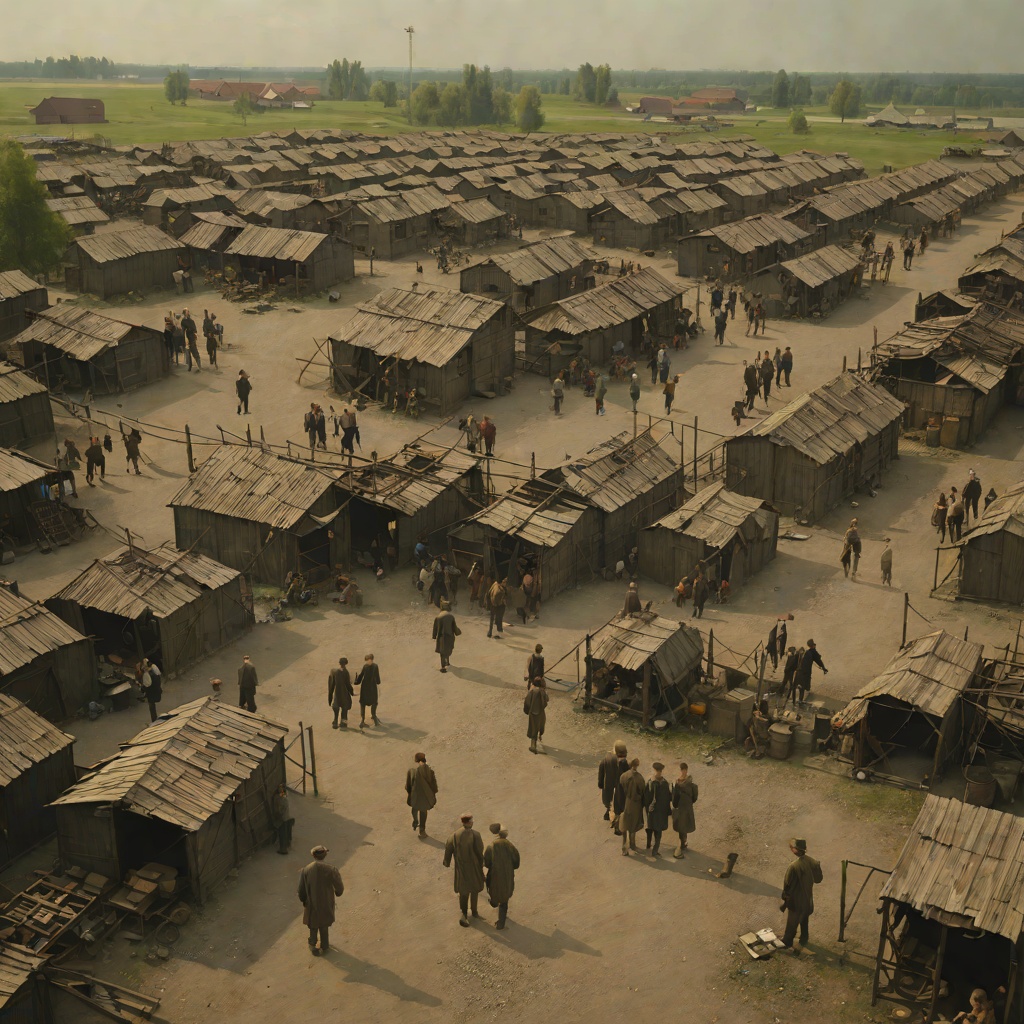
The Tattooist of AuschwitzVictor is a local civilian who works at Auschwitz each day, a man whose rough voice, worn by too many cigarettes, and plainspoken manner make him an unlikely anchor in Lale Sokolov's early days in the camp. He first appears when Lale, checking out his surroundings and curious about the workers he sees, approaches a group of them and introduces himself. The younger man among them, Victor's son Yuri, tells Lale to get lost, but Victor intervenes, telling the boy to settle down and not mind him. He extends his hand, which Lale shakes, and introduces himself and his son. When Lale offers his hand to Yuri, the young man refuses to take it, an early sign of the suspicion and hostility that surrounds any prisoner who speaks to civilians. Victor explains that he and Yuri live nearby and come to work each day, and Lale, struck by the strangeness of it, asks directly whether they come voluntarily and are paid to be there. Victor's answer, and the alliance that follows, establish him as a figure who operates in the gray zone between the camp and the outside world, a man whose work brings him into daily contact with the prisoners but who is not himself a prisoner.
The Warning About Crematorium One
Victor's most chilling contribution to Lale's understanding of Auschwitz comes during an early conversation at a building site, where Lale is standing and bracing himself on a pile of bricks. Lale, already numbed by the horrors around him, says that surely nothing can be worse than what is already happening. Victor, looking away, tells him quietly that the building is called Crematorium One. Lale, grasping the implication, asks whether there is the possibility of a number two, and Victor apologizes, saying he knew Lale would not like it. This exchange, brief and understated, delivers the first explicit confirmation to Lale that the camp is not merely a place of imprisonment and labor but a site of industrialized mass murder. Victor's willingness to speak this truth, and his quiet regret in doing so, marks him as a man who, despite his civilian status, is not indifferent to the prisoners' fate. He does not soften the news or pretend it is anything other than what it is; he simply states it and looks away, a gesture that carries the weight of a man who has seen enough to know that words cannot undo what is being built.
The Sealed Alliance and the New Year's Handshake
Victor's role in Lale's life deepens into a working partnership built on mutual need and silent trust. After Lale acquires a stash of valuables, he separates the precious stones from the money and the loose gems from the jewelry, wrapping them separately in the rags they came in. He pushes the majority of the loot under his mattress but keeps a loose ruby and a diamond ring in his bag. At seven the next morning, Lale hangs around the main compound gates as the local workers enter, sidles up to Victor, and opens his hand to reveal the ruby and the ring. Victor closes his hand over Lale's in a handshake, palming the jewels, and as Lale's bag is already open, Victor quickly transfers some packages into it. Their alliance is now sealed. Victor whispers, "Happy New Year," and Lale trudges away as the snow falls heavily and covers the camp, with 1943 having begun. This handshake is the founding transaction of Lale's black-market smuggling operation, the arrangement that will allow him to obtain goods and favors inside the camp and, crucially, to secure the penicillin and other necessities that will later save Gita's life. Victor's willingness to trade with a prisoner, and his quiet efficiency in doing so, makes him an indispensable partner, a man who asks no questions and keeps no records, only exchanges what is needed.
A Figure of Pragmatism and Trust
The relationship between Victor and Lale is defined by a pragmatic, unspoken understanding rather than by friendship or sentiment. Victor is not a fellow prisoner, not a fellow sufferer, but a civilian who has chosen to work at the camp for pay, and his motives remain his own. Yet in a world where nearly every interaction is poisoned by fear, suspicion, or cruelty, Victor stands out as a man who deals fairly and keeps his word. He does not exploit Lale's desperation, nor does he betray him to the authorities; he simply conducts their exchanges with the same quiet efficiency with which he delivers the news about Crematorium One. This reliability makes him a rare figure of trust in Lale's life, a counterweight to the SS officers and Kapos who surround the prisoners with violence and caprice. Victor's significance lies not in any heroic act but in his ordinary, workmanlike decency, the simple fact that he treats Lale as a trading partner rather than as a condemned man. In the moral landscape of the camp, that small measure of human recognition is itself a form of resistance, a refusal to let the machinery of death define every relationship.
Narrative Role and Lasting Significance
Victor appears in the narrative as a supporting figure whose function is to open doors for Lale, both literally and figuratively. He is the one who tells Lale about Crematorium One, forcing him to confront the scale of the horror he has been drawn into, and he is the one who seals the black-market alliance that gives Lale the means to survive and to help others. Without Victor, Lale would lack the channel for the valuables he accumulates and the supplies he needs, and the rescue of Mendel Bauer, the procurement of penicillin for Gita, and many other acts of survival would be impossible. Victor's presence also grounds the story in the wider world beyond the camp walls, reminding the reader that Auschwitz did not exist in isolation but was surrounded by a civilian population that worked alongside it, profited from it, and, in Victor's case, quietly enabled acts of mercy within it. His rough voice, his refusal to take Yuri's hostility seriously, his quiet warning about the crematorium, and his whispered "Happy New Year" all combine to create a portrait of a man who is neither hero nor villain, but a pragmatic survivor who chooses, in small and unremarkable ways, to help a prisoner stay alive. In a story dominated by extremes of cruelty and courage, Victor represents the middle ground, the ordinary human capacity for decency that, however limited, makes survival possible.