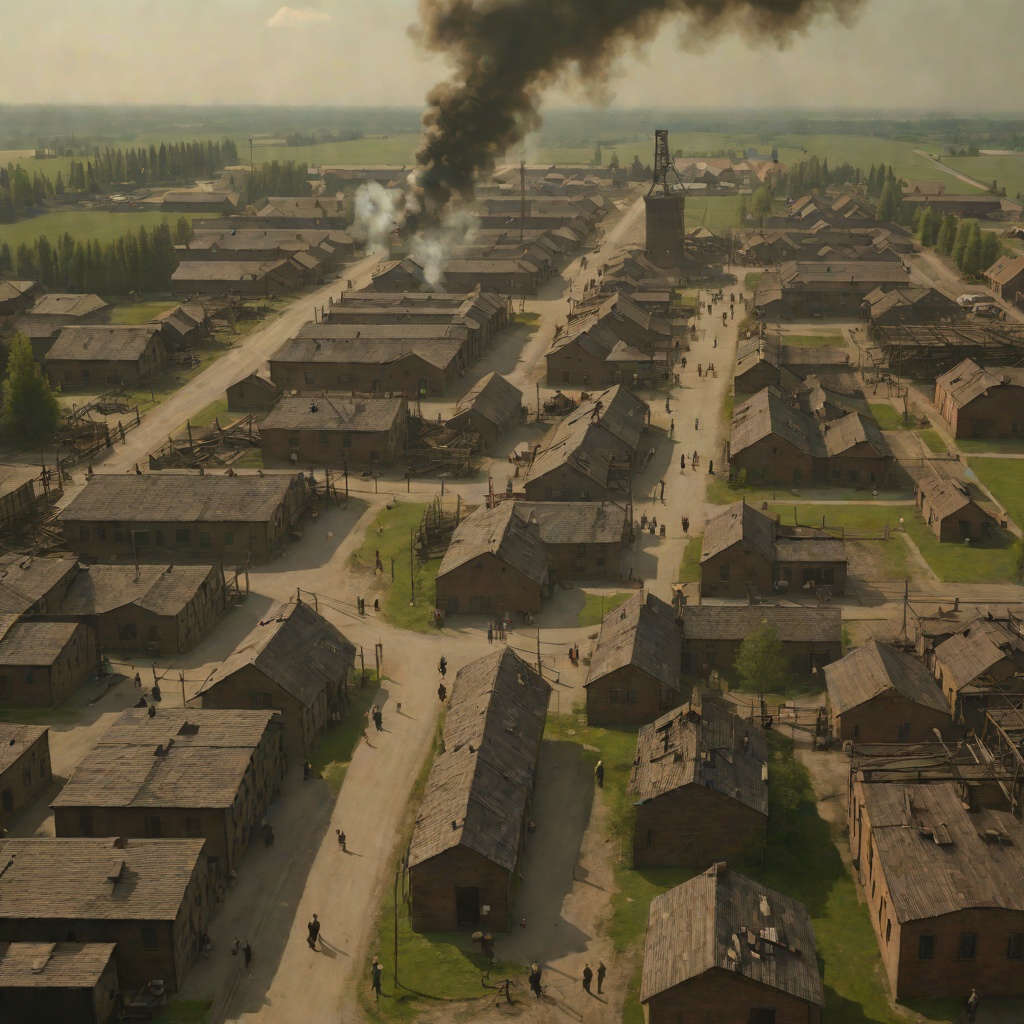
gas van
The Tattooist of AuschwitzThe gas van appears in the narrative as a converted bus, an ordinary vehicle repurposed into a mobile killing chamber. It is described as an odd bus adapted into a bunker of sorts, with steel plates nailed across the window frames. This transformation of a civilian vehicle into an instrument of mass murder embodies the systematic perversion of everyday objects within the Nazi camp system, where even the most mundane machinery could be weaponized against human life.
The Witnessing
On a beautiful spring day, not too hot, Lale watches as a large, enclosed truck continues past the usual point for unloading building supplies, driving around the back of the administration building. Knowing that the boundary fence lies not far beyond, and having never dared venture to this area, curiosity gets the better of him. He walks after it with an air of "I belong here, I can go where I want." Peering around the corner, he sees the truck pull up beside the gas van. Dozens of naked men are herded out of the truck and led toward the bus. Some enter willingly; those who resist are hit with a rifle butt, and fellow prisoners drag the semiconscious objectors to their fate. The bus becomes so full that the last men to board cling to the steps with their tiptoes, their naked bottoms hanging out the door, while officers shove their weight against the bodies. The doors are slammed shut, and one officer walks around the bus, rapping on the metal sheets to check that everything is secure.
The Killing
A nimble officer clambers onto the roof with a canister in his hand. Unable to move, Lale watches as he opens a small hatch on the roof of the bus and upends the canister, then slams the lid down and latches it. As the guard scurries down, the bus shakes violently and muffled screams can be heard. Lale drops to his knees, retching, and remains there, sick in the dirt, as the screams fade. When the bus is still and quiet, the doors are opened, and dead men fall out like blocks of stone. A group of prisoners is marched out from beyond the other corner of the building; the truck backs up, and the prisoners begin transferring the bodies onto it, staggering under the weight while trying to hide their distress. Lale has witnessed an unimaginable act. He staggers to his feet, standing on the threshold of hell, an inferno of feelings raging inside him.
The Aftermath
The next morning, Lale cannot get up; he is burning up. This physical collapse marks the first time the horror of the camp penetrates his body, not just his mind. The gas van execution becomes a threshold moment in his experience of Auschwitz, separating the relative ignorance of his early days from the full, unbearable knowledge of what the camp system truly is. It is a knowledge that will inform every subsequent decision he makes, from his willingness to become the Tätowierer to his determination to survive and to save others.
The Contrast with Other Spaces
The gas van stands in stark contrast to the other spaces Lale inhabits in the camp. Where the Arbeit Macht Frei gate at the entrance offers a cruel promise of liberation through work, the gas van delivers death without any pretense of labor or redemption. Where Lale's single room as the Tätowierer, located immediately inside the door of a newly completed block, grants him a measure of isolation and privilege, the gas van is a space of absolute, forced togetherness ending in annihilation. The gas van is also distinct from the cattle train that brought Lale to Auschwitz, a space of confinement and discomfort but not of immediate, deliberate killing. The train's livestock-car design dehumanized its passengers; the gas van completed that dehumanization by treating them as refuse to be disposed of.
The Narrative Significance
The gas van episode is one of the earliest and most visceral depictions of mass murder in the narrative, establishing the stakes of Lale's survival story. It is the event that forces him to confront the reality of the Holocaust in its most mechanical, bureaucratic form. The image of dead men falling out of the bus "like blocks of stone" recurs in the reader's memory as Lale later risks his life to smuggle goods, to obtain penicillin for Gita, and to save Mendel Bauer. The gas van is the negative image against which all his acts of compassion and resistance are defined. It also foreshadows the later liquidation of the Gypsy camp and the destruction of Crematorium 4, showing that the camp's capacity for mass murder only grows more industrialized and more efficient over time. For Lale, the memory of the gas van becomes part of the trauma he carries with him, contributing to the emotional numbness that persists even after the war, when he finds himself unable to weep even at the death of his own sister, until the passing of his wife Gita finally breaks through.