
The Economics of Survival
The ThicketThis flow follows how money, property, rewards, and labor shape nearly every alliance and moral compromise.
increasing Bearing strength in each event
 decreasing
Bearing strength in each eventdecreasingLand as Inheritance
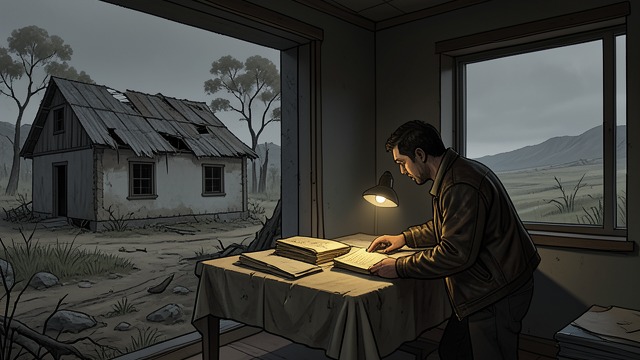
Documents in a Pocket
Transfer
Old Caleb Parker places the family land contracts in Jack Parker's care.
Responsibility
Property becomes the only portable wealth available after the epidemic destroys the household.
Risk
Jack's legal inheritance immediately becomes collateral for survival.
Bounty Calculation
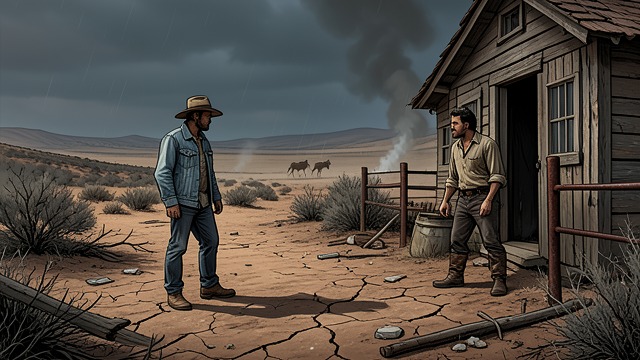
Rescue for a Price
Bargain
Eustace Cox and Shorty agree to pursue Lula Parker for land and possible rewards.
Motive
Their willingness is practical, not sentimental, yet danger makes emotional loyalty grow.
Theme
The novel treats money as both corrupting force and necessary means of justice.
Grave Labor
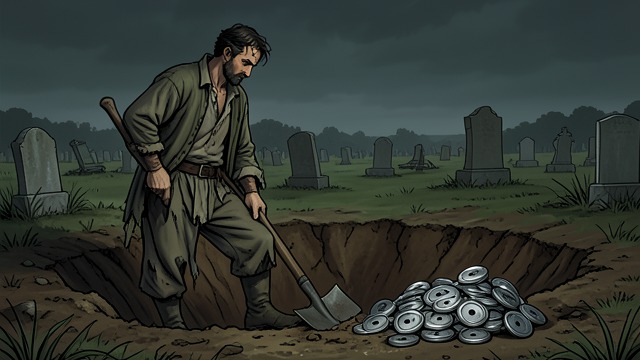
Payment in Death Work
Practice
Eustace Cox earns money digging graves and sometimes threatens those who refuse to pay.
Contradiction
He serves the dead while treating corpses as negotiable labor.
Consequence
His economic desperation explains both his roughness and his attraction to bounty hunting.
Reward Negotiations
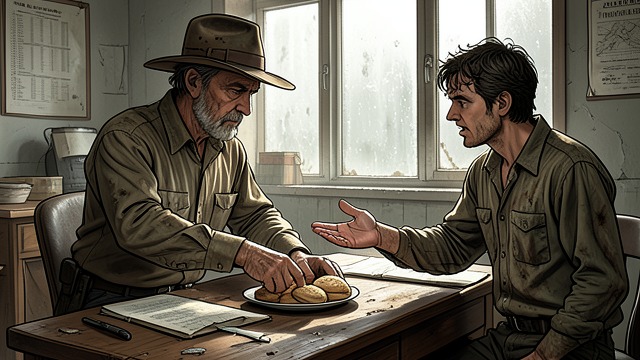
Five Dollars Deferred
Demand
Spot insists that Sheriff Winton honor the promised payment for his warning.
Evasion
Winton tries to replace money with biscuits and later admits he never meant to pay.
Resolution
Shorty preserves the bargain, showing that practical fairness can survive inside corrupt institutions.
Oil Fortune
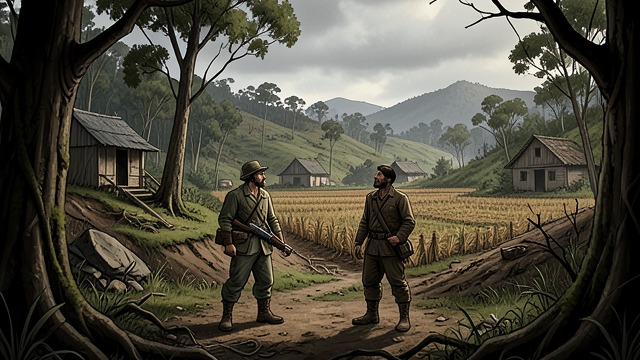
Wealth After Violence
Discovery
Oil is found on the land divided between Shorty and Eustace Cox.
Choice
They retain trees and farmland rather than exploiting every possible well.
Meaning
The survivors gain wealth without allowing wealth to erase the values created by hardship.
the day Old Caleb Parker leaves home
the first meeting with Eustace Cox and Shorty
the night Eustace Cox recruits Shorty
during the stay in Livingston
years after the rescue
