
The Big Thicket as Moral Landscape
The ThicketThis flow traces the Big Thicket from rumored wilderness into a symbolic realm where social order and human boundaries collapse.
increasing Bearing strength in each event
 decreasing
Bearing strength in each eventdecreasingRumored Wilderness
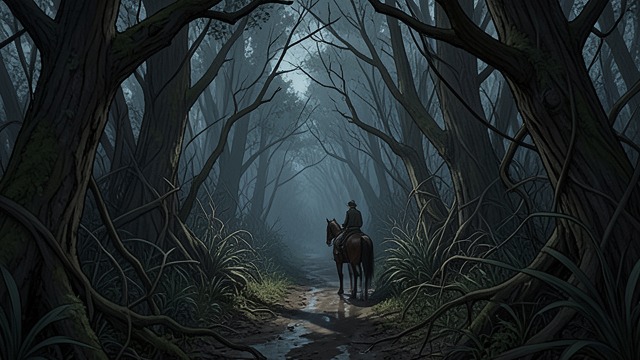
A Place Outside Law
Reputation
Eustace Cox describes the Big Thicket as a refuge for fugitives, isolated families, and people law avoids.
Fear
Its dangers are partly factual and partly enlarged by rumor.
Function
The region becomes the destination where the posse's ordinary assumptions will be tested.
Environmental Ruin
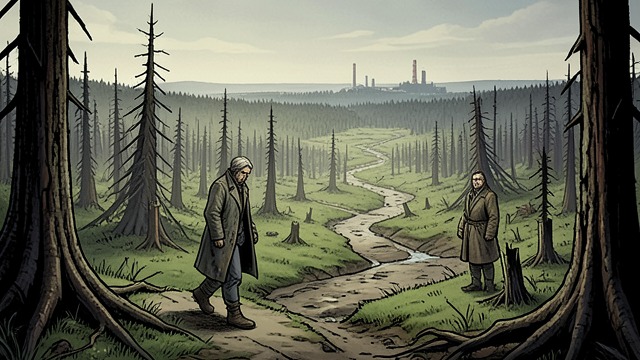
Forest Cut Open
Change
Logging roads, stumps, burned timber, and oil towers scar the country.
Contrast
Eustace Cox mourns the loss of soil and trees while Shorty predicts economic transformation.
Meaning
The Thicket is threatened by industry even before the gang's violence is confronted.
Hidden Communities
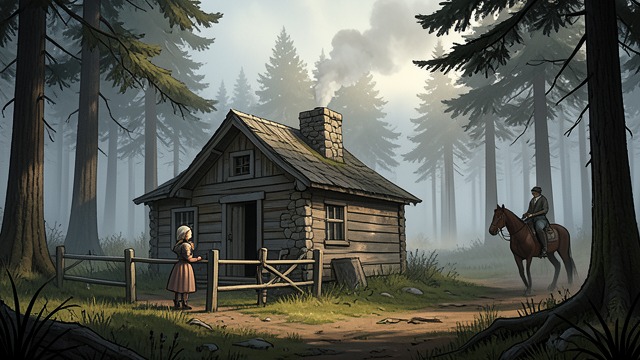
Lives Outside the Main Road
Testimony
Efrem and Ella reveal how isolated households can be attacked without timely protection.
Structure
The Thicket shelters both victims and predators because distance weakens every authority.
Consequence
Jack Parker learns that rescue requires entering communities the formal world has abandoned.
The Gang's Sanctuary
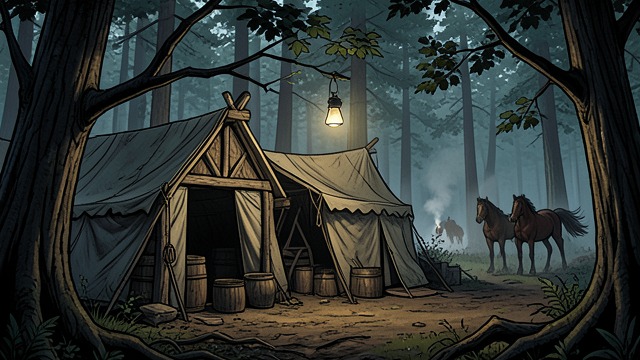
Camp Beyond Witnesses
Isolation
Cut Throat Bill's gang occupies a crude camp protected by woods, horses, and fear.
Brutality
The absence of outside observers allows them to turn murder into casual entertainment.
Challenge
The posse must make the landscape itself part of its strategy.
Leaving the Thicket
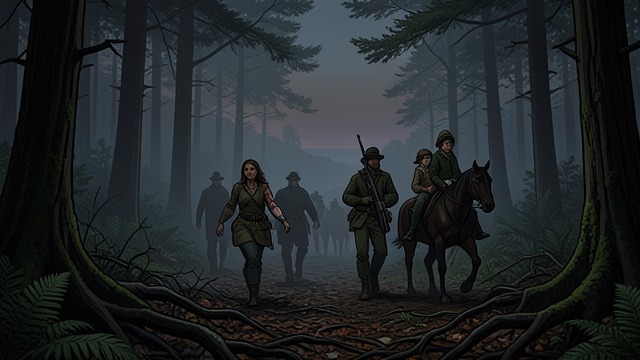
Return Through Ruin
Departure
The survivors leave with bodies, weapons, horses, and the rescued Lula Parker.
Memory
The wilderness has permanently altered how Jack understands home and safety.
Resolution
The Thicket remains physically behind them but persists as a moral geography in memory.
when Eustace Cox first describes the Thicket
during the approach to Livingston
during the search beyond Livingston
the morning Spot is killed
after Lula Parker's reunion with Jack
