Hinge Gate smallpox epidemic
The ThicketThe Hinge Gate smallpox epidemic is the initiating catastrophe of Jack Parker and Lula Parker’s story: it kills their parents, suspends ordinary civic life, and compels the siblings to abandon their home. Its effects extend beyond the outbreak itself, shaping Jack’s memory, the family’s later cemetery, and the novel’s larger vision of a frontier repeatedly transformed by forces that individuals cannot control.
Outbreak and Public Collapse
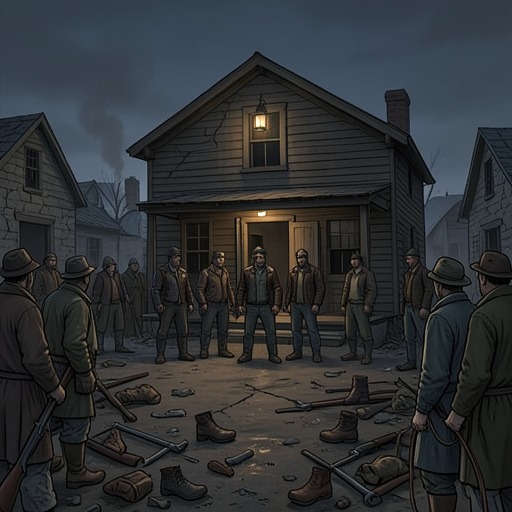
Smallpox moves through Hinge Gate with extraordinary speed, becoming an epidemic rather than an isolated illness. The dead accumulate outside houses, are loaded into wagons, buried hurriedly, or burned unidentified when travelers die without leaving names or destinations. Sheriff Gaston responds by placing signs on the roads to stop both departures and arrivals, creating a quarantine that turns the town into a sealed emergency space. The signs are an improvised assertion of public authority, but they cannot restore order or prevent the epidemic’s social effects.
Fear also produces ineffective private remedies. Residents burn smoke pots around and inside their homes, believing smoke will keep smallpox away; instead, it makes the air oppressive and makes breathing harder for those already sick. The epidemic therefore attacks both bodies and judgment. Jack recalls that it killed many people, frightened the survivors, and seemed to take away their reason, making rational distinctions between protection and harm increasingly difficult.
The Parker Family’s Loss
Jack and Lula initially escape infection. Jack is sixteen and newly healthy after a sickly childhood, while Lula is fourteen and has remained scrawny, yet neither contracts the disease. Their parents, by contrast, develop fever, blisters, and labored breathing after what Jack suspects was contact with a traveling tinker. Jack believes the infection may have reached the family when his father shook the tinker’s hand and bought a skillet, though the tinker showed no visible symptoms. The suspected point of transmission gives the epidemic an intimate, almost material presence: it travels through ordinary commerce and touch.
Jack rides into town for a doctor, but the doctor can do little beyond giving the parents pills, and soon dies of smallpox himself. Jack recognizes the doctor’s grave because a smoke pot burns beside it, an image that joins medical failure, superstition, and the hasty disposal of the dead. When Jack returns home, both parents have died. Lula is crying in the yard while still holding a strangled chicken she had begun preparing for dinner, an ordinary domestic task continuing beside an unbearable disruption.
The siblings have been sleeping and cooking outside beneath a tree to reduce their exposure. Their grandfather, who survived smallpox in his youth and therefore cannot catch it again, is able to enter the house and handle the bodies. His own earlier infection occurred among the Cheyenne near the Wind River Range after white people gave infected blankets to the Cheyenne as a joke. That remembered history places the Hinge Gate epidemic within a longer chain of disease, colonial contact, and racial violence rather than treating it as an inexplicable natural event.
Burial, Burning, and Forced Departure
On the day the parents die, Jack and his grandfather bury them under emergency conditions. The grandfather brings lime, which he pours over the bodies in the belief that it will prevent the disease from spreading, and lowers them into coffins that he had already built because he understood what was coming. Jack helps with ropes while remaining stunned and unable to absorb the practical meaning of the scene. The grave itself becomes a compromise between ritual and public-health necessity: there is a Bible and preaching, but there is also lime, haste, distance, and fear of contamination.
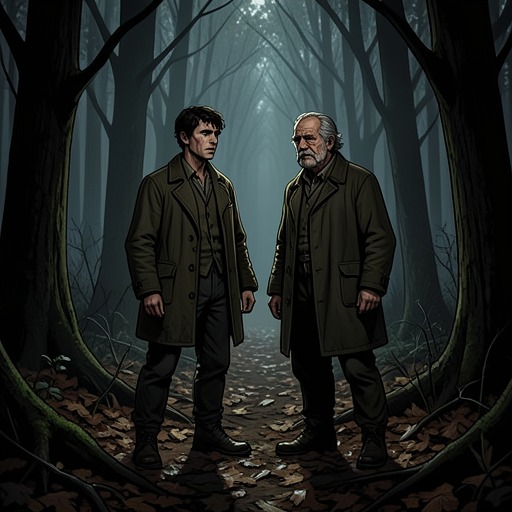
After the burial, the grandfather sets the family home on fire. The burning is not presented as a chosen act of mourning but as a measure intended to remove the infected dwelling from the living world. He loads Jack and Lula into the wagon and ties the old mule behind it. When Jack asks where they are going, the grandfather explains that Jack must go to Kansas to stay with Aunt Tessle. The epidemic thus converts a death at home into a forced migration, separating the siblings from their land and beginning the displacement that drives the subsequent narrative.
Recurring Disaster and Frontier Disorder
The epidemic becomes one instance in a wider landscape of unstable hazards. The later Sabine River ferry disaster turns a crossing into a scene of wind, water, and mass dislocation when the ferry rope frays, a water devil rises in the river, and the ferry is struck. Other disasters are produced by human systems: a circus fire spreads through tents coated with oil, resin, and wax; logging roads cut through the Big Thicket and leave stumps, burning hardwood, silent birds, and ruined traffic; and the search for Fatty Worth proceeds through a forest already fragmented by sawmills.
The epidemic’s logic also echoes the novel’s treatment of violence and public authority. Sheriff Gaston’s road signs impose quarantine, while elsewhere authority collapses into the open sheriff’s office, mob justice, jurisdictional disputes, and armed pursuit. The hanging of Bobby O’Dell and the later insistence that Sheriff Winton lacks jurisdiction show how quickly formal law can be displaced by improvised power. Against that background, the smallpox quarantine is both necessary protection and an example of a frontier community defining who may enter, leave, or be abandoned.
Memory, Land, and Aftermath
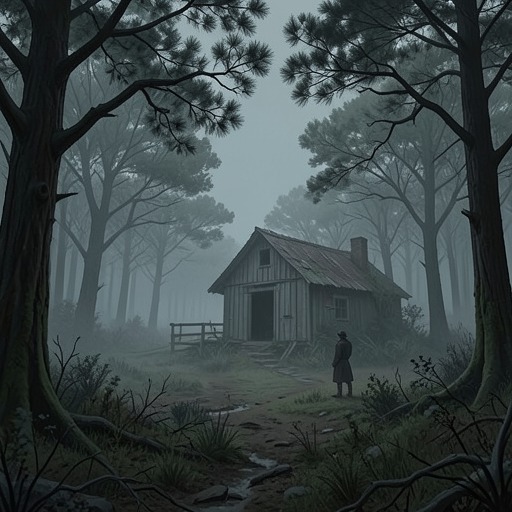
The epidemic never entirely ends for Jack when Hinge Gate recovers. After returning to the family land, he refuses to rebuild on the site of the old house because he associates it with smallpox and fears that the disease might somehow rise from the ground. The original burial place becomes a family cemetery, preserving the parents’ deaths as a physical feature of the property and turning epidemic memory into inheritance.
The land later produces an unexpected reversal. Oil is discovered on the boundary between the parcels divided between Eustace Cox and Shorty, bringing substantial wealth, yet they allow only one well because they prefer to preserve the trees and farmland. The same broader region that has carried disease, dispossession, logging, and violence also becomes a source of prosperity, though the decision to limit drilling distinguishes their stewardship from the destructive development represented by the sawmills. Hinge Gate’s recovery permits Lula Parker and Shorty to marry there years later, but the town’s later normality does not erase what the epidemic did: it killed the parents, broke the household, and set Jack and Lula’s lives on a course defined by exile, survival, and the stubborn reconstruction of home.