Lula Parker
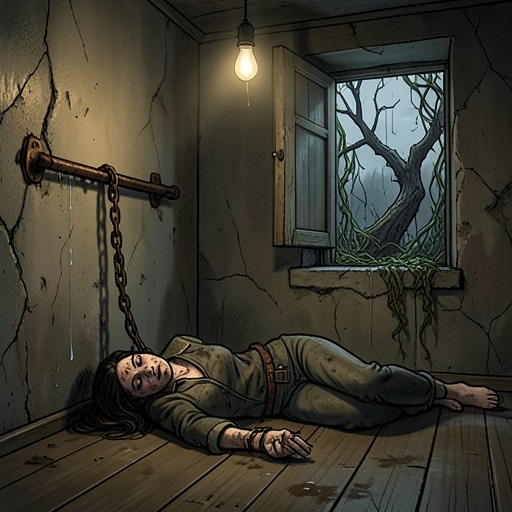
The ThicketLula Parker is Jack Parker’s younger sister and one of the central survivors whose fate sets the novel’s pursuit in motion. Fourteen when the story begins, she escapes the smallpox that kills both parents, survives the Sabine River catastrophe with Jack and Old Caleb Parker, and is then taken by armed men. Her captivity transforms a landscape of epidemic, racial violence, and lawlessness into a family emergency: Jack’s determination to recover her becomes the emotional line connecting the book’s scattered dangers.
Identity and Background
Lula is introduced as fourteen years old, slight in build, and approaching womanhood when the smallpox epidemic reaches Hinge Gate. The disease kills her parents even though neither had previously been ill, while Lula and Jack remain untouched. Their immunity does not spare them from loss: they must watch their parents die and cannot touch them for fear of infection. Lula’s survival therefore begins in a household already emptied by the epidemic, making her bond with Jack one of the few remaining forms of family security.
Old Caleb Parker later gathers Lula and Jack and takes them toward the ferry. The journey ends in catastrophe when the ferry is overwhelmed by a water devil. Jack remembers that Lula and their grandfather reached the far side or nearly did, that Old Caleb Parker had already been shot, and that the men responsible took Lula. Because the abduction follows immediately upon the epidemic and the ferry disaster, Lula’s disappearance is not an isolated misfortune; it is the latest link in a chain that has repeatedly stripped the siblings of home, parents, and protection.
Captivity and the Rescue Quest
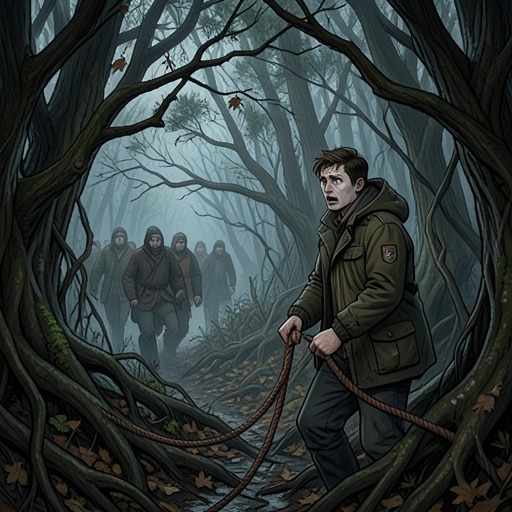
Jack’s account of Lula’s seizure is direct and urgent: he tells those who find him that the men took his sister and that he has to get her back. Advice that the flooded river, rough water, and distance make pursuit nearly impossible cannot displace that obligation. His response rejects the logic of ordinary survival. Lula is not merely someone lost in a disaster but the person for whom Jack accepts further danger, legal uncertainty, and association with violent companions.
The rescue quest also exposes the moral mud surrounding Lula’s captivity. Sheriff Winton later explains that the men killed during the pursuit were plainly dangerous and might themselves have stolen Jack’s sister, while the trading post connected with them catered to criminal activity rather than respectable people. Yet Winton refuses to divide the survivors from the dead into pure good and pure evil. He describes both groups as containing more bad than they would like, but less than the men who were killed. Lula’s abduction consequently becomes part of a world where rescue may require violence by people who cannot claim innocence.
Jack’s memory of the public killing of Bobby O’Dell deepens that moral setting. He watches the hanging man spin from the rope while men strike him, throw dirt, and continue attacking after he has gone still. Although Lula is not present in the scene, the episode clarifies the social order into which her disappearance has thrust Jack: cruelty is communal, spectacle is mistaken for justice, and the institutions meant to distinguish law from revenge are unstable. Her absence is therefore felt against a background in which recovery can never be cleanly separated from retaliation.
Relationships and Moral Consequences
Lula’s relationship with Jack is defined by mutual survival before it is defined by ordinary sibling intimacy. The epidemic leaves them without parents; the ferry disaster leaves them without secure guardianship; and the abduction gives Jack a single, concrete objective. His insistence on finding her expresses loyalty, but it also places her at the center of the violent masculine world through which he travels. She is the person being protected, yet the attempt to protect her draws Jack toward guns, pursuit, and men whose own conduct is compromised.
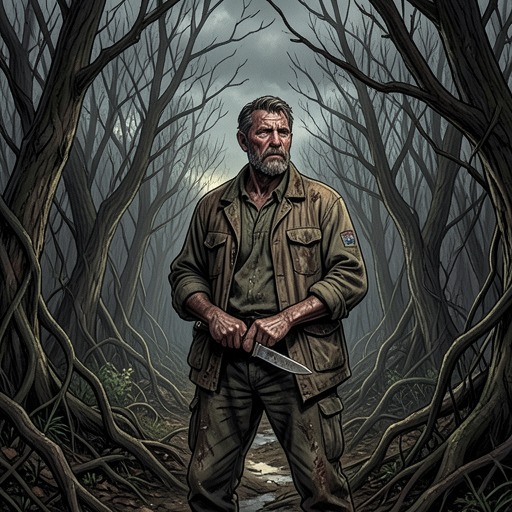
The rescue also creates unexpected relational consequences. Shorty’s extraordinary long-range shot saves Lula from Cut Throat Bill, but the same act brings Shorty and Lula together. The connection is not presented as a simple reward for heroic violence: it grows out of a scene in which salvation, danger, and lethal skill are inseparable. Lula’s eventual life with Shorty shows how the rescue quest changes shape after its immediate objective has been achieved. She is no longer only the missing sister whom Jack must recover; she becomes a partner, a mother, and a person whose future is bound to the man who helped save her.
Reunion, Confession, and Later Life
When Jack and Lula are finally together again, Lula repeatedly says Jack’s name as though recognition itself is returning to her. The moment is physically difficult for Jack, whose knee hurts badly and who needs Lula’s help to rise. Shorty approaches slowly on horseback, leading Lula’s horse after it has regained some of its strength. The scene reverses the earlier arrangement of dependence: the sister once carried away by others is now present, helping Jack stand while Shorty comes toward them.
Lula then admits that she is not as pure as she once was. The statement is brief but decisive because it refuses to make her return a restoration of untouched innocence. Her survival has altered her, and the reunion must accommodate knowledge and experience that Jack cannot simply erase. The confession also complicates the rescue narrative’s implied promise that recovering the lost person will return the family to its former condition. Lula comes back, but neither she nor the world around her is what it was before the ferry disaster.
Lula’s later life extends beyond the immediate adventure. She and Shorty have a son named James, who grows to normal height but resembles his father closely. After Shorty’s death, Lula is the one who finds him in the tower, where he has died too young while seated before his telescope and looking at the stars. Her discovery gives her a final active place in Shorty’s story: she is not merely the woman he rescued, but the person who encounters the end of his life and remains connected to the world he imagined through the telescope.
Narrative Role and Significance
Lula’s trajectory links private attachment to the novel’s larger history of social violence. Her family is devastated by the Hinge Gate smallpox epidemic; her grandfather is shot during the ferry disaster; and her own captivity becomes the motive for a journey through criminality, racial terror, and compromised law. She is thus both an individual character and the measure of what those forces cost a family.
Her return does not produce a morally simple ending. The same violence that threatens her also enables her rescue and her meeting with Shorty, while the men pursuing or opposing one another remain entangled in the muddy proportion of good and bad that Sheriff Winton describes. Lula’s confession preserves that ambiguity within the family’s supposed happy resolution. Her story finally belongs to the novel’s larger meditation on memory: Jack acknowledges that what he recounts may not be perfect truth but is true as he remembers it, and that people remember not only what happened but how they thought it happened. Lula survives physically and becomes part of a continuing family line, yet her survival remains inseparable from loss, altered identity, and the unreliable shape of remembered experience.