
Evidence Against Certainty
The Thing on the DoorstepThis thread traces Daniel Upton’s struggle to decide what counts as knowledge when credible observation, frightening testimony, and impossible explanations collide.
increasing Bearing strength in each event
 decreasing
Bearing strength in each eventdecreasingThe Rational Observer
Evidence Against Certainty
A Claim Before Its Proof
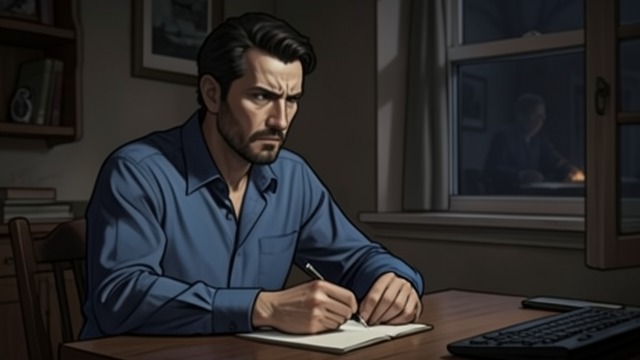
Daniel Upton begins by admitting that he shot his closest friend, while insisting that he did not murder him. His claim immediately places the reader in the same unsettled position as the narrator: the act is certain, but its meaning depends on explanations that may sound like madness.
He anticipates disbelief and presents his account as an argument to be weighed against known facts. The opening frames narration itself as an attempt to make an extraordinary experience legible to people who have no reason to accept it at first hearing.
Confidence Under Suspicion
Daniel Upton does not present himself as immune to doubt. He wonders whether he was misled or is mad, allowing uncertainty to remain part of his account rather than pretending that the evidence has made every question disappear.
This self-questioning gives the story its investigative shape. The reader must assess not just what happened, but how far an ordinary witness can trust his perceptions when the explanation appears to overturn ordinary knowledge.
Rumor and Testimony
Evidence Against Certainty
Stories at a Distance
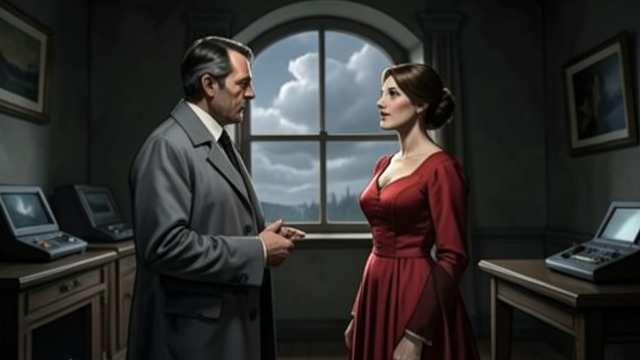
Before meeting Asenath Waite, Daniel Upton hears reports about her from people who encountered her at school. The stories describe unsettling hypnotic episodes, unusual knowledge, and an influence over other people that seems difficult to explain.
Such accounts are neither direct proof nor simple gossip within the logic of the story. They offer possible clues, but their distance from Daniel Upton’s own experience leaves room for exaggeration, prejudice, or mistaken interpretation.
Clues Without a Verdict
As the marriage changes Edward Pickman Derby, Daniel Upton begins to reconsider the earlier reports. Edward Pickman Derby’s sudden shifts in personality seem to echo the accounts of exchanged perspective, but resemblance does not by itself establish what has occurred.
The story shows how evidence can accumulate without immediately resolving uncertainty. Each new observation changes the significance of earlier rumors, while still demanding a judgment about which explanations the facts can support.
A Witness to Transformation
Evidence Against Certainty
An Unexplained Change
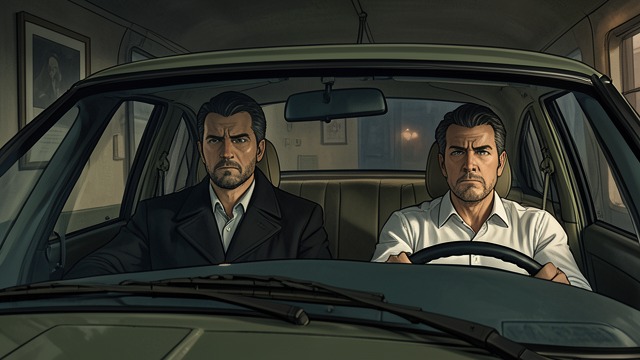
While driving Edward Pickman Derby home after finding him in distress, Daniel Upton hears him describe bodily exchanges and occult ordeals. Then Edward Pickman Derby’s speech abruptly stops, his body shivers, and the person beside Daniel Upton appears to become more decisive and unfamiliar.
Daniel Upton observes a change he cannot readily explain, but the observation does not tell him which account of it is true. The transformed passenger dismisses the earlier statements as delusion and supplies a more ordinary story about a trip and an illness.
The Limits of Observation
The drive leaves Daniel Upton with an intense feeling that the passenger is no longer the friend he knows. Yet feeling, however powerful, is not a complete demonstration of possession; the altered demeanor can still be mistaken for sickness, exhaustion, or a change in character.
This moment exposes a central problem of knowledge in the story. Daniel Upton is given direct experience, but not the interpretive certainty needed to turn experience into publicly convincing proof.
An Impossible Warning
Evidence Against Certainty
A Message from the Unbelievable
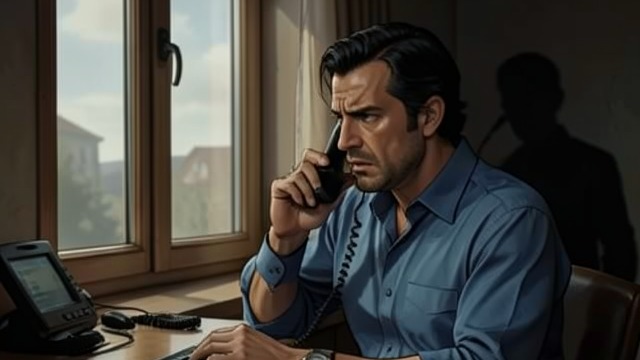
In the middle of the night, Daniel Upton receives a strange telephone call from the Crowninshield House. The sound on the line resembles a bubbling, unintelligible voice, and later investigation links the call to the house without explaining how a speaker could have produced it.
A short time afterward, a grotesque figure reaches Daniel Upton’s doorstep and hands him a written warning. The note’s script resembles Edward Pickman Derby’s, but the messenger’s condition and the impossible claims in the message make interpretation as disturbing as the evidence itself.
Credibility Through Detail
The warning supplies specific allegations about Asenath Waite’s death, Edward Pickman Derby’s confinement, and the apparent recovery at the Arkham Sanitarium. Its particulars connect events that Daniel Upton had previously understood only in fragments.
Yet the message arrives through a source that ordinary reasoning would reject. The story makes credibility a pressure point: the more impossible the messenger appears, the harder it is to trust the account, but the closer the message brings Daniel Upton to an explanation of earlier observations.
Action Without Proof
Evidence Against Certainty
Decision Under Uncertainty
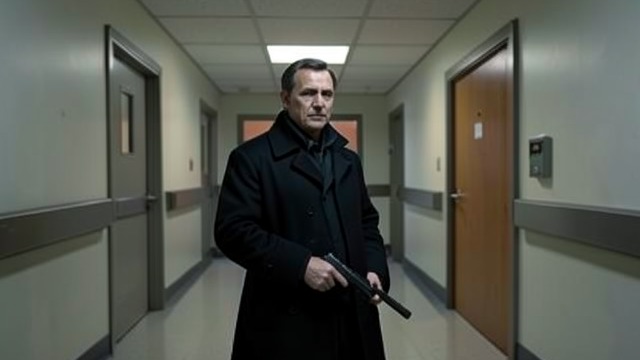
Daniel Upton visits the Arkham Sanitarium and shoots the patient he believes is no longer Edward Pickman Derby. He acts on the written warning and on his accumulated impressions, though neither the authorities nor the available evidence can establish the supernatural explanation in conventional terms.
His decision turns private belief into irreversible action. Daniel Upton’s uncertainty does not free him from responsibility; instead, it becomes the condition under which he must decide whether inaction would leave a danger alive.
The Unfinished Case
Afterward, Daniel Upton presses for the body to be cremated, fearing that death may not have ended the threat. The insistence shows that the shooting has not produced a secure conclusion, only a new demand for measures that reflect what he believes.
The story closes with knowledge still contested. Daniel Upton’s testimony may be read as a reasoned account of a hidden horror or as the record of a man whose certainty has become inseparable from fear, leaving the reader to judge what the evidence permits.
At the opening of Daniel Upton’s account
Before and during the early years of the marriage
During the drive home from Maine
Just before the final night at Daniel Upton’s house
The afternoon after the doorstep visit
