
The Body as Contested Territory
The Thing on the DoorstepThis thread traces how bodily identity becomes a battleground, turning apparent intimacy and survival into forms of possession.
increasing Bearing strength in each event
 decreasing
Bearing strength in each eventdecreasingA Hypnotic Disturbance
The Body as Contested Territory
A Self Made Uncertain
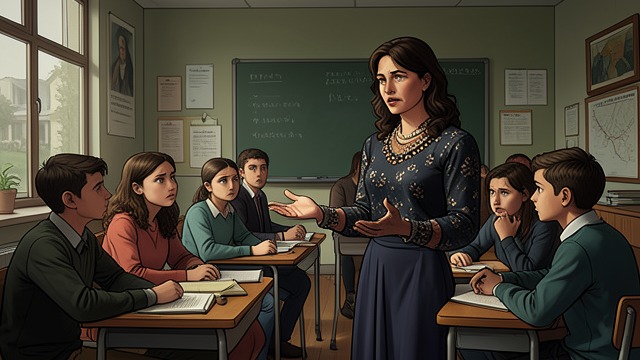
At school, Asenath Waite’s hypnotic demonstrations leave other students feeling as if they have been displaced into her body and can see their own selves from outside. The episodes unsettle the ordinary assumption that a person’s point of view belongs securely to one body.
The effect is more than a strange performance: it suggests that bodily identity can be manipulated by a forceful will. The students’ momentary confusion foreshadows the later possibility that a person may remain conscious while losing control of the physical form through which others recognize them.
An Early Warning
Asenath Waite’s confidence in the independence of consciousness gives these demonstrations a disturbing intellectual frame. What might otherwise be dismissed as a trick becomes a rehearsal for a world in which the body is not a dependable boundary around the self.
The story introduces this danger before Daniel Upton can interpret it. The early reports thus make later possession feel less like an isolated impossibility than the terrifying fulfillment of a warning already embedded in ordinary social life.
Marriage and Bodily Access
The Body as Contested Territory
Intimacy as an Opening
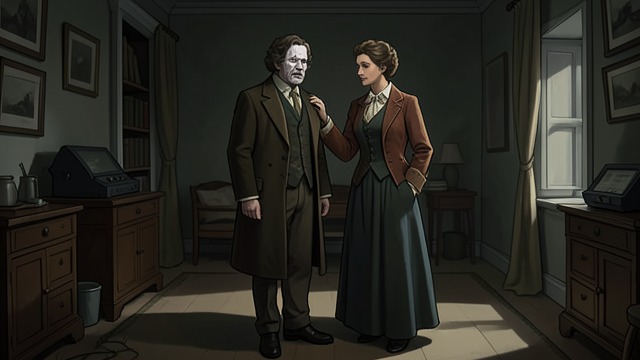
When Edward Pickman Derby marries Asenath Waite, their shared occult interests appear to promise intellectual companionship. Yet the marriage also places Edward Pickman Derby within reach of the person whose experiments have already blurred the boundary between one consciousness and another.
Daniel Upton initially interprets the change in Edward Pickman Derby as a possible movement toward adult independence. That hopeful reading misses the more ominous possibility: a new confidence and activity may not mean that Edward Pickman Derby is becoming more fully himself.
Private Life, Public Appearance
The marriage creates an intimate setting in which bodily control can be contested away from witnesses. To outsiders, changes in demeanor can be explained as marital influence, unusual study, or a shift in personality; none reveals who is actually directing the body.
This gap between visible conduct and inward identity gives the marriage its central horror. The person who appears to act freely may be acting under another will, while the displaced self has little proof or language with which to make its captivity known.
The First Displacements
The Body as Contested Territory
A Divided Routine
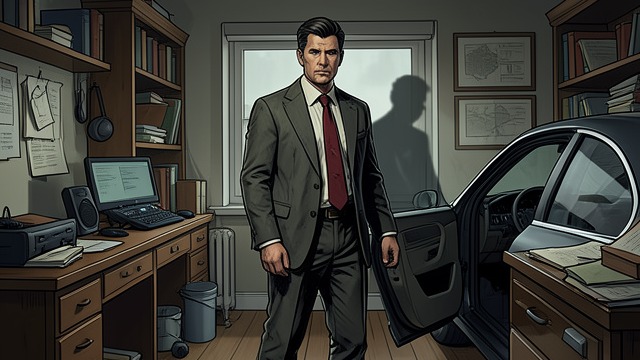
As Edward Pickman Derby’s behavior grows erratic, observers see flashes of startling competence alongside renewed helplessness. At times he handles a car with decisive skill; at others, he returns exhausted and dependent, as though the body’s actions and the familiar personality no longer belong together.
The changes become especially disturbing because they are visible without being legible. People can notice that something is wrong, but the evidence does not tell them whether Edward Pickman Derby is ill, transformed, or absent from his own body.
Control Without Consent
Edward Pickman Derby eventually describes Asenath Waite taking his body and leaving him confined elsewhere. His account makes physical agency the measure of freedom: control of the body determines where he can go, what he experiences, and whether he can protect himself.
The exchanges also reverse the usual relation between appearance and identity. A familiar face can conceal an alien will, while the imprisoned self may survive only as a fragment of consciousness struggling to be heard.
A Corpse as Prison
The Body as Contested Territory
Death Does Not Close the Boundary
Edward Pickman Derby later writes that Asenath Waite, though dead, continues to reach for his body. In his account, the division between life and death fails to end the struggle over who may inhabit a physical form.
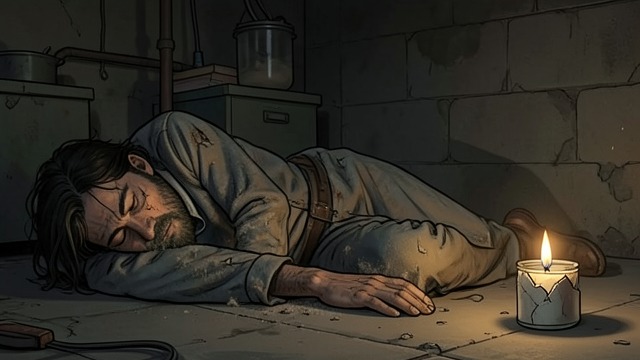
His description makes the corpse a terrible extension of bodily captivity. He finds himself trapped in the decaying remains hidden beneath the Crowninshield House, unable to escape merely because the body he once feared is no longer alive.
The Cost of Survival
The possibility that consciousness can persist beyond bodily death converts survival into a threat rather than a guarantee of safety. A living body can be taken, and a dead body can remain an instrument through which an unwanted will acts.
The story therefore denies the comforting idea that bodily limits naturally protect the self. Edward Pickman Derby’s predicament is defined by the failure of every boundary—between self and other, living and dead, and refuge and confinement.
The Last False Return
The Body as Contested Territory
A Familiar Face Reconsidered
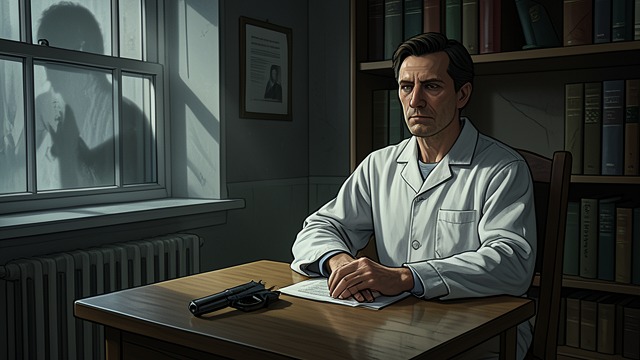
When Daniel Upton visits Edward Pickman Derby at the Arkham Sanitarium after his apparent recovery, the patient seems composed and competent. Yet the very traits that suggest restored health instead recall the alien personality Daniel Upton has learned to fear.
The scene makes recognition unreliable. A face and voice can preserve the appearance of a friend even when the person Daniel Upton once knew may no longer be present within that body.
Violence as a Desperate Boundary
Daniel Upton later shoots the body he believes has been occupied by an enemy, hoping to stop the threat to Edward Pickman Derby and others. The act presents destruction as a final attempt to defend bodily identity when no trustworthy means of distinguishing occupant from victim remains.
The resolution offers no secure restoration of the self. Even after the shooting, Daniel Upton fears that the force involved may survive, so bodily death cannot provide the certainty he sought. The struggle ends in violence, but the boundary it was meant to defend remains in doubt.
Before Asenath Waite meets Edward Pickman Derby
The month of the wedding
During the first two years of the marriage
After Asenath Waite dies and Edward Pickman Derby is confined
Near the ending, before the final doorstep visit
