
The Fragility of Will
The Thing on the DoorstepThis thread follows the story’s contrast between dependence and agency, showing how vulnerability becomes both an opening for control and a belated source of resistance.
increasing Bearing strength in each event
 decreasing
Bearing strength in each eventdecreasingA Sheltered Childhood
The Fragility of Will
Dependence Learned Early
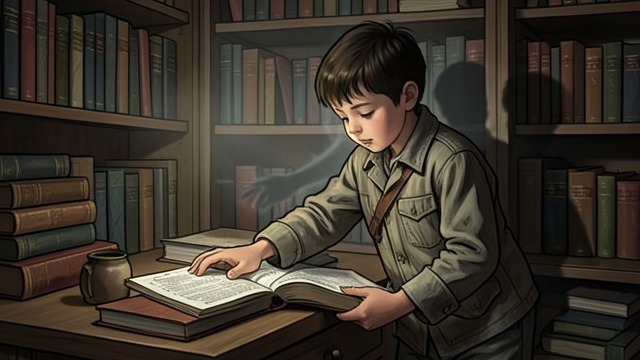
Edward Pickman Derby grows up under close parental protection, with illness and seclusion limiting his opportunities to act independently. His remarkable intellectual life develops alongside habits of reliance, leaving him learned but poorly prepared to make practical decisions or resist stronger personalities.
Daniel Upton understands these limitations as part of Edward Pickman Derby’s character rather than as a passing weakness. The portrait establishes that dependence can be cultivated through care as well as imposed through force.
Knowledge Without Agency
Edward Pickman Derby’s education gives him access to books and speculative ideas, but it does not automatically give him command over his daily life. The distinction matters because his later danger does not arise from ignorance alone: he can understand disturbing possibilities while still lacking the will to act against them.
The story thus separates intellectual ability from self-determination. Learning can expand a person’s awareness without strengthening the practical independence needed to defend a self under pressure.
The Transfer of Dependence
The Fragility of Will
A New Authority
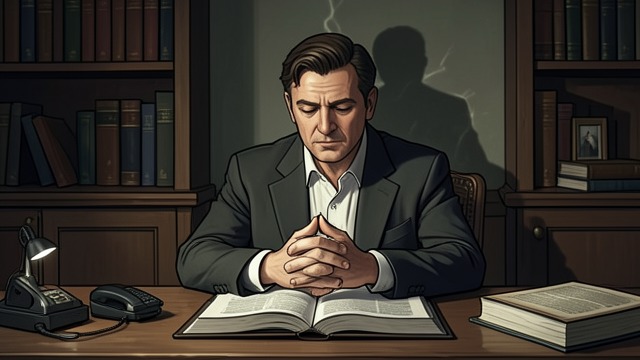
Edward Pickman Derby’s fascination with Asenath Waite quickly becomes an attachment strong enough to override the concerns of Daniel Upton and Edward Pickman Derby’s father. Daniel Upton sees the familiar pattern of dependence shifting from a parent to a more forceful figure, not disappearing through marriage.
That shift makes affection difficult to separate from susceptibility. Edward Pickman Derby may sincerely choose the relationship, yet the story emphasizes how his longstanding need for guidance weakens the independence required to assess its dangers.
Consent Under Pressure
Asenath Waite’s powerful will and interest in the nature of consciousness give the new relationship an unequal structure. What appears from the outside to be a private romantic choice may become a channel through which one person’s ambitions shape another person’s freedom.
The marriage therefore complicates any simple distinction between voluntary attachment and coercion. Edward Pickman Derby’s vulnerability does not erase his capacity to care, but it makes that care easier to exploit.
The Will to Resist
The Fragility of Will
Resistance Takes Shape
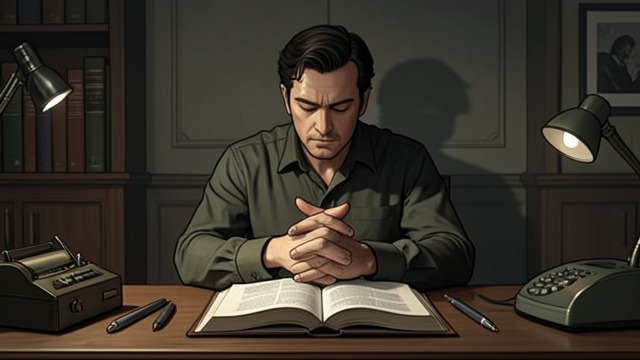
Edward Pickman Derby begins to tell Daniel Upton that things have gone too far and that he needs to regain his identity. These hesitant disclosures mark a change: he is no longer only enduring the pressure but trying to name what is happening to him.
His efforts remain precarious. Asenath Waite can apparently obstruct his movements and discover that he has been seeking help, while Edward Pickman Derby struggles to make himself understood without being silenced or disbelieved.
A Narrow Opening
The disclosures show that resistance need not begin as a confident act. In Edward Pickman Derby’s case, it first appears as fragments of speech, fear, and attempts to reach a trusted friend.
Daniel Upton’s attention gives those fragments an audience, but it cannot by itself free Edward Pickman Derby. The episode reveals both the importance and the limits of testimony when a person’s will is under attack and the surrounding evidence remains ambiguous.
Resistance Turns Violent
The Fragility of Will
Agency Under Threat
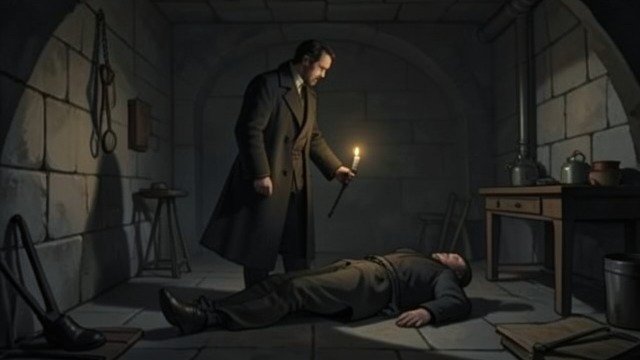
Convinced that Asenath Waite intends to take his body permanently, Edward Pickman Derby waits for a moment when he believes he is back in control of himself. He then kills her with a candlestick and hides her body in the cellar of the Crowninshield House.
His actions are presented as an attempt to escape a future in which his will would be permanently displaced. Yet the violence cannot restore the security he seeks: it removes Asenath Waite’s living body without ending the force Edward Pickman Derby believes she can exert.
The Price of Self-Defense
The killing converts a private struggle over autonomy into a concealed crime, deepening Edward Pickman Derby’s isolation. Rather than bringing a stable return to selfhood, the act leaves him fearful, secretive, and vulnerable to renewed possession.
The episode complicates resistance as a moral ideal. Edward Pickman Derby’s desperate choice may be intended as self-preservation, but it traps him in further danger and makes his survival depend on decisions no outside observer can easily verify.
The Final Appeal
The Fragility of Will
A Last Act of Agency
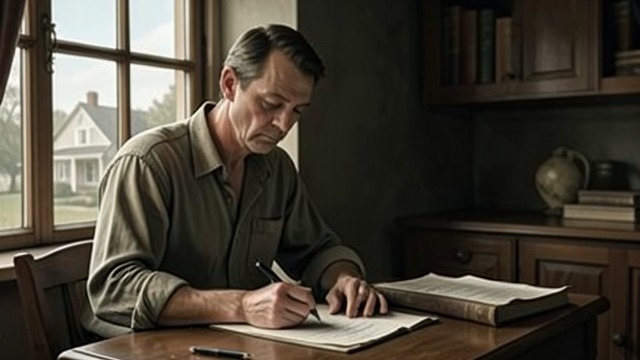
After discovering himself trapped in Asenath Waite’s decaying corpse, Edward Pickman Derby escapes the cellar and reaches Daniel Upton’s home. Unable to speak clearly, he writes a warning identifying the apparent patient at the Arkham Sanitarium as the continuing danger.
The written message is a final assertion of selfhood. Edward Pickman Derby cannot reclaim his former body, but he can still make a choice, communicate what he knows, and try to prevent the threat from passing beyond him.
An Incomplete Victory
Daniel Upton acts on the warning and shoots the body believed to contain the enemy. Edward Pickman Derby’s appeal therefore changes what happens, even though it arrives after his life and identity have been devastated.
The ending refuses to make resistance triumphant. Edward Pickman Derby’s last effort reaches another person, but it cannot guarantee that the danger is over or undo what has been done to him.
Edward Pickman Derby’s childhood in Arkham
When Edward Pickman Derby meets Asenath Waite
In the third year of the marriage
Around Hallowmass, before Edward Pickman Derby’s confinement
The night Edward Pickman Derby reaches Daniel Upton’s doorstep
