
Humanity at the Edge
The Thing on the DoorstepThis thread traces how the story destabilizes ordinary ideas of personhood, sanity, and human belonging as the familiar becomes difficult to distinguish from the alien.
increasing Bearing strength in each event
 decreasing
Bearing strength in each eventdecreasingThe Familiar Town Under Shadow
Humanity at the Edge
Everyday Life Beside the Uncanny
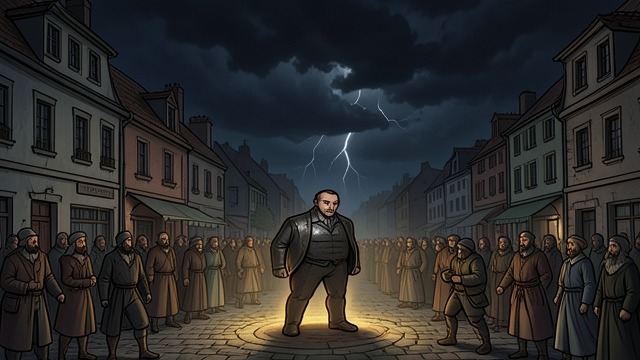
Daniel Upton presents Arkham as a recognizable town whose old buildings and everyday routines coexist with a persistent atmosphere of legend. The setting does not begin as a separate fantasy world; the unsettling possibility grows out of streets, homes, friendships, and institutions that appear ordinary.
That proximity makes the uncanny harder to dismiss as distant spectacle. If disturbing forces can enter through familiar doors and domestic relationships, then ordinary life offers no clean boundary separating the human world from what lies beyond it.
A World with Unmapped Borders
The story gradually suggests that human beings know less about their surroundings than they assume. The unknown is not simply a metaphor for private fear: the characters encounter claims about places, forces, and experiences that their ordinary categories cannot comfortably contain.
Arkham’s surface of routine therefore becomes a fragile shelter. The horror draws power from the possibility that the everyday world has always been adjacent to realities that human understanding has failed to recognize.
The Mind Beyond Its Frame
Humanity at the Edge
Personhood Unfastened
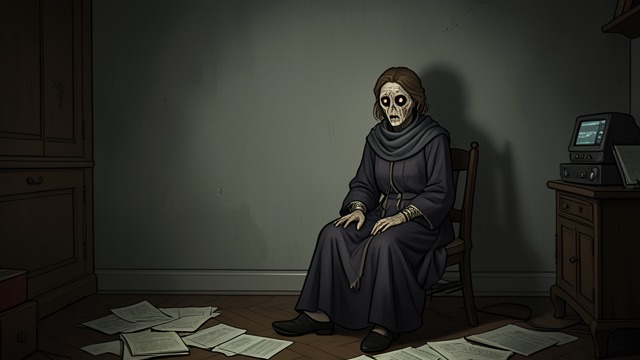
Reports about Asenath Waite describe students who feel momentarily exchanged with her, as if consciousness could look out from somewhere other than its accustomed body. These episodes unsettle the idea that identity is a stable, private possession anchored to a single physical frame.
The disturbance is philosophical as well as frightening. If a point of view can be relocated or manipulated, then the distinction between one person and another may be less secure than ordinary social recognition suggests.
Human Categories Under Strain
Asenath Waite’s claims about consciousness and the body make the uncertainty explicit, but her demonstrations leave the matter unresolved for those who witness them. The students can report a strange experience without possessing a reliable theory that explains it.
The story uses that gap to show how fragile human categories can be. A person may be treated as a coherent individual in public life even while the basis of that individuality has become impossible to verify.
The Alien in a Friend’s Face
Humanity at the Edge
Recognition Breaks Down
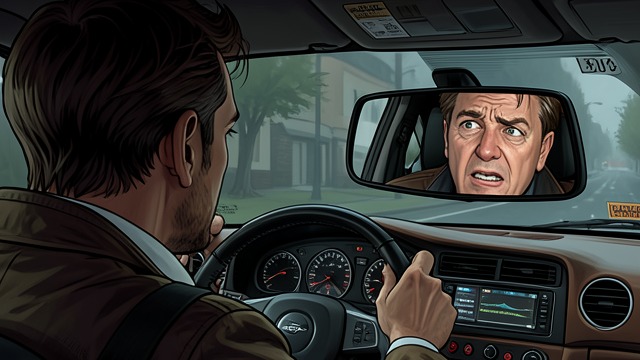
During the drive home, Daniel Upton sees Edward Pickman Derby change in ways he cannot reconcile with his lifelong knowledge of his friend. The altered voice, expression, and manner make the familiar face seem to belong to an intruder rather than to Edward Pickman Derby.
The scene makes recognition an unreliable guide to humanity. The body still presents the signs by which Daniel Upton knows his friend, but those signs no longer assure him that the person inside is the one he expects.
Fear of the Inhuman
Daniel Upton struggles to describe his response except as a feeling of alienness and cosmic horror. His reaction arises before he can prove what has changed, showing how the story makes the human and the nonhuman difficult to distinguish through ordinary evidence.
The encounter also exposes the moral danger of such uncertainty. If someone who looks like a friend may be an alien will, then compassion, trust, and self-protection all become harder to direct with confidence.
Sanity as a Social Verdict
Humanity at the Edge
Distress Classified
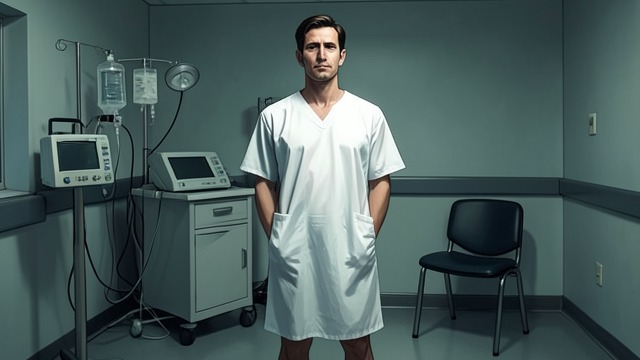
After Edward Pickman Derby returns from Maine in a state of terror, Daniel Upton interprets his stories as possible hallucinations caused by a real psychological ordeal. Later, doctors and specialists respond to Edward Pickman Derby’s deterioration by sending him to the Arkham Sanitarium.
The institution offers a recognizable social response to behavior that cannot be understood: it classifies the sufferer as mentally ill and confines him for care. That response may be compassionate, but it also limits which explanations can be taken seriously.
Recovery Without Recognition
When Edward Pickman Derby appears sane again, Daniel Upton is more frightened rather than reassured. The patient’s composure and competence look like evidence of recovery, yet they also resemble the alien personality Daniel Upton has encountered before.
Sanity therefore fails to settle the question of identity. A person may meet the outward expectations of rational conduct while still seeming, to a close observer, profoundly unlike himself; the institution can record improvement without determining who has returned.
The Human and the Monstrous
Humanity at the Edge
A Body Beyond Ordinary Description
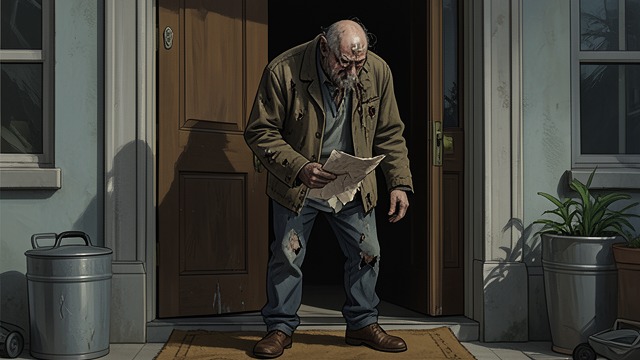
The figure that reaches Daniel Upton’s doorstep wears Edward Pickman Derby’s clothes but can barely communicate. Its foul smell, distorted shape, and eventual collapse make it difficult to fit within familiar ideas of a person, even as its message claims the identity of Edward Pickman Derby.
The scene brings the story’s deepest uncertainty into physical view. A voice may be damaged, a body may be failing, and written testimony may survive where speech cannot; none of these signs alone makes the distinction between human victim and monstrous presence simple.
A Moral Boundary Without Certainty
Daniel Upton’s later shooting of the patient reflects an attempt to defend humanity from what he believes is an inhuman occupant. The decision is presented as an act of protection, but its justification depends on accepting an explanation the surrounding world is likely to reject.
The story ends without restoring a stable definition of the human. The danger may have been stopped, but Daniel Upton remains unsure whether it can survive, and the reader is left with a world where personhood, sanity, and bodily life no longer guarantee one another.
In Daniel Upton’s opening recollections of Arkham
When Asenath Waite’s school reputation is recounted
During the night drive from Maine to Arkham
From Edward Pickman Derby’s arrest through his apparent recovery
At the final doorstep visit and its aftermath
