
Ephraim Waite's Survival Through Others
The Thing on the DoorstepThis thread traces Ephraim Waite's occult legacy, his alleged exchange with Asenath, and the continued possibility that his will survives by taking other bodies.
increasing Bearing strength in each event
 decreasing
Bearing strength in each eventdecreasingA Reputation for Sorcery
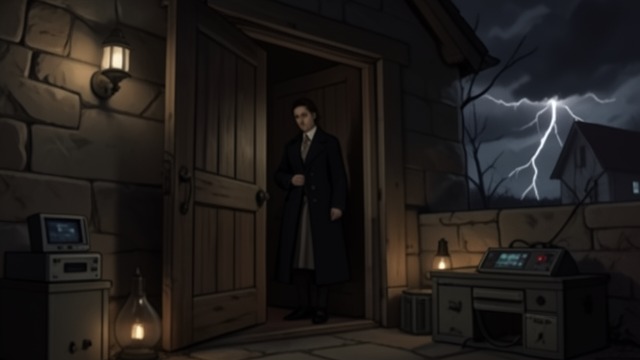
The Old Wizard
A Feared Household
Ephraim Waite lives in a decaying mansion in Innsmouth, where rumors attach strange sounds, occult study, and a mysterious family history to the house. People who know of him describe a powerful and unsettling figure rather than an ordinary scholar.
His reputation precedes his daughter Asenath. The tales of his command over storms and his access to forbidden books may be embellished, but they establish the atmosphere in which she receives her earliest instruction.
Knowledge as Inheritance
Ephraim's most important legacy is not a public career but an occult understanding passed into his household. Asenath becomes his avid pupil, learning to treat consciousness and bodily identity as things that can be manipulated.
This education leaves open the possibility that his influence will continue after his apparent death. The story presents the father's legacy as more than ideas: it may be a method for preserving a self by appropriating another person's body.
The Daughter's Uncanny Gift
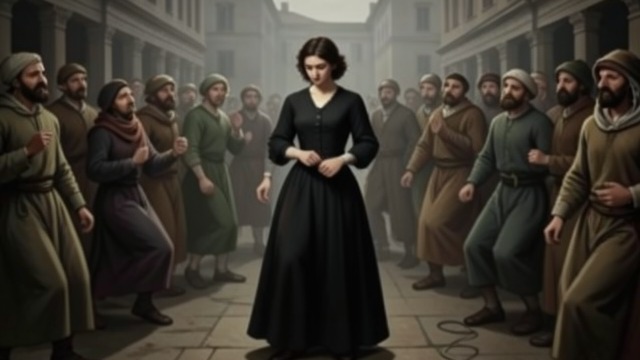
A Pupil Marked by Her Father
Learning to Influence
Asenath's schoolmates describe her as capable of hypnotic influence and unnerving demonstrations. She can make others feel as though they have been placed in her body, an experience that echoes the occult ideas associated with Ephraim's household.
Her unusually adult knowledge and her desire for a male brain make her seem shaped by a purpose inherited from her father. The accounts do not establish exactly what Ephraim taught her, but they show that bodily exchange becomes central to her ambitions early.
A Family Mystery
Ephraim's death is surrounded by troubling reports, including the suggestion that he died after going mad and that his body was not the whole story. Asenath's later suspicions and Edward's theories make the father's role in her identity increasingly uncertain.
The uncertainty itself becomes part of Ephraim's survival. He is absent from the household, yet the possibility that his consciousness remains active makes every later act attributed to Asenath open to reinterpretation.
The Alleged Exchange
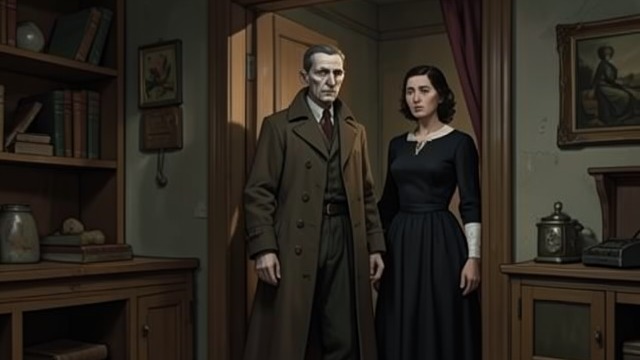
A Father in His Daughter's Body
Edward's Retrospective Theory
Edward eventually tells Daniel that Ephraim sought someone with a powerful mind and a weak will before his death. He believes that Ephraim exchanged identities with Asenath, taking her body while putting her into his own dying form.
In Edward's account, Ephraim then poisoned the body he had abandoned. The theory explains why Asenath's manner and handwriting sometimes seem to resemble those of an old man, though Daniel has no independent proof that the exchange occurred.
A Fatal Inheritance
If Edward is right, Asenath's later quest for a male body repeats a pattern first imposed on her by her father. She would be both a victim of Ephraim's exchange and an inheritor of its method, turning a stolen identity into a model for her own pursuit of Edward.
The alleged exchange transforms family history into a chain of appropriations. The father may have survived by taking his daughter's body, leaving her own identity displaced and making Edward the next possible vessel.
A Presence in Edward
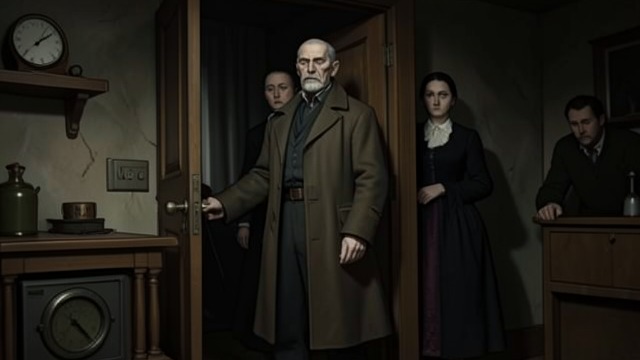
The Old Wizard's Suspected Return
Signs in Another Face
Edward's reports give Ephraim an ongoing role in the contest over his body. He tells Daniel that Asenath's gaze sometimes resembles her father's and that the person controlling Edward can also seem to carry Ephraim's manner and expression.
These impressions make it difficult to separate Asenath's ambition from Ephraim's supposed survival. Edward suspects that the person seeking his body may not be the woman he married but an older will concealed behind her identity.
The Question of Agency
Daniel observes moments when Edward appears strikingly unlike himself, but observation cannot identify the consciousness responsible. The story lets Ephraim's possible presence deepen the threat without resolving whether Edward's theory is accurate.
Ephraim's fate therefore remains suspended between death and continuation. His influence is felt through the body-exchange practices attributed to his family, and the possibility of his survival makes the struggle over Edward's identity even less containable.
The Unresolved Survival
An Ending That Cannot Be Verified
Destruction of the Occupied Body
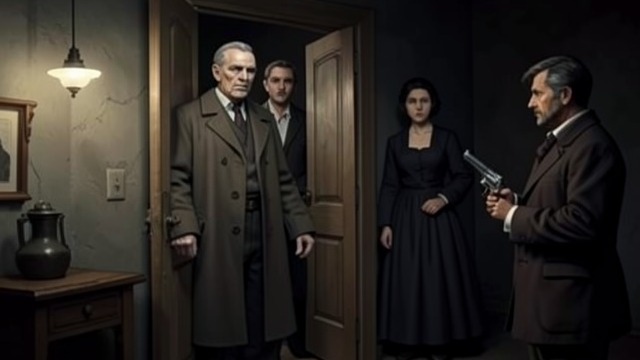
Daniel shoots the person in Edward's body at the sanitarium, believing that Edward himself has already been displaced and that the remaining occupant threatens others. The act ends the immediate crisis but does not establish which identity has been killed.
Daniel demands cremation because he fears that an occult presence might survive the body's death. His insistence reflects Edward's warnings about a life-glow that can persist beyond the physical form.
The Father's Open Shadow
Ephraim's alleged survival is never confirmed or disproved. If he initiated the exchange with Asenath, his method may have set in motion the sequence that ultimately takes Edward's body and leaves Daniel uncertain about what he has destroyed.
The story closes without a secure boundary between a dead body and a dead self. Ephraim's fate remains the oldest and most consequential uncertainty in a chain of identities that may outlast the people who first bore them.
Ephraim's later years in Innsmouth
Asenath's school years
Before Asenath enters the Hall School
During the final years of Edward and Asenath's marriage
After Daniel shoots the patient at Arkham Sanitarium
