
A Struggle Across Two Bodies
The Thing on the DoorstepThis thread follows the conflict between Edward Derby and the force he identifies as Ephraim Waite, tracing the suspected earlier exchange, its renewed attempt to secure a male body, and its apparent survival beyond death.
increasing Bearing strength in each event
 decreasing
Bearing strength in each eventdecreasingA Troubled Inheritance
A Troubled Inheritance
The Father's Reputation
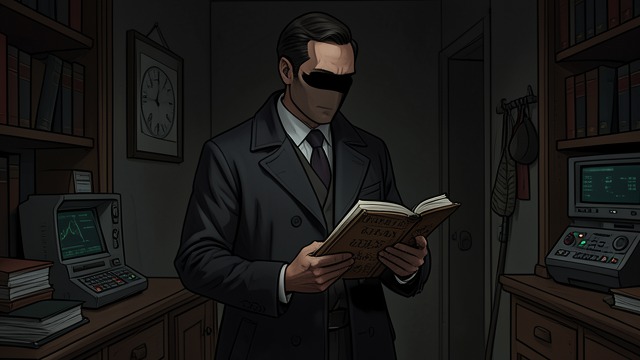
Asenath Waite is known as Ephraim Waite's daughter, and the stories surrounding her father cast the family as steeped in forbidden learning. Ephraim is described as a formidable magical student whose death came after insanity and confinement.
The history gives later events a shadowed prelude. Before Edward has evidence of an exchange, the possibility that Ephraim's influence continues through his daughter is already present in Arkham's rumors and in Asenath's uncanny reputation.
A Question of Identity
Asenath's unusual powers and her insistence that a male brain has special capabilities lead Edward to wonder whether she is pursuing more than knowledge. Her apparent ambitions make the boundary between father and daughter seem potentially unstable.
The story does not initially establish the truth of Edward's later theory. Instead, the family history supplies the first conditions for suspicion: a dead occultist, a daughter said to resemble him, and a persistent preoccupation with mastering another mind.
The Suspected First Exchange
The Suspected First Exchange
A Pattern in the Past
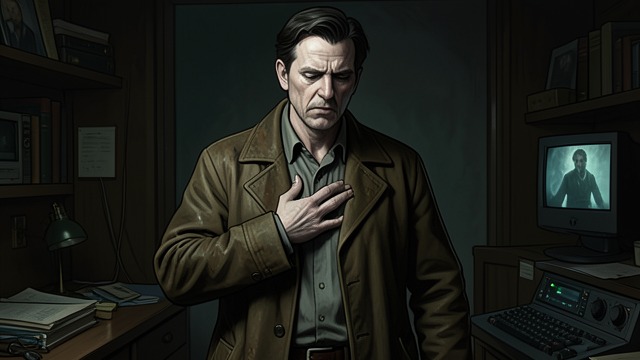
After claiming that Asenath has left him, Edward tells Daniel Upton that her identity is false: he believes Ephraim Waite used his daughter's body to escape death. He points to similarities in handwriting and speech as signs that the father has continued through the daughter.
Edward further suspects that Ephraim deliberately sought a person with an able mind and a weak will. In his account, Asenath was not simply a victim or a successor but the person whose body made the older magician's survival possible.
Doubt That Does Not Disappear
The theory reinterprets Asenath's history as an earlier instance of the same bodily struggle Edward is now experiencing. Her desire to possess a male brain may reflect the ambitions of the mind he believes lies behind her face.
Upton hears the account as the product of a distressed man, and the claims remain unverified at this point. Still, the proposed pattern changes the scale of the conflict: Edward may be confronting not one adversary but an occult will that has already crossed bodies before.
A Male Body as Prize

A Male Body as Prize
Edward's Theory of the Motive
Edward believes Asenath is using him because she wants to become a man and to wield the powers she associates with a male brain. His own intelligence and weak will, he fears, make him the ideal target.
The theory links his personal danger to the ambition Asenath has expressed since school. What had sounded like provocative talk about consciousness now becomes, in Edward's account, a concrete plan to take over his body.
Temporary Control Becomes Strategic
Edward describes the exchanges as recurring and increasingly difficult to resist. When Asenath occupies his body, he experiences himself as displaced, while the confident personality visible to others appears to act in his place.
The conflict therefore has both a bodily and an existential dimension. Edward is trying to preserve the life he recognizes as his own, while the force he identifies as Ephraim seeks a body in which it can act without the limitations of its former existence.
The Hallowmass Plan
The Hallowmass Plan
A Ritual Deadline
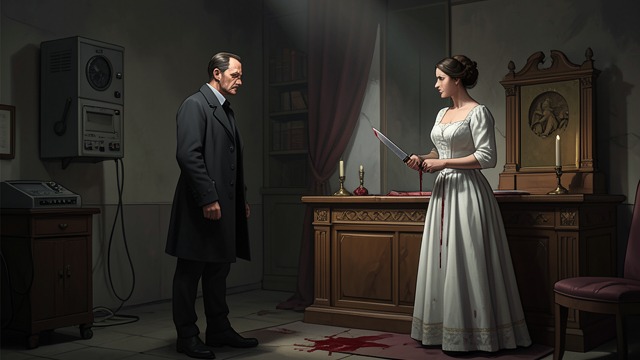
Edward fears that Asenath intends to complete the exchange at Hallowmass through a sacrifice. He believes the ritual would make her possession permanent, leaving him unable to return to his own body.
The deadline transforms a repeated struggle into an approaching point of no return. Edward's warnings to Upton are shaped by the belief that failure to resist before the rite would let the invading will secure the body it has been pursuing.
Resistance Under Pressure
Edward claims he eventually gains the upper hand and forces Asenath to leave, but he remains afraid that the danger is not finished. His anxiety about the servants and the occult groups associated with Asenath reflects a conflict that extends beyond the couple's private relationship.
The account establishes Hallowmass as the moment Edward thinks the exchange should have been finalized. Later events complicate that assumption: the pursuit persists beyond the apparent deadline, and a death he believes decisive proves insufficient.
The Dead Will's Persistence
The Dead Will's Persistence
The Failed Escape
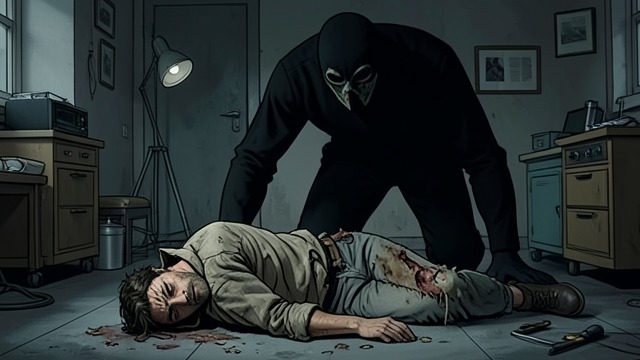
Edward's final letter claims that he killed Asenath and concealed her body, believing the immediate threat had ended. He later found himself inside her decomposing corpse, while the force he identifies with her occupied his living body at Arkham Sanitarium.
The reversal makes his act of self-defense appear to have worsened his vulnerability. Asenath's physical death did not prevent the exchange, and Edward now faces the same opponent without the ability to return to a healthy body.
An Uncertain End
The letter warns Upton that the soul can persist after the body dies and that the occupied body must be cremated. Upton shoots the person at the sanitarium, but fears that the force may survive the bullets.
The story leaves the outcome unresolved at the level of supernatural certainty. A body has been destroyed, but whether the will that moved between bodies has truly been extinguished remains the final source of conflict.
Before Asenath enters Edward's life
During Edward's account after Asenath's departure
During the third year of the marriage
The period leading up to Hallowmass
After Asenath's death and the final warning
