Arkham
The Thing on the DoorstepArkham is the old, legend-haunted town that frames Daniel Upton and Edward Pickman Derby’s long friendship and becomes the setting for the story’s final confrontation. Its crumbling architecture and familiar domestic routines give the narrative a recognisable local world, even as the events surrounding Edward and Asenath Waite strain the explanations of its residents and police.
Setting and Atmosphere
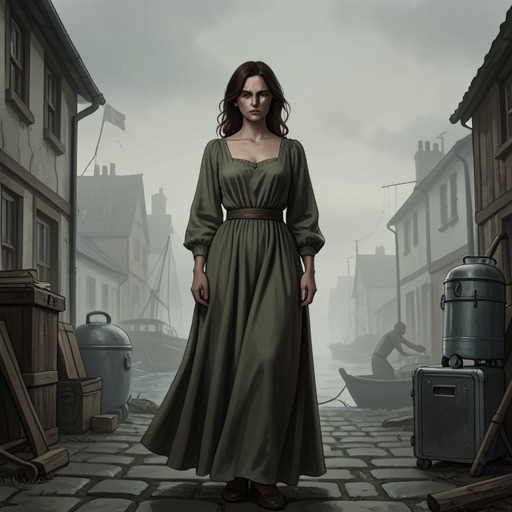
Arkham is portrayed as ancient and subtly menacing: its sagging gambrel roofs and decaying Georgian balustrades gather along the Miskatonic. The town’s witch-haunted reputation and worn built environment make the uncanny feel close to ordinary life rather than confined to a distant wilderness. This atmosphere helps explain the early affinity between Daniel Upton, whose artistic interests leaned toward the grotesque, and the younger Edward Pickman Derby, whose poems explored sombre and fantastic subjects.
The landscape also establishes a contrast between Arkham’s settled streets and the more remote places where the story’s occult episodes are said to occur. Edward’s account places a terrifying ritual beyond Chesuncook, in the Maine forest; Arkham is instead the town to which he returns and where the consequences of that experience become entangled with domestic life.
Homes, Friendship, and Education
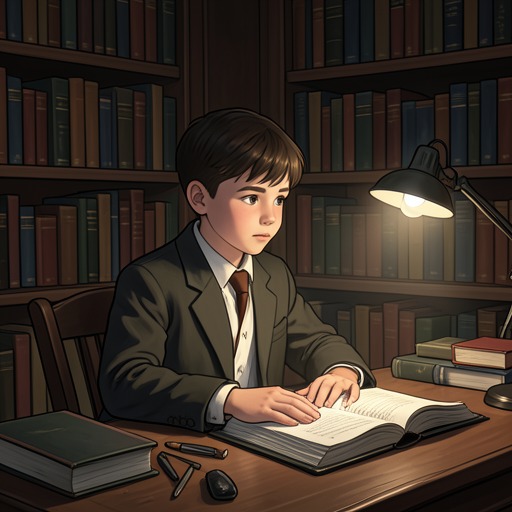
After studying at Harvard and training in a Boston architect’s office, Daniel Upton returned to Arkham to practise architecture and settled in his family home on Saltonstall Street. Edward, eight years younger, had known him since childhood and came to call almost every evening, becoming so familiar that Upton regarded him as one of the household. Edward’s characteristic pattern of three brisk knocks followed by two more became part of the home’s routine, a small sign of the intimacy that made the later crisis personal for Upton.
Arkham also shaped Edward’s education. His parents would not allow him to live away from them, so he attended Miskatonic University in town. He entered at sixteen, completed his course in three years, and excelled in English and French literature while doing less well in mathematics and the sciences. His limited independence and social reserve remained visible in the local life around him: he watched the university’s more daring students from a distance, admiring a manner of life he did not feel able to adopt.
Institutions and the Crisis
The Arkham Sanitarium is the setting of the story’s decisive confrontation. At the beginning, Daniel Upton acknowledges that he shot his closest friend there, while insisting that the act was not murder. His account links the shooting to the belief that the person in Edward’s body was no longer Edward, but Asenath Waite—or, as Edward had come to suspect, her father, Ephraim Waite. The sanitarium thus becomes more than a place of confinement: it is where Upton acts on an explanation that the ordinary language of madness cannot resolve.
The crisis has roots in events beyond Arkham. Edward says that Asenath had taken him from his body and forced him to experience a cult ritual near Chesuncook; he feared that a Hallowmass sacrifice would make the exchange permanent. Later, in a written warning, he reveals that he killed Asenath and hid her body in a cellar storeroom, but believed that her soul continued to act after death. He reports escaping from the corpse and reaching Upton to warn him that Asenath, now in Edward’s body, was at the sanitarium. These claims remain Edward’s testimony, but they explain why Upton’s return to the Arkham institution culminates in violence.
Local Knowledge and Narrative Significance
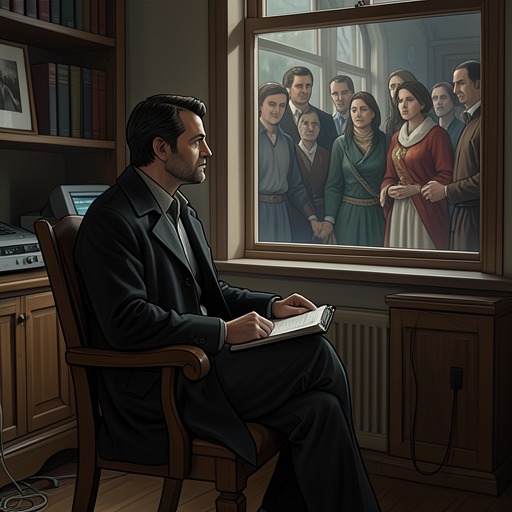
Arkham’s residents and authorities do not possess a convincing account of the final events. The police struggle to explain the last terrible visit and resort to weak theories of a grotesque prank or a warning by dismissed servants. Their uncertainty reflects the story’s larger tension: familiar institutions can observe the aftermath, but they cannot make the reported exchanges of bodies and persistence of the dead intelligible within ordinary explanations.
The town therefore anchors the horror without containing all of its causes. Arkham is where Edward’s friendship with Upton develops, where his education takes place, and where the sanitarium becomes the site of Upton’s irreversible decision. Against the distant forest ritual and the hidden cellar, its homes and public institutions make the supernatural conflict feel like an intrusion into everyday life—and leave the town with consequences it cannot explain.