Arkham Sanitarium
The Thing on the DoorstepArkham Sanitarium is the institutional setting for the final crisis in Edward Derby’s story. It receives him after he emerges from the Maine woods in a disturbed condition, holds him through a period of decline, and then reports an apparent recovery that Daniel Upton cannot accept as genuine. The sanitarium’s ordinary procedures—confinement, observation, and the prospect of release—become entangled with the story’s central uncertainty: whether the person occupying Derby’s body is Derby at all.
Admission and Custody
After finding Derby in a cell at Chesuncook, Upton brings him back toward Arkham and initially plans to shelter him himself rather than return him to Asenath Waite. Derby’s episodes worsen, however. He sits in his library in a state of abnormal attentiveness, while mentions of his troubles, future plans, or wife provoke extreme agitation; his butler reports dangerous nighttime seizures. Upton consults Derby’s doctor, banker, and lawyer, then brings the physician and two specialist colleagues to see him. The resulting spasms lead to Derby’s removal by closed car to Arkham Sanitarium.
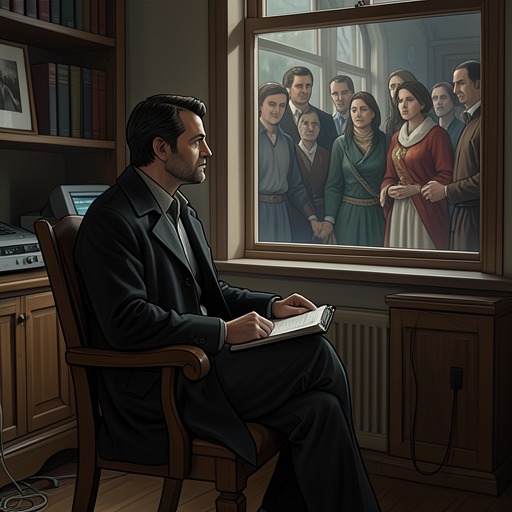
Upton is made Derby’s guardian and visits him twice each week. The visits give him direct access to Derby’s continuing distress: the patient cries out, whispers, and repeats that he had to do something and that something will get him in the darkness. The sanitarium is thus not merely a place named in the account but the setting in which Upton witnesses the consequences of Derby’s ordeal and assumes responsibility for him. No certainty is offered about the prospect of recovery. Upton nevertheless tries to prepare for Derby’s possible return, moving his servants to the family mansion while leaving the Crowninshield House and its unexplained collections largely undisturbed.
The Reported Recovery
Before Candlemas, in late January, the sanitarium telephones Upton with news that Derby’s reason has suddenly returned. His continuous memory is said to be badly impaired, but the staff considers his sanity restored; after a further period of observation, they expect that he can be released in about a week. The report briefly appears to resolve the crisis through familiar medical terms: recovery, observation, and discharge.
Upton’s visit unsettles that expectation. The patient rises politely and speaks affably about arrangements for release, yet Upton recognizes the forceful, competent personality that had seemed foreign to Derby and that Derby had identified as his wife’s intruding soul. The visitor sees in the patient’s expression and manner a resemblance to Asenath Waite and Ephraim Waite, and recalls the same personality from an earlier nighttime drive. The apparent improvement therefore sharpens, rather than settles, the question of identity. The patient seems sane, but Upton cannot reconcile that composure with the Derby he knew.
The uncertainty is intensified by the reported gaps in the patient’s recent memories and by his ironic manner. Upton leaves without openly challenging the sanitarium’s assessment, then spends the following day and night unable to concentrate on his usual work. The institution can certify a change in the patient’s mental condition, but it cannot answer Upton’s deeper question: whether the person who has recovered is Edward Derby. Its announcement of release consequently becomes a false promise of resolution and a warning that the danger may soon pass beyond its walls.
The Patient’s Identity and the Escape
After Upton receives a strange telephone call from the Crowninshield House, a misshapen visitor arrives at his door carrying a handwritten message. The letter identifies the patient at Arkham Sanitarium as Asenath Waite occupying Derby’s body. Derby says he had killed Asenath months earlier, fearing that she would take his body permanently at Hallowmass, but that her soul continued after death and began forcing an exchange with him. He describes becoming trapped in her buried body and says that, after the exchange, Asenath remained at the sanitarium in his body, apparently sane and awaiting release.
According to the letter, Derby’s own escape from the cellar was desperate and incomplete: he had become too weak to explain himself aloud, so he wrote to Upton instead. He urges Upton to kill the patient and have the body cremated, warning that the force behind the exchange could continue from body to body. The account makes the sanitarium’s earlier report newly alarming. What its staff interprets as restored reason and readiness for release, Derby presents as the successful concealment of an identity takeover.
Shooting and Aftermath
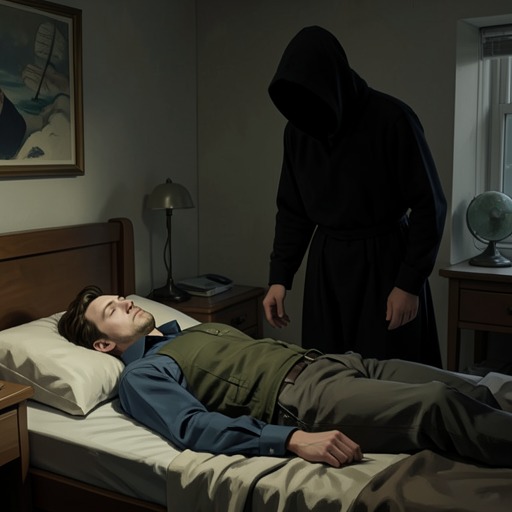
The following afternoon, Upton goes to Arkham Sanitarium and shoots the patient. He later insists that the person he killed was not Edward Derby, but he remains unsure whether death has ended the threat. The body is retained for medical examinations, while Upton argues that it must instead be cremated. His fear reflects the story’s claim that the forces involved can outlast the physical life of a body; confinement and death may not, by themselves, guarantee an end to the danger.
The location’s role therefore changes across the episode. It first offers a place of custody when Derby can no longer safely remain at home; next it appears to confirm his recovery; finally it becomes the setting where Upton acts on a truth that the institution’s assessment cannot recognize. The narrative gives no account of the sanitarium’s internal methods beyond observation and care, nor does it establish that its staff knowingly assist the transformation. Its importance lies instead in the contrast between the outwardly legible patient and the identity Upton believes is hidden within him. The reported return to sanity is real as an appearance, but its meaning is radically different from what the institution and its visitors initially suppose.