Asenath Attempts to Permanently Take Derby's Body at Hallowmass
The Thing on the DoorstepAsenath Waite’s attempt to make her occupation of Edward Derby’s body permanent is first understood as a future threat, then revealed as a danger that survives her death. The planned Hallowmass sacrifice was meant to finalize the exchange; although Derby killed Asenath before that ceremony, her disembodied agency later reclaimed his body, making the attempt succeed by a different route.
Background and Intended Exchange
Before describing the threat, Derby tells Daniel Upton that Asenath had already driven him out of his body during their return from Maine. He says he had been left in the body of the figure he called Asenath, while she occupied his own. That earlier exchange makes the Hallowmass plan more than a conjecture: Derby presents it as the final step in a process already under way.
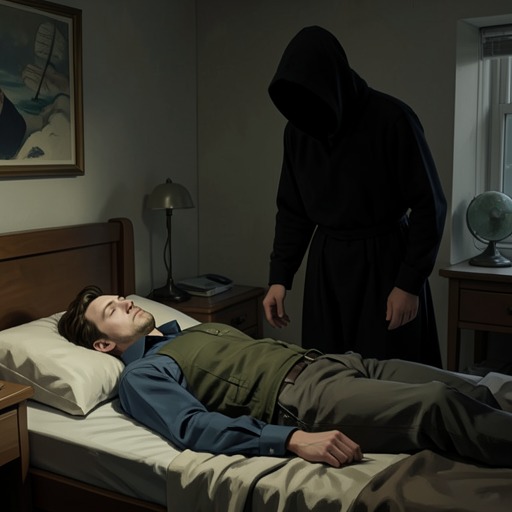
Derby says that a cult Sabbat was to take place beyond Chesuncook at Hallowmass, and that its sacrifice would secure the change permanently. In his account, Asenath would become him, taking the body and the male, fully human existence she wanted, while he would be left in her former body. He fears that she would then kill the person trapped there, as he believes had happened in an earlier exchange.
The Plan Is Interrupted
The later account in Derby’s letter establishes that he acted before the threatened Hallowmass culmination. He writes that he killed Asenath while he was in his own body and that they were alone. He then concealed her body in a storeroom in the farther part of the cellar, under old boxes, and cleaned up the traces. He says the servants suspected something the next morning but kept silent, and that he sent them away.
Derby’s action interrupts the plan as he had understood it: Asenath is dead before the ceremony he feared. Yet killing her does not end the danger. His account distinguishes the death of her body from the persistence of her soul, which he believes can continue as long as the body remains. The concealed corpse therefore becomes not proof that the threat has ended, but the means by which it returns.
The Posthumous Reversal
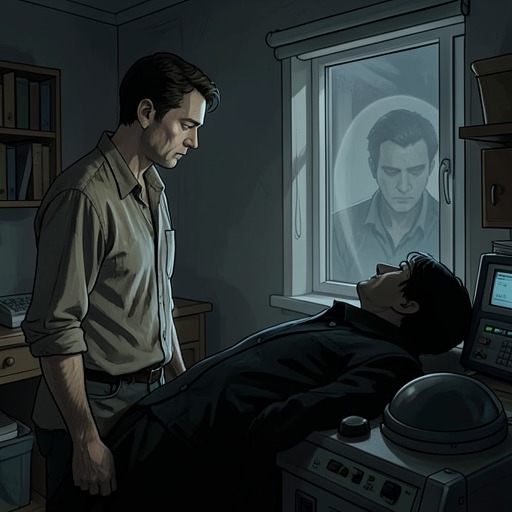
After Hallowmass, Derby feels the force he describes as a tug at his brain and recognizes it as another exchange. He says he awakens in the dark, confined in Asenath’s decaying body beneath the boxes where he had hidden it. Meanwhile, he believes that Asenath has taken his body at the sanitarium. The sacrifice, he concludes, can still work after her death and without her being physically present at the ceremony.
The reversal changes the meaning of Derby’s attempt to stop her. He had killed Asenath to prevent a permanent body-taking, but the act left her body available for the soul’s return and did not protect his own. By the time he escapes, he believes the Hallowmass condition has made her occupation of him permanent. The intended exchange has thus been completed not by the living Asenath appearing at the Sabbat, but through her continuing agency after death and Derby’s confinement in the body he had buried.
Significance
The episode turns the apparent solution of killing Asenath into a further stage of the danger. Its central distinction is between body and soul: bodily death does not, in Derby’s account, end the capacity to act, and destroying the living person does not necessarily restore the rightful occupant of a body. Hallowmass marks the threshold after which the exchange becomes irreversible, while the cellar burial links Derby’s attempt at prevention to the very form his later captivity takes.