Christmas
The Thing on the DoorstepChristmas marks a decisive reversal in Edward Pickman Derby’s fragile recovery. As the date for his breakdown, it interrupts Daniel Upton’s plans for a calmer future and gives renewed force to fears that had seemed, for a time, containable.
Calendar Position and Immediate Context
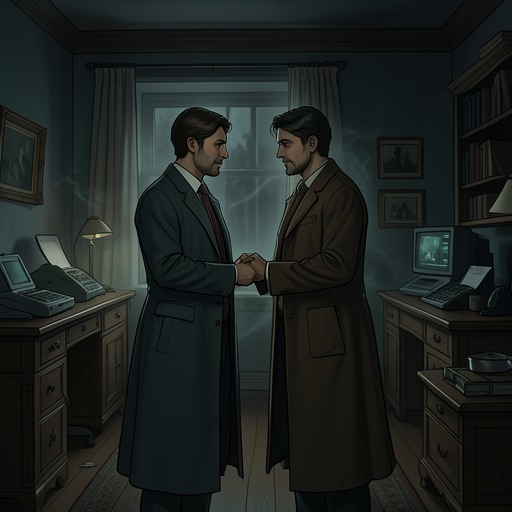
The Christmas episode follows a period of attempted respite. After Derby emerged from the Maine woods in a delirious state, Upton found him in a cell at Chesuncook and brought him back toward Arkham. Derby stayed overnight with Upton, and in the weeks that followed the two men avoided discussing the occult experiences that had frightened him. They instead talked about restoring the old Derby mansion and taking a European trip the next summer.
By December, the mansion was ready, but Derby repeatedly postponed moving there. He seemed both afraid of and bound to the Crowninshield House, struggled to begin dismantling its contents, and made troubling trips around the house, especially into the cellar. Upton also knew that Derby’s moods remained unstable: exhilaration alternated with frequent fear and depression. Thus Christmas arrives not after a settled recovery, but amid the gap between the future Derby and Upton hope to arrange and the disturbing attachments that still govern Derby’s behavior.
The Christmas Breakdown
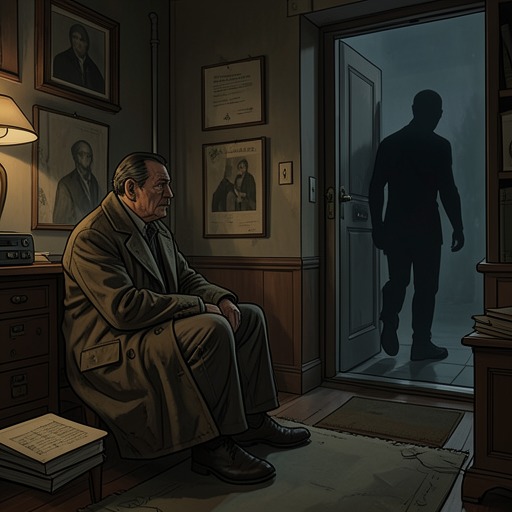
While visiting Upton around Christmas, Derby suddenly leapt from his chair in uncontrollable fright as their conversation turned toward the following summer’s travel. His outburst centered on the sensation of something tugging at his brain from beyond himself. He invoked Ephraim Waite and the name Kamog, and returned to the terrifying pit and its Shoggoths, themes already present in his account of the experiences in Maine.
The timing makes the breakdown a sharp contradiction of the ordinary future the friends had been discussing. Travel and the renovation of the family home offered practical plans, but Derby’s sudden panic made clear that neither plan had freed him from the threat he associated with Asenath Waite and Ephraim Waite. The Christmas visit is therefore a failed moment of reassurance: conversation about a future summer gives way to Derby’s conviction that an influence outside his body is again reaching him.
Christmas and Hallowmass
The episode’s significance is sharpened by Derby’s earlier account of Hallowmass. He believed that a ceremony planned for that period would have made the exchange of bodies permanent, leaving Asenath in his body and him displaced from it. That ritual calendar gives the story two contrasting seasonal markers: Hallowmass is associated in Derby’s account with the threatened completion of the exchange, while Christmas is the date of a later breakdown that shows his terror has not subsided.
The text does not present Christmas as a celebration or describe any holiday observance. It functions instead as a precise point in the chronology, set against the failed expectation that Derby would recover through rest, distance from Asenath, and practical arrangements for the coming year. His Christmas outburst brings the earlier ritual threat back into the present without, at that moment, explaining what has happened to him.
Retrospective Significance
Later events give the Christmas breakdown a more ominous place in the sequence. In a warning delivered to Upton, Derby explains that Asenath had been dead for months and that he had killed her after fearing she would take his body permanently. He also claims that her soul, or Ephraim’s, could persist after the body died and continue trying to exchange bodies. This later account reframes the force Derby sensed as more than a passing fear, though Upton’s knowledge remains mediated by Derby’s testimony and by the unsettling evidence discovered afterward.
The Christmas episode does not settle the mystery or restore Derby. Instead, it stands between his initial return from Maine and the later disclosures that reveal the depth of the danger. Its ordinary calendar setting intensifies the contrast: even as Upton and Derby speak of travel and renovation, Derby’s mind is pulled back toward a conflict that reaches beyond ordinary bodily life.