Crowninshield House
The Thing on the DoorstepCrowninshield House is the country residence in Arkham where Edward Pickman Derby and Asenath Waite make their home after marrying. Its restored rooms and grounds, private library, and secluded cellar become closely bound to the couple’s occult work and to the increasingly concealed struggle over whose identity inhabits Edward’s body. The house begins as a chosen home near the college; it ends as the site of a buried body, a desperate escape, and evidence that the conflict has continued beyond death.
Setting and Household
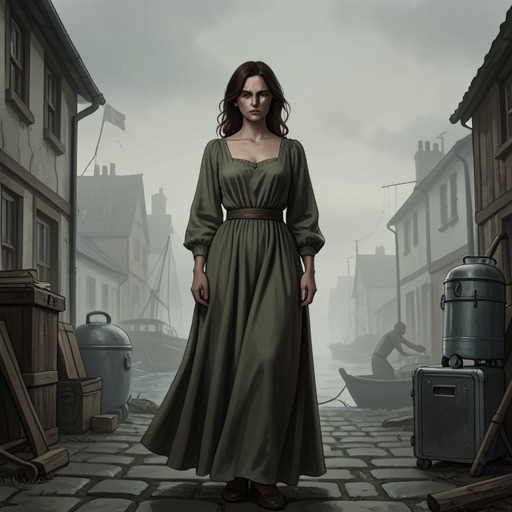
Asenath Waite buys the old Crowninshield place at the end of High Street before the wedding. After a brief ceremony and a trip to Innsmouth, the newlyweds settle there rather than return permanently to Asenath’s former home. The narrator, Daniel Upton, understands the choice partly as a wish to remain near the college, its library, and its social circle. Asenath brings books and apparatus from Innsmouth and oversees the restoration of the house and grounds. The residence thus joins domestic life to her esoteric interests from the beginning.
The household includes three servants brought from Innsmouth: an exceptionally aged couple associated with Ephraim Waite and Asenath’s dead mother, and a younger servant whose unusual appearance makes her seem markedly out of place. Their cryptic references to the family’s past give the house an atmosphere of concealed history. As Edward’s contact with Upton diminishes, the servants also become part of the house’s guarded routine, watching his movements and helping restrict his access to visitors.
Occult Work and Changing Identities
For a time, Crowninshield House appears to offer Edward a more settled adult life. After the honeymoon he seems more sober and thoughtful, while Asenath is occupied with the property and the materials she has brought there. He tells Upton that her guidance is advancing his knowledge of esoteric subjects, though he will not describe the more daring experiments she proposes. The house is therefore not merely a backdrop to their marriage: it is the private setting in which their studies develop and from which Edward’s later fears emerge.
Over the next two years, the couple become increasingly secretive. Their visits to others grow rare, and even people in their college circle are disturbed by the direction of their studies. Reports about the house and driveway register a disturbing change in Edward. He is sometimes seen driving Asenath’s powerful Packard with a confidence and skill unlike his usual indecisive manner, often as if setting out from or returning to a journey. On other occasions, he appears listless and returns in the back seat while a hired driver handles the car. The house’s driveway becomes a visible threshold between these contrasting versions of him, although observers cannot explain what causes the shifts.
One visitor glimpses a face at a library window after seeing the confident Edward drive away. The face appears to be Asenath’s, but its expression seems to belong to the suffering, confused Edward. The episode gives the house’s interior a significance beyond simple privacy: behind its windows, the outward identities of the couple no longer reliably reveal who is present. Edward later tells Upton that Asenath has forced him out of his body during an earlier visit, leaving someone else to drive home in his form. His account connects the house’s library and the journeys from its grounds to a contest over bodily control.
Secrecy, Confinement, and Rumor
As Edward grows fearful and begins speaking of the need to regain his identity, Asenath tries to prevent him from visiting Upton. Edward’s visits usually occur when she is away, and he describes her as being away in her own body. At other times, he has difficulty reaching Upton, as though an unseen influence interrupts his intentions. The servants’ watchfulness makes the house a place where his movements can be observed and his attempts to speak beyond it obstructed.
After Edward is found in a distressed state near Chesuncook and Upton brings him back toward Arkham, the house remains the center of local speculation. For a period, Edward is seen more often in his newly confident manner, while Asenath is seldom available to callers. People also report intermittent sobbing from inside Crowninshield House, sometimes apparently in a woman’s voice and sometimes in a man’s. Asenath publicly explains her absence by describing a visiting guest from Boston as having suffered a breakdown, but the guest is never seen. These accounts do not establish exactly what is happening inside; instead, they show how the household’s secrecy allows competing explanations to circulate.
The Cellar and the House’s Final Role
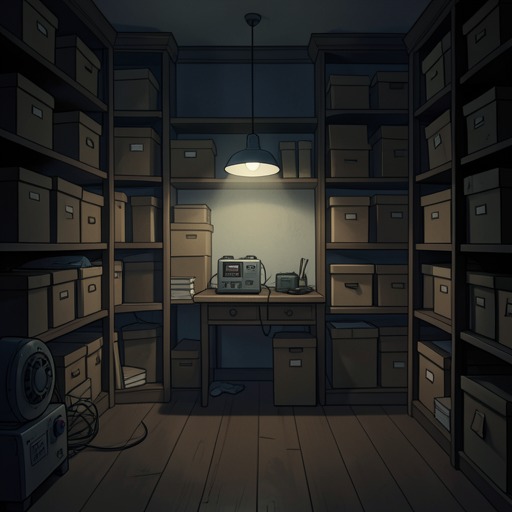
Edward later tells Upton that Asenath intended to make their exchange permanent at Hallowmass, when a sacrifice would supposedly complete the change. He also claims that Asenath was in truth Ephraim Waite, who had previously exchanged identities with his daughter. These are Edward’s revelations, not events witnessed by Upton, but they make the house’s rooms and concealed spaces part of a larger history of identity exchanges. Edward says he killed Asenath in the house and hid her body beneath old boxes in a cellar storeroom farther from the main rooms. He believed the danger had ended, only to feel that her identity continued to act after her death and was taking control of him again.
In Edward’s final written warning, he describes awakening trapped in Asenath’s corpse in the cellar and clawing his way out. He believes that after Hallowmass she has taken his body at the sanitarium, and urges Upton to ensure that the body is cremated. Later, an investigation of Crowninshield House finds signs of upheaval in a remote cellar storeroom, along with tracks, disturbed belongings, and marks on the telephone and stationery. The details support the discovery of a concealed disturbance without resolving every question about what happened there. The house’s cellar, first an unseen part of the domestic setting, becomes the place where Edward’s account of the continuing exchange intersects with physical evidence.
Narrative Significance
Crowninshield House changes in meaning as the story’s evidence changes. Its restoration initially suggests a new household and a possible step toward Edward’s independence; its library and driveway become associated with unexplained changes in his behavior; its closed rooms shelter rumors and restrictions; and its cellar holds the secret Edward says he tried to bury. Much of what the house signifies reaches the reader through Upton’s observations, other people’s reports, and Edward’s increasingly alarming testimony. That limited access keeps the residence both an identifiable place at the end of High Street and a center of uncertainty. The final traces there do not make the occult account publicly accepted, but they leave the house as the material record of a conflict that ordinary explanations have failed to settle.