Daniel Upton Shoots the Possessed Derby
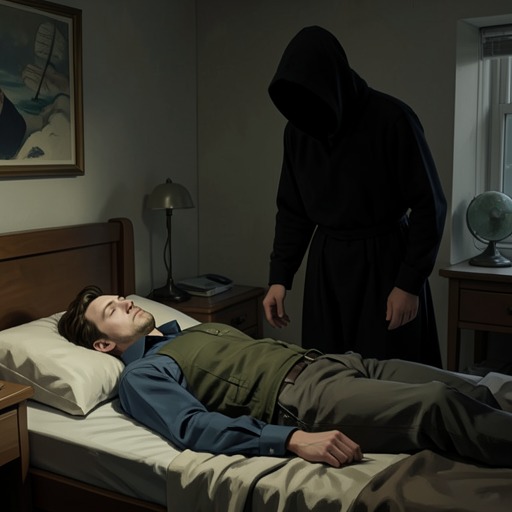
The Thing on the DoorstepDaniel Upton’s shooting of the possessed Edward Pickman Derby is the story’s violent answer to a crisis of identity: Upton kills the body in which his friend had lived, convinced that its occupant is no longer Edward, yet remains unsure whether death has made anyone safe.
Causes and Stakes
By the time Upton acted, his understanding of Edward Pickman Derby’s ordeal had changed. He says he now believes what Edward had told him: Ephraim Waite and Asenath Waite had summoned horrors that engulfed Edward and were now engulfing Upton himself. The threat, as Upton understood it, was not confined to one person or one living body. It reached beyond the ordinary boundary between life and death.
The immediate stakes were therefore both personal and larger than friendship. Upton describes his decision as being for Edward’s sake and for the world’s, but his account also makes clear that he feared for his own survival. He could not know whether the force that had taken Edward’s identity might next take his.
The Shooting
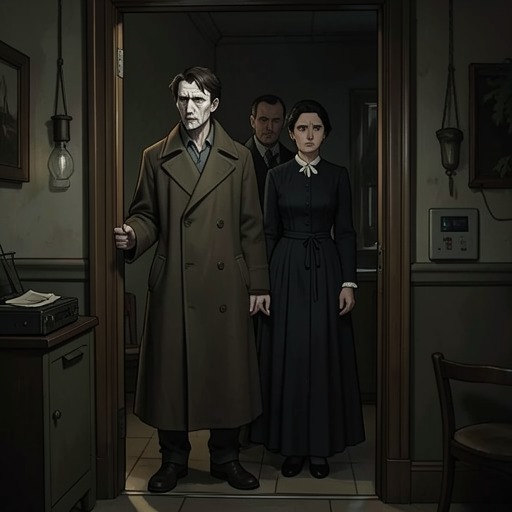
The next afternoon, after recovering from a state of prostration enough to walk and speak coherently, Upton went to the madhouse and shot the person held there. His account is decisive about the action but careful about the identity of its target: he insists that the body was no longer Edward Pickman Derby. The shooting thus serves, in Upton’s judgment, as an act of rescue and prevention, though it cannot restore Edward or prove that the danger has ended.
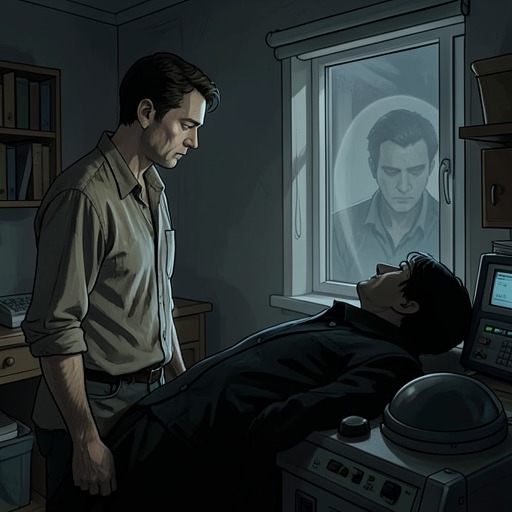
That distinction between body and person shapes the event. Upton kills the body associated with his friend while denying that the friend remains within it. The act is presented as an urgent response to possession, not as a claim that physical death alone can settle who inhabits a body.
Aftermath and Uncertainty
The shooting brings no relief. The body is retained for autopsies by several doctors, while Upton insists that it must be cremated. He fears that the powers he has encountered survive the physical form, and cannot be certain that killing the body has stopped them. His fear turns inward: he worries that he may be the next person forced from his own body, and resolves not to surrender it or exchange souls with the bullet-ridden corpse.
Upton’s account leaves the event suspended between apparent finality and continuing threat. The shooting is a death, but not a secure ending: the body remains available for examination rather than cremation, and Upton’s conviction that the occupant was not Edward does not tell him what may persist after the bullets. His act closes one immediate danger only in his own judgment; the possibility of further possession remains open.