Derby Is Forced to Experience a Cult Ritual in Maine
The Thing on the DoorstepDerby Is Forced to Experience a Cult Ritual in Maine is a pivotal episode in Edward Derby’s account of Asenath’s control over his body: while confined in a room at home, he abruptly found himself at a remote cult rite, apparently in the body Asenath had left him. The episode made the danger more than a private fear. It connected their involuntary body exchanges to a hidden ritual and to Derby’s fear that a calendrical sacrifice would make the exchange irreversible.
Circumstances and Account
More than three years into his marriage, Edward Derby was found wandering out of the woods near Chesuncook, a settlement beside one of Maine’s most remote forest regions. The town marshal sent a telegram to Daniel Upton, who traveled there and found Derby confined in a cell at the town farm. Derby recognized his friend, but his account emerged in a disordered torrent, shifting between panic and silence.
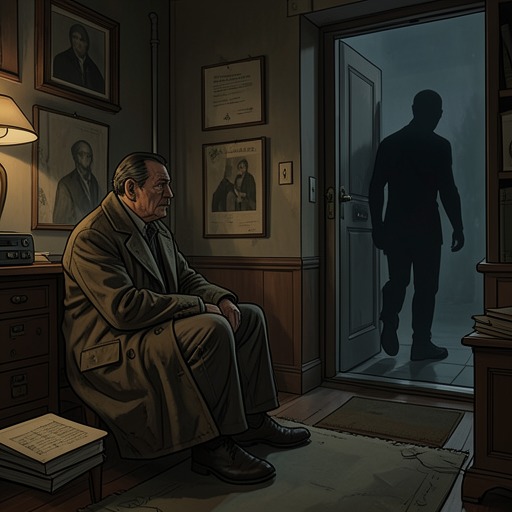
Derby described a sudden transition: shortly before, he had been locked in the library; then he was at a cult gathering in a place he associated with Asenath’s journeys in his body. He understood the episode as another instance of her taking control while leaving him displaced. The abrupt change of place, and his inability to explain how he had arrived there, were central to his terror.
The Ritual and Its Setting
In Derby’s description, the rite took place beneath a remote, underground region reached by a vast descent. He reported a gathering of hundreds, an altar, and a figure that rose from it. He also said he saw a Shoggoth change shape. These details came from Derby’s agitated recollection, not from Daniel Upton’s direct observation; Upton initially regarded the account as delusional, though he sensed a disturbing coherence in its references to occult traditions.
Derby also recalled a cry associated with the gathering that used Ephraim Waite’s secret name within the coven. That detail linked the ritual to the Waite family’s occult history and made the episode seem to Derby like part of a larger, concealed practice rather than an isolated ordeal. He believed Asenath had taken him to the place despite having promised not to do so.
Repeated Displacement and Rising Stakes
The Maine episode was not, in Derby’s account, the first time Asenath had taken his body to unknown places. He told Upton that she would leave him in her body while she traveled and took part in rites, then sometimes lose her hold on him, causing him to find himself suddenly back in his own body far from home. On multiple occasions, he had been stranded at a great distance and had to arrange transportation back.
Derby feared that the periods of Asenath’s control were growing longer. He believed she wanted his body because she thought it would allow her to become fully human, and that she would eventually displace him altogether. He identified Hallowmass as the point at which a Sabbat and sacrifice could make the transfer permanent. The cult rite in Maine thus stood both as an ordeal already endured and as evidence, in his mind, of a process that could culminate in the permanent loss of his body.
Aftermath and Significance
After an hour of effort, Upton managed to calm Derby and took him from the town farm toward Arkham rather than returning him to his home. Derby muttered during the journey and became especially troubled again while passing through Portland. Upton chose to shelter him himself, believing that distance from Asenath might help and that Derby’s marriage had become dangerous to him. At this stage, Upton still interpreted the account as a possible product of mental illness, even as its recurring pattern gave it weight.
Derby later connected the danger directly to Hallowmass, insisting that a sacrifice would have made Asenath’s possession permanent. In a final written warning, he said that after killing Asenath and concealing her body, he had nevertheless felt her continuing influence and believed she was transferring him into her corpse. He attributed this persistence to a soul that could remain active after bodily death, and warned that the Hallowmass rite could succeed even without Asenath’s presence. The later account changes the significance of the Maine episode: what Upton first encountered as a frightening, apparently incoherent report becomes an early stage in Derby’s struggle against a body-taking process that continued after Asenath’s death.